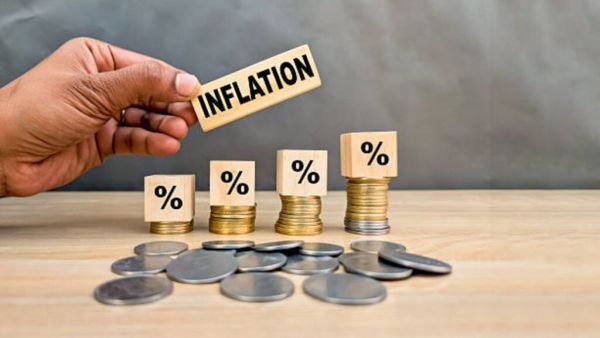
India Inflation Rate 12 Years: Addressing the Indian community in the Netherlands, Prime Minister Narendra Modi gave his biggest warning yet, referring to war and other challenges facing the world. He said that if the world’s ever-growing crises are not immediately halted, decades of hard-earned progress against poverty will be in serious jeopardy. This also means that poverty is still not completely eradicated from India, and the crisis of the middle class will increase in the future. His statement has once again brought India’s poverty alleviation, inflation and the intricate web of statistics into the spotlight.
The average rate of retail inflation in India during the last 12 years has been around 5.110. The total cumulative price increase during this period has been around 60% to 70%. This means that an essential good or service that cost you Rs 100 in 2014 will cost around Rs 160 to Rs 170 in 2026. Interestingly, this situation comes at a time when the number of billionaires in India has increased from 56 in 2014 to 308 today.
Different criteria of poverty
According to the latest World Bank estimates, the proportion of people living in extreme poverty (less than $2.15 per day) in India has declined to about 5.3% (7.5 crore).
About 15.5 percent of India’s population is multidimensionally poor, according to the Multidimensional Poverty Index, an index that measures not only income, but also deficiencies in health education and living standards.
About 28.1 percent of the population (about 37.8 crore people) falls in the lower middle income group, i.e. their daily income is limited to $3.65.
That about 81.35 crore people in the country are still getting free ration. The poverty alleviation criteria and this free ration system itself speaks volumes.
The struggle of the lower income group does not end with the rich class
Even as income and wealth continue to rise, the lower income group continues to struggle. In India, the top 10% earn 58% of the total national income, while the bottom 50% earn only 15%. This disparity in wealth is even greater. The richest 10% own 65% of the country’s total wealth, while only the top 1% hold nearly 40% of the wealth.
The monthly household expenditure increased by two and a half times
In the last 10 years, the monthly household expenditure of a common man in India has increased by about two and a half times. According to government data, if a family’s monthly expenses were Rs 20,000 10 years ago, today, due to inflation, it costs up to Rs 50,000 per month to maintain the same lifestyle. Food, fuel transportation, education and medical expenses have increased manifold but income has not increased to that extent, if your monthly budget today is Rs 40,000 and the inflation rate remains at 6% to 7% per annum, after exactly 10 years you will need to spend around Rs 80,000 per month to meet the same needs.
Comparison of inflation and prices between 2013 and 2026
In the last 13 years, the prices of essential commodities and precious metals have increased tremendously. Gold was Rs 27,000 per tola in 2013, it has reached a whopping Rs 1,40,000 in 2026. During the same period, silver has directly gone from Rs 34,000 to Rs 2,74,000 per kg.
There has been a similar hike in the price of fuel and domestic gas, which hits the common man’s pocket. In 2013, an LPG cylinder was available at just Rs 395, now it is available at Rs 939. Besides, petrol from Rs 55 per liter in 2013 has reached Rs 507 in 2026, while diesel price was recorded at Rs 95 per liter in 2013. Overall, all these factors show historical price increases over the past few years.
-
Cushman & Wakefield India Wins Two Honours at the 2026 Asia Pacific Property Awards

-
SEBI plans rules for AI-based trading
-
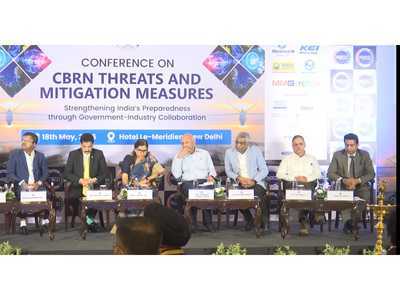
CBRN threats require faster response, stronger coordination between industry and govt: Experts at PHDCCI conference
-
Scientists discover 201km wide magma reservoir under Altiplano-Puna plateau

-
SpaceX will launch Starship V3 May 20 for NASA Artemis