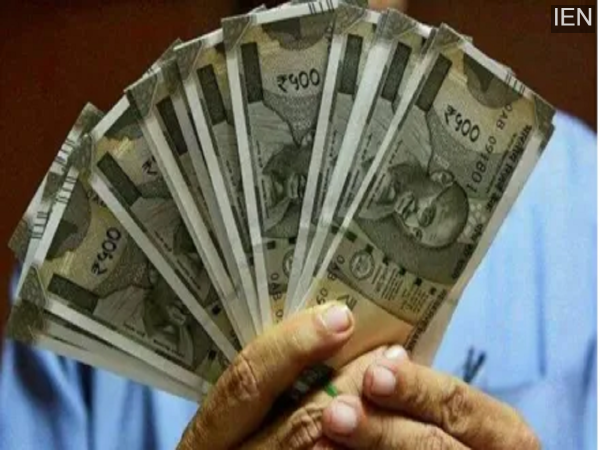
8th Pay Commission and DA News: While there is still some time before the 8th Pay Commission is constituted and its recommendations are implemented, the demands raised by employee organizations have posed a significant challenge for the government.
8th Pay Commission News Update: Major and significant news is emerging for millions of Central Government employees and pensioners. Discussions regarding the constitution of the 8th Pay Commission in the country are already gaining momentum; amidst this, however, employee organizations have put forward a specific demand to the government that has captured everyone's attention. Central Government employees are demanding that their Dearness Allowance (DA) now be directly merged into their Basic Salary.
Several major employee organizations—including the All India NPS Employees Federation (AINPSEF)—have raised this significant demand during the ongoing consultation process for the 8th Pay Commission. Employee unions argue that, given the rapid pace at which inflation has risen and the cost of living has increased over the past few years, the Dearness Allowance should no longer be provided as a separate component but should instead be integrated into the revised salary structure. Simply put, employees are now seeking a merger of the DA into their Basic Salary.
So, what exactly is the rationale behind this demand?
It is worth noting that if the government accepts this demand to merge the Dearness Allowance into the Basic Salary, it will have a direct and substantial impact on the salaries of millions of Central Government employees, their other allowances, their pensions, and their post-retirement benefits—specifically Gratuity and Provident Fund. When the Basic Salary increases, all other allowances calculated on that basis will automatically rise as well, resulting in a significant surge in the employees' take-home (in-hand) salary.
What is Dearness Allowance?
Dearness Allowance (DA) is an additional financial amount provided by the government to its employees and pensioners; it is intended to protect them from the adverse effects of rising inflation. In the market, the prices of everything—ranging from needles to medicines, as well as daily necessities and services—are constantly on the rise. To mitigate the impact of this inflation and to preserve the purchasing power—or 'buying capacity'—of employees, the government periodically revises these provisions.
What is the Current System?
Based on the country's inflation data, the Dearness Allowance (DA) is revised twice a year. The first increase typically takes effect from January, and the second from July. Currently, the Dearness Allowance received by Central Government employees is disbursed as a separate component, distinct from their 'Basic Salary.' However, employee unions now seek to overhaul this outdated system. They assert unequivocally that the time has come to integrate this allowance directly into the foundation of the Basic Salary, rather than maintaining it as a separate entity.
-
Tamil model Tabitha Marie’s natural beauty won hearts at Cannes 2026.

-
IPL 2026 Playoff Scenario: RCB qualifies, PBKS’s tension increases; DC’s victory increased excitement in the points table

-
Indian origin Aaron Roy wins PGA Championship, England’s biggest feat after 107 years

-
Travel Tips: If you have to travel with children, do not forget to keep these things in your bag, otherwise the fun of the trip will be spoiled.

-
RCB reached playoffs with a thumping win, Punjab Kings lost again in Dharamshala