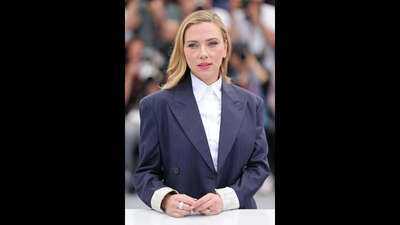
The red carpet at the Cannes Film Festival this year felt noticeably different. Not quieter exactly, but more disciplined. After years of naked dresses, chaotic maximalism, and algorithm-driven “viral fashion moments,” Cannes 2026 seemed to move towards something sharper: controlled glamour.
The dominant trend on La Croisette was structured elegance – clothes that emphasized tailoring, sculptural silhouettes, strong shoulders, corseted waists, elongated lines, and a sense of deliberate restraint. Fashion did not disappear into minimalism, but it stopped screaming for attention.
It was glamour with precision, thought and restraint.
The change was visible across celebrity appearances. Bella Hadid, long associated with sheer dresses and high-risk silhouettes, appeared in sharply cut monochrome gowns that relied more on structure than exposure. Kristen Stewart leaned into elongated silhouettes, while Alicia Vikander continued her recent shift toward commanding, statuesque dressing: clean lines, controlled draping, and sharply defined silhouettes that photographed powerfully without needing embellishment overload.The effect was striking because Cannes, historically, rewards spectacle. Yet the most memorable looks this year often relied on proportion, posture, fabric engineering, and precision tailoring rather than shock value.
Fashion critics have increasingly described this shift as a reaction against “visual fatigue.” Social media accelerated red-carpet dressing into a competition for instant virality, where dresses were designed less for physical presence and more for cropped Instagram slides and TikTok reposts. But audiences appear exhausted by constant escalation. Cannes 2026 suggested that luxury fashion may be rediscovering the value of restraint.
Part of that shift is economicIn uncertain times, fashion often moves toward forms of visible control. During periods marked by inflation, geopolitical instability, climate anxiety, and industry contraction, clothing tends to become more intentional and less chaotic. Structured glamour projects steadiness. It communicates permanence rather than novelty.
That mood was evident in the fabrics dominating Cannes this year: satin duchesse, sculpted velvet, heavy silk, metallic mesh, architectural tulle, and corsetry that created shape without looking overtly theatrical. Even when gowns were dramatic, they felt edited.
The return of couture discipline also reflects the influence of creative directors currently reshaping luxury fashion. Across major houses, designers have been slowly moving away from the hyper-online aesthetic that defined the early 2020s. Instead of meme-fashion or overt gimmick dressing, there is renewed emphasis on construction, atelier craftsmanship, and silhouette engineering.
At Cannes, this translated into gowns that moved almost like sculpture.
Why the 'clean power silhouette' became the defining lookOne of the strongest visual motifs this year was what stylists are informally calling the “clean power silhouette.” The look combines old Hollywood glamour with modern authority: fitted waists, elongated necklines, controlled drapes, sharply framed shoulders, and monochromatic palettes.
Unlike the soft romantic dressing that dominated post-pandemic fashion, this silhouette carries a certain emotional armor. It feels designed for visibility in unstable times. That is partly why actresses such as Cate Blanchett and Scarlett Johansson looked especially aligned with the moment. Their Cannes appearances relied less on trend-chasing and more on commanding shape and presence. Even younger stars leaned toward maturity rather than experimentation.
Interestingly, the trend also aligned with changing beauty aesthetics. Make-up at Cannes 2026 appeared softer, more skin-focused, and less aggressively contoured. Hair was cleaner and more controlled. The overall effect suggested a broader cultural move away from overstimulation and toward refinement.
Climate also quietly influenced the fashionThe Riviera heat has become harder to ignore in recent years, and many stylists appeared conscious of practicality. Lighter fabrics, exposed shoulders, sculpted updos, and streamlined silhouettes worked not only visually, but physically in warmer temperatures. Red-carpet fashion is increasingly adapting to environmental realities, whether openly acknowledged or not.
What made Cannes 2026 memorable was not the absence of extravagance, but the recalibration of it. The most successful looks understood that modern glamour no longer depends on excess. In an era saturated with images, precision itself has become dramatic.
The red carpet this year suggested that fashion may be entering a post-chaos phase – one where elegance is less about overwhelming the eye and more about holding attention without trying too hard. That restraint ended up looking far more powerful than the spectacle we are used to watching in the past decades.
-
A cascade of problems in Adkabail near the highway

-
Understanding Pulmonary Embolism: Risks and Prevention

-
Karnataka: OMCs assure adequate fuel stocks, urge public to avoid panic buying

-
Tories urged to deal with Reform in Makerfield by-election: 'Stand aside!'

-
'No need to preach to Udupi people': Yashpal Suvarna attacks Lakshmi Hebbalkar