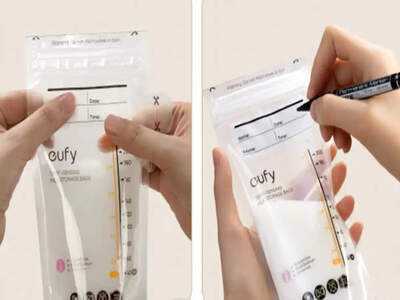
Safe Breast Milk Storage Tips: The journey of motherhood is incredibly rewarding, yet it introduces a new set of responsibilities, particularly for working mothers preparing to return to their jobs after maternity leave. A common concern for these mothers is ensuring their baby receives proper nutrition while they are at work. Pumping and storing breast milk is an effective solution.
However, new mothers often face a dilemma: should they store expressed breast milk in a regular refrigerator or a deep freezer? The guidelines and storage durations for each method vary significantly. Let’s delve into the crucial rules regarding breast milk storage that every working mother should be aware of.
Refrigerator vs. Freezer:
Both options are viable for storing breast milk, but the choice hinges on when you plan to use it:
When to Use the Refrigerator: If you intend to feed your baby within 3 to 4 days, the refrigerator is the best choice. Ensure the fridge's internal temperature is at or below 4°C. Always store the milk in the coldest section of the fridge, typically at the back, rather than in the door, where temperatures fluctuate frequently.
When to Opt for a Deep Freezer: For mothers building a long-term supply (for instance, for use in 3 to 6 months), a deep freezer is ideal. The freezer should maintain a temperature of -18°C or lower. Milk stored in a freezer retains its freshness and nutritional value for an extended period. According to health authorities, expressed breast milk can be safely stored for up to 4 days in a refrigerator and for 6 to 12 months in a deep freezer. The American Academy of Pediatrics recommends thawing frozen milk using lukewarm water and advises against using a microwave.
Five Essential Rules for Storing Breast Milk:
**Label Everything:** Always mark the date and time on the storage container or bag. Use the oldest milk first to adhere to the FIFO (First In, First Out) principle.
**Select Appropriate Containers:** Store milk in food-grade, BPA-free plastic bottles, glass containers, or specialized breast milk storage bags. Avoid regular plastic bags or household containers, as they can encourage bacterial growth.
**Consider Quantity:** Only store as much milk as your baby typically consumes in one feeding (usually between 60 to 120 milliliters). Once thawed, any leftover milk cannot be refrozen, so smaller portions help minimize waste.
**Thawing Frozen Milk Correctly:**
Never boil milk directly on the stove or heat it in a microwave, as this can destroy vital nutrients. Instead, thaw the milk by placing the bag or bottle in the refrigerator overnight or in a bowl of lukewarm water.
**Prioritize Hygiene:**
Always wash your hands thoroughly with soap before pumping. Ensure that all components of the breast pump and storage bottles are properly sterilized before use.
For working mothers, the ability to store breast milk is invaluable. It ensures that your baby receives the nutritional benefits of breast milk even when you are away, providing peace of mind. By adhering to the temperature and hygiene guidelines outlined above, you can effectively balance your personal and professional responsibilities without concern!
PC Social Media
-
A cascade of problems in Adkabail near the highway

-
Understanding Pulmonary Embolism: Risks and Prevention

-
Karnataka: OMCs assure adequate fuel stocks, urge public to avoid panic buying

-
Tories urged to deal with Reform in Makerfield by-election: 'Stand aside!'

-
'No need to preach to Udupi people': Yashpal Suvarna attacks Lakshmi Hebbalkar