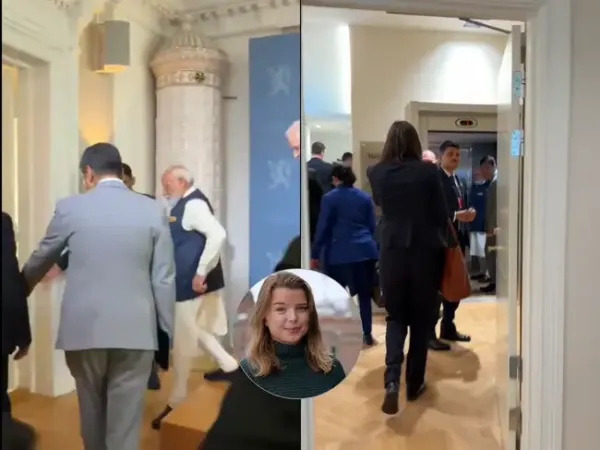
A Norwegian journalist, Helle Lyng, asked Prime Minister Narendra Modi over the absence of media questions during a joint press appearance with Norwegian Prime Minister Jonas Gahr Støre in Oslo on Monday.
Following the meeting, Lyng shared posts on X stating that she had attempted to ask questions during the press interaction but was not expecting Modi to respond. She also referred to Norway’s top ranking on the World Press Freedom Index and India’s position at 157, saying journalism requires questioning those in power.
The journalist said she later disabled comments on a video related to the interaction after Modi took questions from Indian reporters later in the day. However, she maintained that questions should have been allowed during the initial press meeting as well.
She said representatives instead referred to India’s efforts during the Covid pandemic and subjects such as yoga while responding to the questions. Lyng added that her colleague had recorded the exchanges and that the videos would likely be published later.
George said India represents one-sixth of the world’s population but does not account for one-sixth of its problems. He stated that the Indian Constitution guarantees fundamental rights and emphasised that women in India received voting rights immediately after independence in 1947.
He said India believes in equality and human rights, adding that citizens whose rights are violated have access to the courts. George also said India takes pride in being a democracy.
George further said many people fail to understand the scale of India and its media ecosystem. Referring to the country’s television news landscape, he said Delhi alone has around 200 TV channels operating in English, Hindi and multiple other languages.
He criticised what he described as reliance on reports from “ignorant NGOs” while forming opinions about India and said outsiders often lack understanding of the country’s size and complexity.
Following the meeting, Lyng shared posts on X stating that she had attempted to ask questions during the press interaction but was not expecting Modi to respond. She also referred to Norway’s top ranking on the World Press Freedom Index and India’s position at 157, saying journalism requires questioning those in power.
Journalist defends questioning during press interaction
Lyng said journalism can be confrontational and that reporters have a responsibility to seek direct answers rather than accept prepared talking points. She stated that if public figures avoid answering questions, journalists may interrupt in an effort to obtain clearer responses.The journalist said she later disabled comments on a video related to the interaction after Modi took questions from Indian reporters later in the day. However, she maintained that questions should have been allowed during the initial press meeting as well.
Journalist rejects spy allegations online
Lyng also addressed allegations circulating online about her identity and intentions. In a post, she wrote: “I never thought I would have to write this, but I am not a foreign spy of any sort, sent out by any foreign government. My work is journalism, primarily in Norway now.”Questions raised over human rights concerns
Lyng said she and a colleague had asked questions regarding why India should be trusted on human rights issues, along with queries related to the visit itself. According to her, attempts to seek specific responses on human rights concerns were unsuccessful.She said representatives instead referred to India’s efforts during the Covid pandemic and subjects such as yoga while responding to the questions. Lyng added that her colleague had recorded the exchanges and that the videos would likely be published later.
Indian envoy defends India’s democratic and media framework
Responding during a press briefing, India’s Ambassador to Japan Sibi George defended India’s democratic institutions and constitutional protections.George said India represents one-sixth of the world’s population but does not account for one-sixth of its problems. He stated that the Indian Constitution guarantees fundamental rights and emphasised that women in India received voting rights immediately after independence in 1947.
He said India believes in equality and human rights, adding that citizens whose rights are violated have access to the courts. George also said India takes pride in being a democracy.
George further said many people fail to understand the scale of India and its media ecosystem. Referring to the country’s television news landscape, he said Delhi alone has around 200 TV channels operating in English, Hindi and multiple other languages.
He criticised what he described as reliance on reports from “ignorant NGOs” while forming opinions about India and said outsiders often lack understanding of the country’s size and complexity.