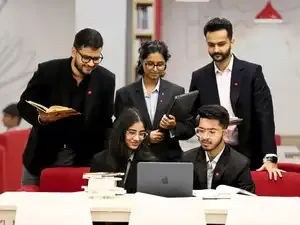
Something has shifted on Indian campuses in the past few years, and it is not subtle. The student who once measured success by the company that came to recruit on placement day is increasingly the exception. In their place is a generation that is prototyping, pitching, and building ventures while still in their second year of college. They are not waiting to graduate before they start. They are not asking whether they are ready. And the institutions that have understood this shift early are the ones producing a very different kind of graduate. Chitkara University in Chandigarh has been one of them.
Why this generation sees entrepreneurship differently
Previous generations of students grew up in an environment where building a company was something you did after a career, or instead of one if the conventional path did not work out. Risk was the word most associated with it. Entrepreneurship was for a particular kind of person, usually older or already established in some way.
Generation Z or Gen-Z has grown up watching founders their own age build companies that became household names. They have watched shows such as Shark Tank India from their hostel rooms and seen young entrepreneurs pitch ideas that went on to raise real money. They have access to tools, platforms, and communities that make the distance between an idea and a working prototype shorter than it has ever been. The psychological barrier that used to separate 'student' from 'founder' has largely dissolved.
What they need now is not permission. They need the right environment.
Engineering colleges are quietly becoming venture studios
The most forward-looking universities in India are no longer just places where students study engineering, business, or design. They are increasingly functioning as early-stage venture environments where ideas get tested, prototypes get built, and founders get their first real experience of what it means to take something from concept to market.
This shift is structural, not cosmetic. It requires incubation infrastructure, access to mentors who have actually built companies, connections to investors and industry, and a culture that treats failure as data rather than disgrace. Most universities have none of these things in any meaningful form; only a few are genuinely investing in building them.
The difference between those two categories of institution is becoming one of the more important things a prospective student, or their parents, can investigate before making a decision about where to spend four years.
What a real startup ecosystem on campus actually looks like
Numbers tell part of the story. Chitkara University has incubated over 320 startups since its inception, with a combined valuation of more than ₹750 crore. The startups it has supported have raised over ₹85 crore in external funding and created more than 3,500 jobs. This is the outcome of a system that has been carefully built over the years.
But the numbers miss the texture of what this kind of environment actually does to a student. It changes the questions they ask. A student who spends four years in a place where ventures are being built around them starts to think differently about problems. They start to see a gap in the market where they previously would have seen nothing. They develop the instinct to ask whether something can be built, not just whether it is interesting.
That instinct is what employers at product companies, consulting firms, and investment funds are increasingly looking for. The student who has tried to build something and failed is often more valuable to a hiring manager than the one who has not tried anything at all.
What the classroom-to-company pipeline looks like
ChaiNagri, founded by Chitkara University students Divam Wadhwa and Simran Singh, began as an idea tested on campus. It now has over 30 outlets across India and has generated more than ₹4 crore in revenue. Sellebration, an AI and computer vision startup incubated at Chitkara University, was named among India's Top 20 Promising Startups of 2023. Parrave Ventures, an IoT startup from the same ecosystem, raised ₹10 lakh in equity-free investment while its founders were still students.
These are not one-off stories. They are part of a pattern that emerges when a university treats entrepreneurship as a serious academic and professional discipline rather than an extracurricular activity. The student who founded ChaiNagri and the student who joined a multinational both benefited from being in an environment where building things is normal.
The mentors and the machinery behind it
Access to the right people at the right moment is often what separates an idea that goes somewhere from one that does not. Chitkara University's startup ecosystem has hosted founders and business leaders, including Ghazal Alagh of Mamaearth, Vineeta Singh of Sugar Cosmetics, Ankur Warikoo, and Srikanth Bolla, among over 200 mentors who engage with students directly. These are sessions where students get honest feedback on their ideas from people who have navigated the same problems.
Then there’s the infrastructure itself: co-working spaces, tech labs, prototyping facilities, seed funding access, and live connections to angel investors, venture funds, and government grants by the likes of the DST and the MSME ministry. Collaborations with Google for Startups, AWS Activate, NASSCOM, and TiE Global extend that network further. The Governor of Punjab recognised the ecosystem with the Pioneer Startup Ecosystem Award. The 2024 Bharat Entrepreneurship Summit gave it the Bharat Incubator Award. Recognition of this kind tends to follow sustained output rather than precede it.
EMERGENCE: where India's next founders show up
Once a year, Chitkara University hosts EMERGENCE, a student-led startup and innovation summit that brings together founders, creators, investors, and young entrepreneurs from across India. It is a platform where student founders pitch to investors, interact with entrepreneurs who have built at scale, and get exposure to the wider startup ecosystem beyond their campus. It is the kind of event that reminds students that building a company is not an abstract ambition but a practical path that people around them are already walking.
Events like this matter more than they are often given credit for. Ambition is partly contagious. Being surrounded by people who are building things, and by an institution that takes that seriously, changes what a student thinks is possible for themselves.
What this means for students choosing where to study
The question of where to study is often framed around rankings, fees, and placement records. These things matter. But they do not capture everything that a four-year university education does to a person.
An institution that has built a serious, functioning startup ecosystem changes the kind of professional its students become, whether or not those students ever start a company. The habits of thinking that come from being around entrepreneurial culture, spotting problems, testing solutions, and understanding what it takes to build something from nothing, are transferable to every career path.
Gen-Z did not invent ambition, but it’s the first generation for whom that ambition feels immediate and achievable rather than distant and improbable. The universities that have understood this and built their environments accordingly are the ones that will produce the founders, the innovators, and the problem-solvers that the next decade of India's economy actually needs. Chitkara University, ranked consistently among India's leading private universities, has made that bet deliberately. The numbers suggest it is paying off.
Disclaimer - The above content is non-editorial, and TIL hereby disclaims any and all warranties, expressed or implied, relating to it, and does not guarantee, vouch for or necessarily endorse any of the content.
Why this generation sees entrepreneurship differently
Previous generations of students grew up in an environment where building a company was something you did after a career, or instead of one if the conventional path did not work out. Risk was the word most associated with it. Entrepreneurship was for a particular kind of person, usually older or already established in some way.
Generation Z or Gen-Z has grown up watching founders their own age build companies that became household names. They have watched shows such as Shark Tank India from their hostel rooms and seen young entrepreneurs pitch ideas that went on to raise real money. They have access to tools, platforms, and communities that make the distance between an idea and a working prototype shorter than it has ever been. The psychological barrier that used to separate 'student' from 'founder' has largely dissolved.
What they need now is not permission. They need the right environment.
Engineering colleges are quietly becoming venture studios
The most forward-looking universities in India are no longer just places where students study engineering, business, or design. They are increasingly functioning as early-stage venture environments where ideas get tested, prototypes get built, and founders get their first real experience of what it means to take something from concept to market.
This shift is structural, not cosmetic. It requires incubation infrastructure, access to mentors who have actually built companies, connections to investors and industry, and a culture that treats failure as data rather than disgrace. Most universities have none of these things in any meaningful form; only a few are genuinely investing in building them.
The difference between those two categories of institution is becoming one of the more important things a prospective student, or their parents, can investigate before making a decision about where to spend four years.
What a real startup ecosystem on campus actually looks like
Numbers tell part of the story. Chitkara University has incubated over 320 startups since its inception, with a combined valuation of more than ₹750 crore. The startups it has supported have raised over ₹85 crore in external funding and created more than 3,500 jobs. This is the outcome of a system that has been carefully built over the years.
But the numbers miss the texture of what this kind of environment actually does to a student. It changes the questions they ask. A student who spends four years in a place where ventures are being built around them starts to think differently about problems. They start to see a gap in the market where they previously would have seen nothing. They develop the instinct to ask whether something can be built, not just whether it is interesting.
That instinct is what employers at product companies, consulting firms, and investment funds are increasingly looking for. The student who has tried to build something and failed is often more valuable to a hiring manager than the one who has not tried anything at all.
What the classroom-to-company pipeline looks like
ChaiNagri, founded by Chitkara University students Divam Wadhwa and Simran Singh, began as an idea tested on campus. It now has over 30 outlets across India and has generated more than ₹4 crore in revenue. Sellebration, an AI and computer vision startup incubated at Chitkara University, was named among India's Top 20 Promising Startups of 2023. Parrave Ventures, an IoT startup from the same ecosystem, raised ₹10 lakh in equity-free investment while its founders were still students.
These are not one-off stories. They are part of a pattern that emerges when a university treats entrepreneurship as a serious academic and professional discipline rather than an extracurricular activity. The student who founded ChaiNagri and the student who joined a multinational both benefited from being in an environment where building things is normal.
The mentors and the machinery behind it
Access to the right people at the right moment is often what separates an idea that goes somewhere from one that does not. Chitkara University's startup ecosystem has hosted founders and business leaders, including Ghazal Alagh of Mamaearth, Vineeta Singh of Sugar Cosmetics, Ankur Warikoo, and Srikanth Bolla, among over 200 mentors who engage with students directly. These are sessions where students get honest feedback on their ideas from people who have navigated the same problems.
Then there’s the infrastructure itself: co-working spaces, tech labs, prototyping facilities, seed funding access, and live connections to angel investors, venture funds, and government grants by the likes of the DST and the MSME ministry. Collaborations with Google for Startups, AWS Activate, NASSCOM, and TiE Global extend that network further. The Governor of Punjab recognised the ecosystem with the Pioneer Startup Ecosystem Award. The 2024 Bharat Entrepreneurship Summit gave it the Bharat Incubator Award. Recognition of this kind tends to follow sustained output rather than precede it.
EMERGENCE: where India's next founders show up
Once a year, Chitkara University hosts EMERGENCE, a student-led startup and innovation summit that brings together founders, creators, investors, and young entrepreneurs from across India. It is a platform where student founders pitch to investors, interact with entrepreneurs who have built at scale, and get exposure to the wider startup ecosystem beyond their campus. It is the kind of event that reminds students that building a company is not an abstract ambition but a practical path that people around them are already walking.
Events like this matter more than they are often given credit for. Ambition is partly contagious. Being surrounded by people who are building things, and by an institution that takes that seriously, changes what a student thinks is possible for themselves.
What this means for students choosing where to study
The question of where to study is often framed around rankings, fees, and placement records. These things matter. But they do not capture everything that a four-year university education does to a person.
An institution that has built a serious, functioning startup ecosystem changes the kind of professional its students become, whether or not those students ever start a company. The habits of thinking that come from being around entrepreneurial culture, spotting problems, testing solutions, and understanding what it takes to build something from nothing, are transferable to every career path.
Gen-Z did not invent ambition, but it’s the first generation for whom that ambition feels immediate and achievable rather than distant and improbable. The universities that have understood this and built their environments accordingly are the ones that will produce the founders, the innovators, and the problem-solvers that the next decade of India's economy actually needs. Chitkara University, ranked consistently among India's leading private universities, has made that bet deliberately. The numbers suggest it is paying off.
Disclaimer - The above content is non-editorial, and TIL hereby disclaims any and all warranties, expressed or implied, relating to it, and does not guarantee, vouch for or necessarily endorse any of the content.