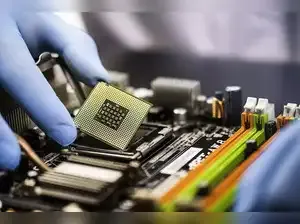
Almost four decades ago, India began semiconductor manufacturing — even before the world’s biggest chipmaker, Taiwan Semiconductor Manufacturing Company which has now become a $50 billion company. Had that early effort succeeded, India could have been at the forefront of today’s AI-driven technological revolution. But a mysterious fire and years of policy neglect derailed those ambitions.
India’s first semiconductor manufacturing unit in Mohali still manufactures chips today, but largely for strategic government applications in the space and defence sectors, using decades-old technology.
Today, TSMC commands around 72% of the global semiconductor foundry market and generates annual revenues of nearly $50 billion.
Many experts believe that had it not been for the mysterious fire that destroyed the SCL facility in 1989, India could have emerged as a global semiconductor powerhouse. To this day, it remains unclear whether the blaze was accidental or an act of sabotage. The fire severely disrupted India’s progress in chip manufacturing, and SCL operations resumed only in 1997 after years of rebuilding.
In 2010, Israel-based Tower Semiconductor helped SCL develop 180-nanometre chip technology. However, while the global semiconductor industry rapidly advanced to sub-10 nm technology, SCL remained stuck with legacy nodes.
Over nearly four decades, SCL’s achievements outside the defence and space sectors have remained limited. The organisation continued relying on 180 nm technology for years, largely due to inadequate investment and lack of sustained government focus. Like many Indian public sector units, SCL also struggled with bureaucratic inefficiencies and operational challenges.
Modern semiconductor innovation requires massive capital investments and close partnerships with global technology leaders. Over the years, SCL underwent multiple administrative changes — from the Department of Electronics in 1984 to the Department of Space in 2006, before finally being brought under the Ministry of Electronics and Information Technology (MeitY) in February 2022.
Experts have also pointed to poor capacity utilisation and inefficient functioning as major reasons behind SCL’s mounting losses. Weak marketing efforts and minimal customer support reportedly pushed the facility’s capacity utilisation to as low as 10%.
The Indian government has now announced an investment of Rs 4,500 crore to modernise and expand SCL. Reports suggest that Tata Electronics and Tower Semiconductor have been shortlisted to help revamp the Mohali facility.
According to officials from the Ministry of Electronics and Information Technology, the immediate goal is to upgrade the plant to industry-standard legacy nodes of 65 nm and 40 nm, before eventually targeting more advanced semiconductor technologies.
India’s first semiconductor manufacturing unit in Mohali still manufactures chips today, but largely for strategic government applications in the space and defence sectors, using decades-old technology.
How India’s chip dream lost momentum
The idea of setting up an indigenous chip fabrication and research facility was first proposed in 1976. The Semi-Conductor Laboratory (SCL) began manufacturing chips in 1984 at its 51-acre campus in Mohali, Punjab. Remarkably, India had its own semiconductor fabrication facility three years before TSMC was founded in Taiwan — a significant head start in a sector that now powers the global digital economy.Today, TSMC commands around 72% of the global semiconductor foundry market and generates annual revenues of nearly $50 billion.
Many experts believe that had it not been for the mysterious fire that destroyed the SCL facility in 1989, India could have emerged as a global semiconductor powerhouse. To this day, it remains unclear whether the blaze was accidental or an act of sabotage. The fire severely disrupted India’s progress in chip manufacturing, and SCL operations resumed only in 1997 after years of rebuilding.
In 2010, Israel-based Tower Semiconductor helped SCL develop 180-nanometre chip technology. However, while the global semiconductor industry rapidly advanced to sub-10 nm technology, SCL remained stuck with legacy nodes.
Over nearly four decades, SCL’s achievements outside the defence and space sectors have remained limited. The organisation continued relying on 180 nm technology for years, largely due to inadequate investment and lack of sustained government focus. Like many Indian public sector units, SCL also struggled with bureaucratic inefficiencies and operational challenges.
Modern semiconductor innovation requires massive capital investments and close partnerships with global technology leaders. Over the years, SCL underwent multiple administrative changes — from the Department of Electronics in 1984 to the Department of Space in 2006, before finally being brought under the Ministry of Electronics and Information Technology (MeitY) in February 2022.
Experts have also pointed to poor capacity utilisation and inefficient functioning as major reasons behind SCL’s mounting losses. Weak marketing efforts and minimal customer support reportedly pushed the facility’s capacity utilisation to as low as 10%.
The Indian government has now announced an investment of Rs 4,500 crore to modernise and expand SCL. Reports suggest that Tata Electronics and Tower Semiconductor have been shortlisted to help revamp the Mohali facility.
According to officials from the Ministry of Electronics and Information Technology, the immediate goal is to upgrade the plant to industry-standard legacy nodes of 65 nm and 40 nm, before eventually targeting more advanced semiconductor technologies.