New Delhi: State-run oil marketing companies (OMCs) may need to sharply raise petrol and diesel prices further if crude oil prices remain elevated amid continued disruptions in the Strait of Hormuz, according to a report by Kotak Securities.
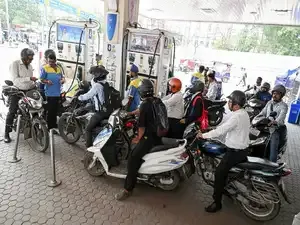
The report said that despite a recent Rs 3 per litre increase in retail fuel prices, under-recoveries for refiners are still significant and could necessitate further price revisions under multiple pricing scenarios.
"After a gap of more than four years (last hike: April 2022), OMCs implemented a modest ~Rs3/liter increase in petrol and diesel prices, starting from May 15," the report noted. However, it added that "under-recoveries likely persist at Rs8-9 bn/day, indicating further price hikes are required unless oil prices significantly cool off shortly."
According to Kotak Institutional Equities, at a delivered crude price of around 120 US dollars per barrel, the implied burden on refiners remains "elevated at Rs250-260 bn/month".
The report outlined four scenarios estimating the additional increase required in retail fuel prices in Delhi.
Under the first scenario -- trade parity pricing where windfall tax impacts only exports -- diesel prices may need to rise by Rs 37.9 per litre and petrol by Rs 28.9 per litre.
In the second scenario based on export parity pricing with windfall tax, the required increase is estimated at Rs 13.4 per litre for diesel and Rs 17.1 per litre for petrol.
The third scenario, assuming fixed normative refining margins over the Indian crude basket, suggests diesel prices may need to be raised by Rs 24.7 per litre and petrol by Rs 20.5 per litre.
Meanwhile, under a low-margin refining assumption, the required increase works out to Rs 21.1 per litre for diesel and Rs 19 per litre for petrol.
The brokerage said the latest windfall tax revision by the government was directionally more rational. Diesel export levy was cut to Rs 16.5 per litre from Rs 23 earlier, while ATF tax was reduced to Rs 16 per litre from Rs 33. Petrol, which was earlier exempt, now attracts a Rs 3 per litre levy.
"We believe the latest revision to the windfall export taxes is directionally more rational," the report said, adding that "post-tax spreads of US$20-30/bbl appear reasonable."
The report also highlighted that global crude prices have surged due to the West Asia crisis and supply disruptions through the Strait of Hormuz, pushing Brent crude to multi-year highs and worsening fuel marketing margins for Indian refiners.
The report said that despite a recent Rs 3 per litre increase in retail fuel prices, under-recoveries for refiners are still significant and could necessitate further price revisions under multiple pricing scenarios.
"After a gap of more than four years (last hike: April 2022), OMCs implemented a modest ~Rs3/liter increase in petrol and diesel prices, starting from May 15," the report noted. However, it added that "under-recoveries likely persist at Rs8-9 bn/day, indicating further price hikes are required unless oil prices significantly cool off shortly."
According to Kotak Institutional Equities, at a delivered crude price of around 120 US dollars per barrel, the implied burden on refiners remains "elevated at Rs250-260 bn/month".
The report outlined four scenarios estimating the additional increase required in retail fuel prices in Delhi.
Under the first scenario -- trade parity pricing where windfall tax impacts only exports -- diesel prices may need to rise by Rs 37.9 per litre and petrol by Rs 28.9 per litre.
In the second scenario based on export parity pricing with windfall tax, the required increase is estimated at Rs 13.4 per litre for diesel and Rs 17.1 per litre for petrol.
The third scenario, assuming fixed normative refining margins over the Indian crude basket, suggests diesel prices may need to be raised by Rs 24.7 per litre and petrol by Rs 20.5 per litre.
Meanwhile, under a low-margin refining assumption, the required increase works out to Rs 21.1 per litre for diesel and Rs 19 per litre for petrol.
The brokerage said the latest windfall tax revision by the government was directionally more rational. Diesel export levy was cut to Rs 16.5 per litre from Rs 23 earlier, while ATF tax was reduced to Rs 16 per litre from Rs 33. Petrol, which was earlier exempt, now attracts a Rs 3 per litre levy.
"We believe the latest revision to the windfall export taxes is directionally more rational," the report said, adding that "post-tax spreads of US$20-30/bbl appear reasonable."
The report also highlighted that global crude prices have surged due to the West Asia crisis and supply disruptions through the Strait of Hormuz, pushing Brent crude to multi-year highs and worsening fuel marketing margins for Indian refiners.