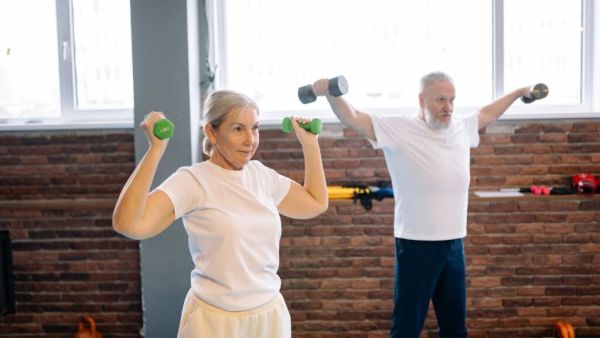
For older adults fighting loss of muscle mass, this could come as interesting news. A new study published in the journal Nutrients showed that participants in trials who took whey protein and combined it with resistance training showed notable improvements in both muscle mass and leg strength.
The meta-analysis, done jointly by the Taipei Medical University and the University of Washington, looked into data from 235 randomised controlled trials on around 21,000 participants aged between 50 and 89.
The participants were community-dwelling, institutionalised or hospitalised older adults.
The trials examined the effectiveness of various kinds of protein (whey, milk, casein, collagen, meat, soy, rice, oat, and others) combined with and separate from physical exercise (resistance training, aerobic exercise, and multicomponent training).
This is just a report on the findings of a trial, and readers are advised to start any new diet or exercise regimen only under the supervision of a qualified medical practitioner.
Whey protein is found in cow’s milk. It is rich in essential amino acids, which help your body to repair muscle fibres that are stressed during workouts. Also, it has a lot of leucine, which is an important amino acid building block.
Resistance exercise introduces a certain level of stress to muscle fibres, which triggers repair and adaptation. These muscle fibres grow when protein synthesis is greater than protein breakdown.
Protein is a vital macronutrient which is responsible for building and maintaining muscle mass. Protein is found in both plant and animal foods, but the nutrient content varies.
Those allergic to dairy or prefer a plant-based diet still get leucine from other protein-rich foods.
The body builds muscle throughout childhood, adolescence, and early adulthood. It starts to lose muscle from the age of 30, accelerating as we grow older. Around the age of 65, muscle loss accelerates, increasing the risk of falls and injuries.
Experts say that resistance training – with light weights in the gym, or with resistance bands in your room, or weighted vests while walking – is beneficial to older adults .
While general guidelines for older adults recommend strength training workouts twice a week, a performance physiologist, Mark Kovacs, was quoted by Health.com as saying three to four days a week is ideal.
-
Confirmed Absences: Players Missing From FIFA World Cup 2026 Due to Injuries

-
Mikel Arteta must focus on Arsenal’s revived Premier League title chase — even if it means letting go of Champions League dreams

-
World Cup setback: Borussia Mönchengladbach striker Haris Tabakovic suffers serious injury ahead of tournament

-
Liverpool Aim to Derail Manchester United’s Pursuit of Bournemouth Sensation Eli Junior Kroupi

-
Marcelo Reflects on Brazil’s 7-1 Defeat to Germany: ‘Losing on Home Soil Was Beyond Painful’