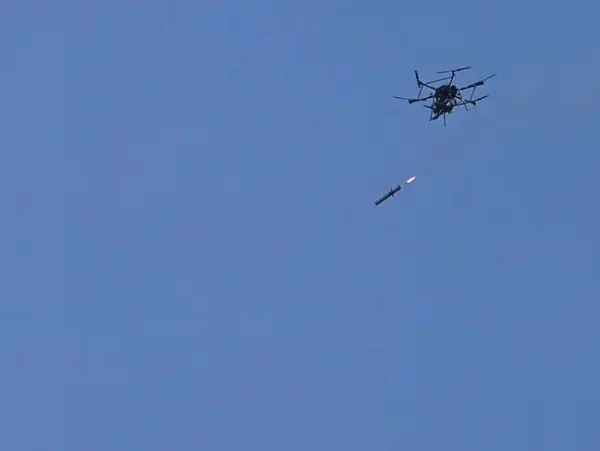
The Defence Research and Development Organisation (DRDO) has successfully completed the final deliverable configuration development trials of the Unmanned Aerial Vehicle Launched Precision Guided Missile (ULPGM)-V3 in both Air-to-Ground and Air-to-Air modes at the DRDO test range near Kurnool in Andhra Pradesh.
The trials were conducted using an integrated Ground Control System (GCS), which was used to command and control the ULPGM weapon system. DRDO said the GCS incorporates advanced technologies aimed at automating readiness and launch operations.
Also Read: Long before Tejas, how India’s indigenous fighter jet Marut met a painful death that still haunts India today
Reportedly, the indigenous fire-and-forget precision-guided missile has an extended stand-off range of up to 10 kilometres, enabling UAVs to engage targets from a safer distance. The missile was also reportedly tested for anti-tank operations in Air-to-Ground mode and against drones, helicopters and other airborne targets in Air-to-Air mode.
The missile can reportedly be configured with different warhead options depending on operational requirements. These include tandem shaped-charge warheads intended to defeat tanks fitted with Explosive Reactive Armour (ERA), penetration-cum-blast payloads for bunker-busting missions and pre-fragmentation warheads aimed at enhancing lethality against soft targets and personnel.
The ULPGM-V3 has also been described as a lightweight missile system designed for deployment from unmanned aerial vehicles.
The missile system was integrated on UAVs developed by Newspace Research and Technologies for the current trials.
The ULPGM missile was developed by Research Centre Imarat as the nodal laboratory in coordination with other DRDO facilities, including Defence Research & Development Laboratory, Terminal Ballistics Research Laboratory and High Energy Materials Research Laboratory.
DRDO stated that the missile was produced entirely through the Indian defence ecosystem with the participation of several MSMEs and other industries. The trials also confirmed the readiness of a mature domestic supply chain for immediate serial mass production.
He described the achievement as a strategic milestone towards Aatmanirbharta in the defence sector.
Also Read: ‘Indian gyms surprised me’: Ukrainian woman compares fitness culture in India and Europe
The trials were conducted using an integrated Ground Control System (GCS), which was used to command and control the ULPGM weapon system. DRDO said the GCS incorporates advanced technologies aimed at automating readiness and launch operations.
Also Read: Long before Tejas, how India’s indigenous fighter jet Marut met a painful death that still haunts India today
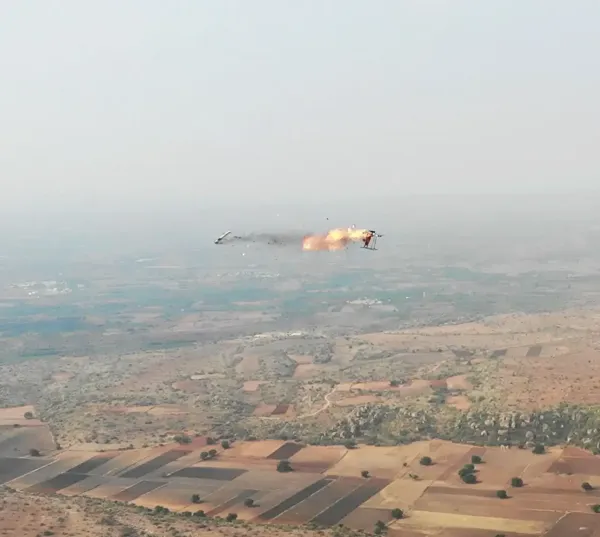
Reportedly, the indigenous fire-and-forget precision-guided missile has an extended stand-off range of up to 10 kilometres, enabling UAVs to engage targets from a safer distance. The missile was also reportedly tested for anti-tank operations in Air-to-Ground mode and against drones, helicopters and other airborne targets in Air-to-Air mode.
In image ULPGM missile is seen successfully destroying the intended target.
Missile equipped with advanced seeker and modular warheads
According to reports, the ULPGM-V3 is fitted with a high-definition dual-channel seeker designed for day-and-night operations across varied terrain conditions. The missile reportedly uses an Imaging Infrared (IIR) seeker with passive homing capability along with a two-way data link that enables real-time post-launch target updates and mid-course corrections.The missile can reportedly be configured with different warhead options depending on operational requirements. These include tandem shaped-charge warheads intended to defeat tanks fitted with Explosive Reactive Armour (ERA), penetration-cum-blast payloads for bunker-busting missions and pre-fragmentation warheads aimed at enhancing lethality against soft targets and personnel.
The ULPGM-V3 has also been described as a lightweight missile system designed for deployment from unmanned aerial vehicles.
Indigenous missile developed through domestic defence ecosystem
DRDO partnered with Bharat Dynamics Limited and Adani Defence Systems & Technologies Limited for the development and production of the missile system.The missile system was integrated on UAVs developed by Newspace Research and Technologies for the current trials.
The ULPGM missile was developed by Research Centre Imarat as the nodal laboratory in coordination with other DRDO facilities, including Defence Research & Development Laboratory, Terminal Ballistics Research Laboratory and High Energy Materials Research Laboratory.
DRDO stated that the missile was produced entirely through the Indian defence ecosystem with the participation of several MSMEs and other industries. The trials also confirmed the readiness of a mature domestic supply chain for immediate serial mass production.
Rajnath Singh calls it a strategic milestone
Rajnath Singh congratulated DRDO, public sector undertakings, defence production partners and industry stakeholders for the successful trials of the ULPGM-V3 in both anti-tank and airborne target engagement roles.He described the achievement as a strategic milestone towards Aatmanirbharta in the defence sector.
Also Read: ‘Indian gyms surprised me’: Ukrainian woman compares fitness culture in India and Europe