Your phone is getting more expensive because AI is stealing its memory chips. That is not a metaphor. The same DRAM that stores your photos, runs your apps, and keeps a dozen browser tabs alive is now the lifeblood of the AI data centres being built at unprecedented speed by Google, Microsoft, Meta, and Amazon. And those data centres are winning the bidding war — every time.
Akis Evangelidis, co-founder and President of Nothing in India, puts the consequence in a single number. A memory chip that cost $20 inside a mid-range smartphone a year ago now costs over $100. In some configurations, $120. That one line item — one component among dozens — has quietly collapsed the economics of affordable Android phones. And for India, where the Rs 15,000–Rs 30,000 segment is the backbone of the market, the pain is only getting started.
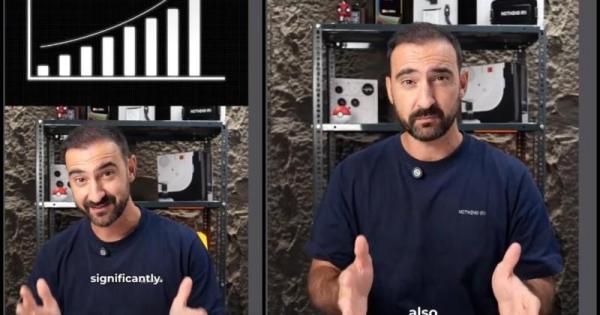
“Surge in demand for those memory chips is not slowing down anytime soon and actually we foresee that trend to sustain until at least the second half of next year. And what that means it’s even smartphones that have been launched the prices for those smartphones will keep on increasing most likely every quarter. So this is why the best time to buy a smartphone was actually yesterday,” Evangelidis said in a video.
How One Chip Breaks a Rs 20,000 Phone
To understand the damage, you need to understand how a smartphone is priced. A phone designed to retail at around $400 is built to a bill of materials — the raw cost of every component — of roughly $200. Within that budget, memory was historically a manageable 15–20 per cent. Now it has reached a point where memory cost and the rest of the bill of materials are almost equal — effectively 50-50, according to Sumit Singh, SVP and Product Head at Lava International.
That single shift cascades through every other decision. The camera sensor gets downgraded. The battery shrinks. The chipset gets swapped for something cheaper. The consumer pays the same — or more — and gets less. In the earlier scenario, above $150 was mostly 5G. Now that threshold has moved higher, effectively pushing 5G connectivity into a less accessible price band.
The cause is structural, not cyclical. The three dominant memory makers — Samsung, SK Hynix, and Micron — have systematically reallocated manufacturing capacity toward high-bandwidth memory chips used in AI data centres, leaving consumer-grade DRAM and NAND flash in critically short supply. This is not a temporary mismatch. It is a permanent, strategic reallocation of the world’s silicon wafer capacity. Alphabet, Amazon, Meta, and Microsoft together are on track to spend $650 billion on AI computing infrastructure in 2026 alone. Smartphone makers are not in that queue.
The Death of the Discount
For a decade, Indian consumers operated on a reliable rhythm: hold off after launch, wait for the festival sale, let the successor model push last year’s phone into a lower bracket. That logic is now broken.
The Samsung Galaxy M36 5G launched in June 2025 at Rs 17,499 and is now Rs 20,999. The OnePlus 15R launched at Rs 47,999 and is now Rs 50,499. The Vivo V70 has gone from Rs 45,999 to Rs 49,999. Nothing’s own Phone 3a Lite has moved up since launch. These are not new models replacing old ones. These are prices on existing, already-launched devices — going up, quietly, quarter by quarter.

Memory prices could rise a further 40 per cent through Q2 2026, pushing bill-of-materials costs up by as much as 15 per cent above already elevated levels, according to Counterpoint Research. DRAM prices rose 172 per cent throughout 2025, prompting Samsung to halt new DDR5 orders to reassess pricing structures. Even with new fabrication plants under construction, meaningful additional output is not expected until 2027.
India’s Particular Exposure
No large smartphone market is more vulnerable to this shift than India. A large sect of Indian consumers typically purchases smartphones priced between Rs 15,000 and Rs 30,000—precisely the segment under the most acute pressure. Even modest price increases here could delay purchasing decisions and slow overall market growth.
The irony is that India’s own ambitions — to become a global data centre hub, to lead on AI infrastructure — are structurally contributing to the same demand surge squeezing its consumers. The shortage and rising prices will have a domino effect across the country’s consumer electronics market.
Nothing’s response has been to manufacture locally — a $100 million joint venture with Optiemus, a CMF subsidiary headquartered in India — betting that domestic production buffers some of the cost volatility that pure import-reliant brands cannot absorb. But no amount of localisation insulates a brand from a global shortage in a component nobody in India makes.
The Honest Advice
Evangelidis is measured about what consumers should do. But the arithmetic is unambiguous. With the global memory shortage expected to continue into 2027 and rupee depreciation adding further cost pressure, consumers considering an upgrade may find better value in purchasing sooner, as pricing pressures are expected to intensify over the coming quarters. Rising prices are also expected to drive demand for refurbished devices as consumers hold onto older phones for longer.
The specs race that defined a decade of Indian smartphone launches is, for now, over. What has replaced it is a price race — upward, sustained, and powered by the same AI revolution that was supposed to make everything better and cheaper.
The best time to buy your smartphone was yesterday. The second-best time is today.
-
Assisted dying bill could make roaring return as MPs enter ballot to bring it back

-
Rachel Reeves slapped down by M&S boss over 'preposterous' supermarket price cap plans

-
UK radio station announces King Charles death before issuing huge apology

-
GRSE launches Next Generation Offshore Patrol Vessel 'Sanghamitra'

-
Nagaland: Jitan Ram Manjhi calls for effective implementation of MSME schemes