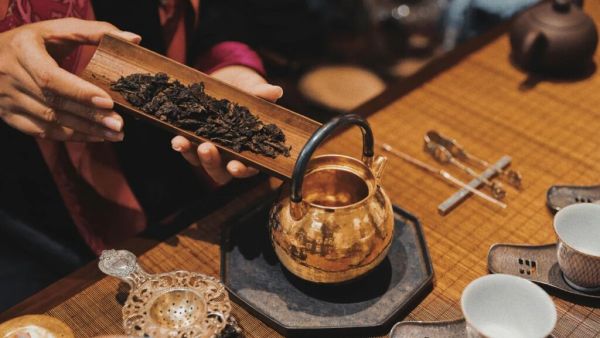
If there is one drink that can start a conversation, solve a problem, comfort on a bad day, and instantly make Indians feel at home, it is chai. But here’s the twist: tea was not born in India. It actually originated in ancient China, long before it reached Indian kitchens and became everyone’s favorite drink.
China Gave The World Its First Sip Of Tea
The story of tea begins nearly 5,000 years ago in the mountains of China’s Yunnan province. According to an ancient Chinese legend, Emperor Shen Nong was sitting under a tree while his drinking water boiled nearby. A few leaves from the tree drifted into the water. Curious, he tasted it and was amazed by its refreshing flavor and energizing effect. That accidental sip is believed to be the world’s first cup of tea.
For centuries after that, tea in China was not just a drink but also considered medicine. Ancient Chinese people believed tea could sharpen the mind, improve digestion, and restore energy. It slowly became a part of daily life and later evolved into an art form. In China, tea is often enjoyed pure, without milk or sugar, so drinkers can appreciate the natural flavors of the leaves.
How Tea Reached The Rest Of The World And India
Photo: Pexels
Tea eventually traveled to Europe through Chinese traders, and by the 17th century, the British had fallen in love with it. There was just one problem. China controlled the tea trade, and Britain wanted to break that monopoly. That is what brought tea to India in a big way.
The British East India Company first tried planting Chinese tea seeds in India, but the real breakthrough came when wild tea plants were discovered growing naturally in Assam. This variety was different from Chinese tea plants. The leaves were larger and produced a much stronger, bolder flavour. It was perfect for making black tea, which quickly became a commercial success.
Massive tea plantations soon spread across Assam, Darjeeling, Nilgiris, and other parts of India. Ironically, most of this tea was initially grown for export, and Indians themselves were not big tea drinkers. It was only in the 20th century, after major tea promotion campaigns, that tea became a household staple across India.
And then India transformed tea completely. While the Chinese preferred tea in its pure form, Indians added milk, sugar, ginger, cardamom, cloves, and spices. What emerged was masala chai, a drink that was richer, stronger, and bursting with flavour.
Chinese Tea vs Indian Tea: What’s The Difference?
Chinese tea is delicate, subtle, and often floral or earthy, meant to be slowly appreciated. Indian tea is bold, malty, and full-bodied, made to wake you up and warm your soul instantly.
Even the way they are enjoyed is different. In China, tea is often about silence and reflection. In India, tea is about conversation and tea snacks. It is shared during family gossip, office breaks, train journeys, and late-night chats.
Tea may have been born in China, but India gave it a new personality. So the next time you hold a hot cup of chai in your hands, remember that you are sipping on a story that began thousands of years ago in ancient Chinese mountains.
-
NEET-UG Re-Exam: Union Minister Dharmendra Pradhan Holds High-Level Security Meeting, Orders Crackdown On Fake Telegram Channels

-
Full TNT Sports Line-up for the Europa League Final Between Aston Villa and Freiburg in Istanbul

-
How Bristol City Cost Nikita Haikin His World Cup Spot

-
Neymar moved to tears during Brazil’s national anthem ahead of Santos match as World Cup squad decision nears

-
Angkrish Raghuvanshi Ruled Out After Injury, KKR Bring In Tejasvi Dahiya Makes Debut As Concussion Sub