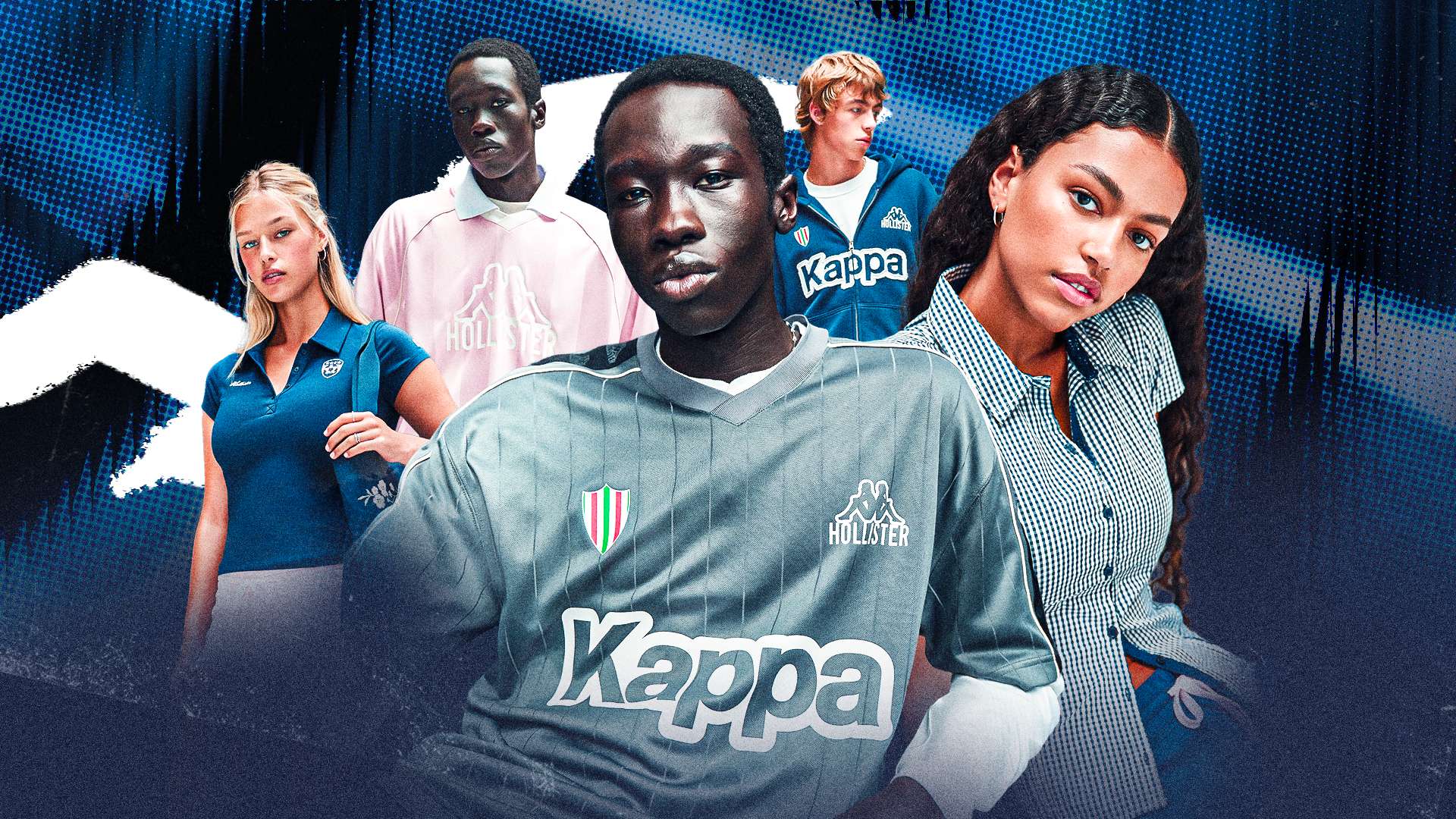
As excitement builds ahead of the World Cup, Hollister and Kappa are bringing football flair into the world of youth fashion. GOAL spoke with Corey Robinson from Abercrombie & Fitch Co. to explore the collaboration and its cultural significance.
Even though the World Cup is still a few months away, football’s growing cultural influence across the United States is already evident.
This summer, Hollister – the Abercrombie & Fitch Co.-owned brand known for denim, fleece, swimwear, and California-inspired casualwear – has partnered with Kappa to launch a football-themed collection. The lineup features jerseys, track jackets, shorts, and easy-to-wear match-day looks that appeal even to those who are not lifelong fans.
At first, Hollister and the FIFA Men’s World Cup might not seem like an obvious combination. But that’s precisely the point. Football in the U.S. is evolving beyond stadiums, supporter pubs, and replica kits. It’s finding expression through fashion, music, travel, and youth culture. Brands outside the traditional football sphere are quickly moving to capture that energy.
The real question isn’t whether Hollister has turned into a football brand overnight – it’s what it says about the sport’s rising cultural power that a lifestyle brand like Hollister sees an opportunity in it.
GOAL caught up with Corey Robinson, Chief Product Officer at Abercrombie & Fitch Co., to understand why Hollister chose this moment for its Kappa collaboration, how it views football’s momentum in the U.S., and why the World Cup is becoming as much a cultural occasion as an athletic one.
‘The pieces feel authentic to the game’
According to Robinson, the collection was inspired by Hollister’s own customers and their growing fascination with football and its surrounding culture. Kappa was a natural partner due to its deep roots in sportswear and its longstanding connection with football.
“Hollister has been merging sport and style through collegiate football, F1, and soccer,” Robinson told GOAL. “This partnership gave us the chance to design a capsule that brings together Kappa’s European sportswear legacy and Hollister’s fashion-forward aesthetic. The result is a collection that feels true to the sport yet relevant for daily wear.”
‘We’re embracing football as a lifestyle’
While athletes have always influenced fashion, the trend of tunnel looks, courtside fits, and pre-match arrivals has turned sports into style showcases. Around major football tournaments, that influence extends beyond athletes and coaches to fans who want to express themselves through what they wear.
That’s the space Hollister and Kappa are targeting. The collection focuses less on traditional fanwear and more on the lifestyle that surrounds football – watch parties, travel, and everything that defines a football-filled summer.
“Hollister wants to establish itself as a brand that genuinely understands the culture around the sport and helps customers elevate their World Cup experience,” Robinson said.
Kappa’s presence lends Hollister instant credibility, blending decades of football heritage with Hollister’s everyday fashion appeal. The collaboration is designed to feel genuine – not like a costume for fans, but like clothing people naturally want to wear.
“We’re leaning into football as a lifestyle, not just a sport,” Robinson added. “Our aim is to help Gen Z enjoy match days, watch parties, travel, and the broader cultural excitement in a way that still feels very Hollister – effortless, fun, and ready for real life.”
How fashion labels are joining the game
“Fashion brands are increasingly viewing global sporting events as cultural stages as much as athletic ones,” Robinson observed. “There’s a rise in collaborations and exclusive collections that reflect fan identity as much as performance on the pitch.”
This is where the Hollister x Kappa collection positions itself. Wearing your favourite player’s jersey during a match remains meaningful, but many fans now want to express their passion differently, especially during a tournament as big as the World Cup.
Supporting the game can take many forms – from buying tickets and hosting watch parties to planning football-themed trips. Fashion has become another channel for fans to connect with the sport’s energy and culture. Hollister and Kappa aim to capture that through pieces that align with football’s essence without being limited to the stadium.
“For us, the appeal lies where authentic football references meet everyday fashion – where a jersey, track jacket, or shorts can move seamlessly from the stands to the street,” Robinson said.
Can Hollister turn shoppers into football fans?
Whether someone is deeply invested in the FIFA Men’s World Cup or simply enjoys the look of a colourful jersey, that’s the space Hollister wants to occupy. The collection isn’t about converting everyone into a hardcore football supporter. Instead, it recognises that the culture surrounding the sport – the gatherings, travel, fashion, and shared experiences – can draw people in naturally.
“The collection is designed to resonate with those who already love football, showing nods to the sport’s culture and Kappa’s legacy,” Robinson explained. “But it’s also made so any Hollister shopper can wear it just because they like the colour, fit, or vibe.”
That might be the clearest reflection of football’s growing influence ahead of the World Cup. The sport no longer needs to be confined to traditional fanwear. It can thrive through a jersey, a track jacket, a pair of shorts, or even a relaxed jort summer – and for brands like Hollister, that is exactly where the opportunity lies.
-
Join the GOAL Community for Exclusive Football Insights

-
New York City Mayor Zohran Mamdani Introduces $50 World Cup Tickets After In-Depth Talks with FIFA

-
Cristiano Ronaldo moved to tears before leading Al-Nassr’s drum celebration after clinching first Saudi Pro League title

-
Financial Horoscope Today, May 22, 2026: Aries Will Focus on Financial Matters, Check What’s in Store for Other Signs

-
Manchester United may challenge Liverpool for Juventus defender Gleison Bremer worth £50 million