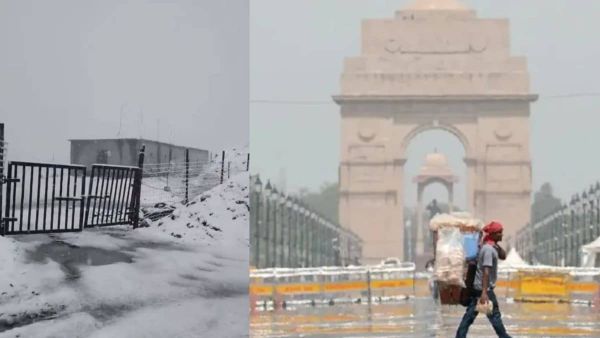
New Delhi: While large parts of India continue to reel under an intense heatwave with temperatures touching 42°C to 47°C, an unusual weather spectacle unfolded in the mountains of Jammu and Kashmir after fresh snowfall blanketed the Zojila region in late May.
On Thursday, May 21, fresh snow near Minamarg transformed the usually dry mountain stretch into a stunning white landscape, surprising travellers and locals alike. The dramatic contrast between snow-covered mountains and sweltering plains below once again highlighted India’s increasingly erratic weather patterns.
Fresh snowfall at zero point Zojila
— All About Kashmir (@wakashmir) May 21, 2026
Date:- 21 May 2026
Video by : Aijaz khan pic.twitter.com/DzDiucUPib
The Zojila Pass, which connects Kashmir to Ladakh, typically witnesses snow melting during May as roads gradually reopen for smoother travel ahead of the tourist season.
However, fresh snowfall at this time of the year is considered unusual. Visuals from the area showed roads, mountains and nearby stretches covered in snow despite it being peak summer season across most parts of the country.
The sudden weather shift also brought chilly conditions back to the higher Himalayan region just as northern and central India continue battling severe heatwave conditions.
Why is It Snowing in May?
The unseasonal snowfall may have been triggered by active Western Disturbances interacting with cold mountain air over the Himalayas.
Western Disturbances are moisture-carrying weather systems that travel from the Mediterranean region towards the Indian subcontinent. When these systems collide with cold air in mountainous regions, they often lead to snowfall in higher altitudes and rainfall or thunderstorms in the plains.
While such systems are common during winter and early spring, snowfall in late May is relatively rare and reflects increasingly unpredictable weather behaviour.
Delhi Baking Under Orange Alert as Power Demand Soars
The national capital recorded its first official heatwave day of the month on Tuesday, driven by blistering sunshine and dry winds.
On Wednesday, the IMD upgraded Delhi's warning level from a yellow to an orange alert, a status expected to last for the next five days. Daytime temperatures this week are unlikely to dip below 43°C, with the mercury hovering between 44°C and 45°C, and isolated pockets bracing for a scorching 46°C.
This extreme weather has pushed infrastructure to its limits. Delhi’s peak power demand hit a fresh summer high of 7,776 MW at 3:30 pm on Tuesday, surpassing the previous day's peak of 7,600 MW. Furthermore, the heat has worsened air quality. Delhi's Air Quality Index (AQI) slipped into the 'poor' category at 336 on Tuesday, prompting the Commission for Air Quality Management (CAQM) to activate Stage 1 of the Graded Response Action Plan (GRAP).
While the AQI improved slightly to a 'moderate' 177 by Wednesday morning, nighttime offers little comfort. Minimum temperatures remain well above average, with Safdarjung recording 28.3°C (1.8 notches above normal) and Palam reaching 28.5°C.
Behind the Heat: Climate Factors and the Threat of a "Super El Niño"
While April and May are traditionally India's hottest months due to intense solar radiation and low-pressure systems over Rajasthan and Pakistan, scientists warn that global climate drivers are severely amplifying this corridor of heat. Specifically, attention is turning to the likely development of El Niño conditions in the Pacific Ocean, which the IMD has flagged for 2026.
Characterized by the warming of sea surface temperatures in the central and eastern Pacific, El Niño disrupts global atmospheric circulation. For India, it historically translates to weaker monsoons, drought-like conditions, and severe pre-monsoon heat waves, as seen in 1987, 2002, 2009, and 2015. The World Meteorological Organisation estimates a 62% to 80% probability of El Niño establishing itself between May and August.
How to Stay Safe: The IMD Health Advisory
An orange alert serves as an explicit warning to be prepared for health risks. While current temperatures present a moderate health concern for the general public, they pose a high risk of heat-related illnesses for vulnerable groups, including infants, the elderly, and individuals with chronic medical conditions.
To combat these risks, the IMD has issued a public safety directive: "Heatwave preparedness is essential during extreme temperatures! Take preventive measures by staying hydrated, keeping cool, avoiding stale food, protecting vulnerable groups, and caring for animals. Children, elderly people and outdoor workers require extra care during intense heat conditions."
The weather office recommends the following immediate protective actions:
- Avoid direct heat exposure during peak afternoon hours.
- Wear lightweight, light-colored, loose cotton clothing.
- Cover your head using a cloth, hat, or umbrella when outdoors.
- Drink sufficient water as frequently as possible, even if you do not feel thirsty, and consume water-rich fruits.
- Keep functioning fire extinguishers inside homes and vehicles as a precaution against heat-induced electrical fires.
-
Printer Tips: People Are Still Making Mistakes When Buying Printers in 2026—How to Choose the Right Printer Based on Your Needs?

-
Airtel: No network tensions! Airtel launches India's first 5G slicing service..

-
Delhi to Get New Direct Train Services for These Cities; Check Route, Timings, and Full Schedule
-
Money Saving Tips: Amidst Rising Inflation, Discover 6 Easy Ways to Save Your Earnings—These Tips Will Prove Invaluable

-
Personal Loan Alert: Mismatch Between ITR and Bank Statement Could Lead to Rejection—Know the Rules