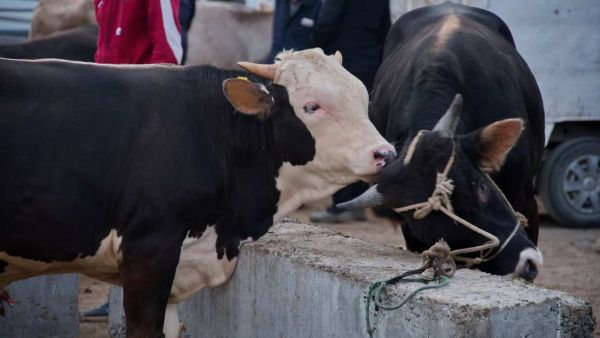
Kolkata: The Calcutta High Court on Thursday, May 21, reserved its order on a batch of petitions challenging a West Bengal government notification that restricts cattle slaughter ahead of Eid ul-Adha, with the festival falling on May 28.
A division bench of Chief Justice Sujoy Paul and Justice Partha Sarathi Sen heard arguments from multiple parties before reserving the verdict.
The notification, issued under the West Bengal Animal Slaughter Control Act, 1950, requires a “fit certificate” from veterinary authorities before slaughter of bulls, bullocks, cows, calves and buffaloes. Only animals above 14 years of age or those permanently incapacitated qualify under the new rules.

Religious practice vs state regulation
Among the petitioners is Trinamool Congress’ MP Mahua Moitra. Senior advocate Shadan Farasat, appearing for her, argued that the 1950 Act itself permits exemptions for religious sacrifice and that the state was obligated to grant one. He said Islamic tradition requires a healthy animal for qurbani, which was the very category the notification now restricted.
Farasat also cited economic hardship, noting that a larger animal can cover seven people for sacrifice, making it the only affordable option for many families, a point that was previously acknowledged by the Supreme Court.
‘Act outdated, impractical’
Senior advocate Bikash Bhattacharya, appearing for another petitioner, argued the 1950 Act had fallen into disuse for decades and invoked the doctrine of desuetude – that laws long abandoned lose their enforceability. He also flagged practical absurdities in the Act, including a Rs 1 non-judicial stamp fee per animal that no longer exists in circulation, and said designated slaughterhouses required under the Act were largely non-existent across Bengal.
He further argued the 15-day appeal window was effectively nullified since the notification was issued on May 13, leaving no time before the festival.
Additional Solicitor General Ashoke Chakrabarti, appearing for the Union of India, submitted that animal sacrifice on Bakrid was an “optional” religious practice and not protected under Article 21. He said the notification flows from an unchallenged High Court order.
Counsel for the State of West Bengal maintained the notification was issued in compliance with a court directive and that no applicant had yet applied for a slaughter certificate.
The court will pronounce its order shortly.
-
Hey Jonas!’: Jonas brothers unveil their official podcast

-
To enhance the taste of semolina halwa, mix these 3 special things, everyone will ask for the recipe…
-
Your Body Is Probably Rejecting Your Job If 8 Things Start Happening On Work Days

-
3 Zodiac Signs Attract Financial Success During The Week Of May 25 – 31, 2026

-
5 Tools From Lowe’s Buyers Say Are Worth The Hefty Price