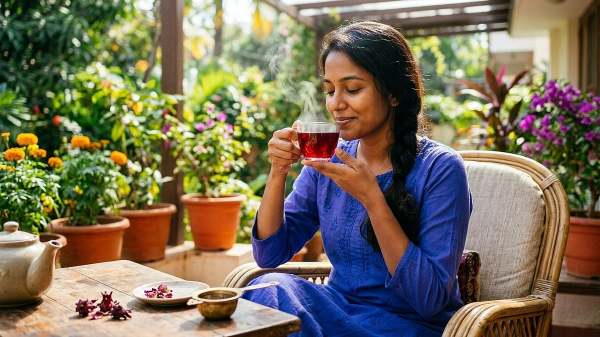
From rose to lavender, caffeine-free floral teas rooted in centuries-old traditions are becoming the new wellness obsession for stress relief, better sleep, and mindful living
The first sip of flower tea is rarely about taste alone. Before the aroma reaches your tongue, it settles into the senses. Across centuries and cultures, flower infused teas have existed not merely as beverages but as rituals of pause, healing, and meditation.
Long before cafes and herbal infusions became modern trends, the art of brewing flowers was deeply woven into Asian spiritual traditions. In the tea house of ancient China during the Tang Dynasty (618-907 CE), floral infusions were prized for their fragrance, medicinal properties, and calming effect on the mind. Buddhist monks often incorporated aromatic teas into medicinal practices, believing that inhaling fragrant stream and slowly sipping botanical infusions heightened awareness, steadied breathing, and improved meditative focus.
Today, as India is increasingly embracing mindful living and holistic wellness, flower teas are quietly returning not as novelty drinks, but as gentle ritual rooted in slowness and sensory comfort.
Ritual of infusions
-
BTSC Food Analyst Vacancy 2026: Applications for Food Analyst Posts Begin Today—An Opportunity for Graduates..

-
Warning: Did you also receive an email containing a 'Microsoft Recovery Code'? A single mistake could lead to your account being hacked..

-
Railway Recruitment 2026: Applications Open for 1,079 Apprentice Posts in South East Central Railway; 10th Pass and ITI Holders Can Apply..

-
Loan Tips: Before taking out an MSME bank loan, be sure to review the Key Fact Sheet..

-
RRB Technician Recruitment 2026: Registration for 6565 Technician posts will start from this date..