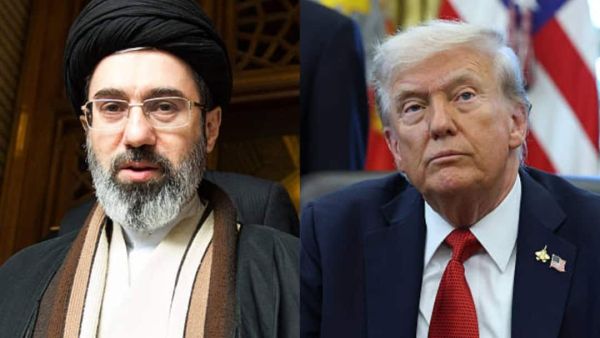
The United States and Iran continued to hold sharply differing positions on Tehran’s uranium stockpile and its control over the Strait of Hormuz on Thursday, although officials on both sides acknowledged that recent diplomatic contacts had yielded limited progress.
US Secretary of State Marco Rubio said there had been “some good signs” emerging from the talks, while cautioning against excessive optimism as negotiations continued, Reuters reported.
“There’s some good signs,” Rubio told reporters. “I don’t want to be overly optimistic ... So, let’s see what happens over the next few days.”
The remarks came as US President Donald Trump reiterated Washington’s intention to ultimately seize Iran’s highly enriched uranium stockpile, which the US believes could be used for developing nuclear weapons. Tehran has consistently maintained that its nuclear activities are solely for peaceful purposes.
“We will get it. We don’t need it, we don’t want it. We’ll probably destroy it after we get it, but we’re not going to let them have it,” Trump said at the White House.
Strait Of Hormuz Remains Central Dispute
Rubio also warned that any Iranian attempt to impose fees or restrictions on passage through the Strait of Hormuz would undermine diplomatic efforts and destabilise global trade.
“It would make a diplomatic deal unfeasible if they were to continue to pursue that. So it’s a threat to the world if they were trying to do that, and it’s completely illegal,” Rubio said.
Trump similarly criticised Tehran’s proposal to levy charges on vessels passing through the strategic waterway, through which nearly one-fifth of global oil and gas supplies moved before the conflict erupted earlier this year.
“We want it open, we want it free. We don’t want tolls,” Trump said. “It’s an international waterway.”
Iran, however, has continued to assert sovereignty claims over the strait. Tehran’s deputy foreign minister on Thursday again defended Iran’s position regarding control over the passage.
According to Iranian state media, authorities were considering reopening the strait to countries deemed friendly and willing to comply with Iranian conditions, potentially including transit fees.
Gaps Narrowed, But No Breakthrough Yet
A senior Iranian source told Reuters that although no formal agreement had been reached, negotiations had narrowed differences between the two sides. The source identified uranium enrichment and the Strait of Hormuz as the principal unresolved issues.
Two senior Iranian officials separately told Reuters before Trump’s remarks that Iran’s Supreme Leader Ayatollah Mojtaba Khamenei had directed that the country’s uranium stockpile should not be transferred abroad.
Trump has repeatedly warned that the United States is prepared to resume military strikes against Iran if negotiations fail to produce what he described as the “right answers” from Tehran’s leadership.
Iran’s Revolutionary Guards responded by warning that renewed attacks would trigger retaliatory actions extending beyond the region.
Mediation Efforts Continue
Diplomatic efforts aimed at ending the conflict have shown limited visible progress since a fragile ceasefire took hold six weeks ago.
Pakistan Army Chief Asim Munir was expected to travel to Tehran for further mediation efforts, Reuters reported citing sources familiar with the negotiations.
“We’re speaking to all the various groups in Iran to streamline communication and so things pick up pace,” one source familiar with the talks said. “Trump’s patience running thin is a concern, but we’re working on the pace at which messages are relayed from each side.”
Earlier this week, Pakistani Interior Minister Syed Mohsin Naqvi visited Tehran for the second time in a week, carrying a message from Washington, according to Iran’s semi-official ISNA news agency.
During the visit, Naqvi met Iranian President Masoud Pezeshkian, Foreign Minister Abbas Araqchi and other senior officials.
Energy Markets Under Pressure
The prolonged impasse has continued to rattle global energy markets amid fears of supply disruptions in the Middle East.
The International Energy Agency warned on Thursday that the conflict had triggered the world’s most severe energy shock in recent years.
The agency cautioned that peak summer demand combined with constrained Middle Eastern supply could push energy markets into a “red zone” during July and August.
Shipping traffic through the Strait of Hormuz remains sharply below pre-war levels. Iranian state media outlet IRNA reported that only 31 ships transited the strait over the previous 24 hours under coordination with the Iranian navy, compared with the 125 to 140 daily passages recorded before the conflict.
Broader Strategic Objectives
Trump and Israeli Prime Minister Benjamin Netanyahu have said their objectives include curbing Iran’s support for regional proxy groups, dismantling its nuclear programme and missile capabilities, and weakening the Iranian leadership domestically.
Despite months of conflict and sanctions pressure, Iran is believed to have retained its stockpile of near-weapons-grade uranium as well as its capacity to project military influence through missiles, drones and allied militias across the region.
-
Pisces Tarot Horoscope Today, May 22, 2026: Progress wisely and achieve more milestones

-
Scorpio Tarot Horoscope Today, May 22, 2026: Stay careful in dealings and keep things steady

-
Aries Tarot Horoscope Today, May 22, 2026: Energy and prestige will rise, focus on collaboration and respect

-
Career Horoscope Today, May 22, 2026: Pisces Should Stay Focused, See What’s in Store for Your Sign

-
Taurus Tarot Horoscope Today, May 22, 2026: Stay Confident and Earn Respect