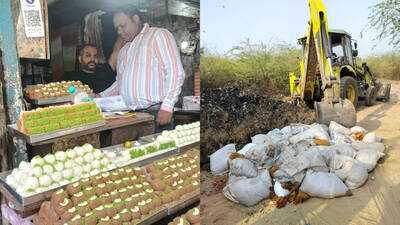
When it comes to bhog or prasad offered to deities, we often trust the sweets shop near the temples to provide us with clean and hygienic foods. But, have you ever thought about how hygienic or clean those prasad and prasad boxes could be? According to a recent report, the Food Safety Department destroyed almost 200 kg of pedas near the famous Shri Banke Bihari Temple in Vrindavan. Scroll down to read the details.
In a major inspection drive to ensure safe food for devotees and visitors during the ongoing Purushottam Mas (Adhikmas), food officials raided across the Mathura district following directions from the District Magistrate and under the supervision of the Chief Food Safety Officer. And according to the X post, during the inspection, they found several shopkeepers selling and storing pedas and other sweets in open and unhygienic conditions. Officials also noted that many establishments failed to display mandatory price lists for customers. The FSSAI officials reportedly found that around 200 kilograms of pedas were packed inside contaminated plastic sacks and kept in unsanitary surroundings, raising concerns over food safety standards in one of the city's busiest religious zones. Following the inspection, the pedas were destroyed.
How to check purity of peda
Check the Texture and Smell: To begin with start with mashing a small portion of peda in your hand. If it is pure, it will have a soft, slightly grainy texture with a natural milk aroma. And if it smells too artificial, overly sweet, or chemical-like, then there are chances it may contain synthetic flavoring or poor-quality ingredients.
Test in Warm Water: For this one, take a small piece of peda and place it in warm water. If it is pure and made with unadulterated ingredients, it will dissolve slowly and evenly. If it leaves excessive residue, artificial color, or separates unnaturally, then there is a high probability of adulterants.
Observe the Color: According to food experts, traditional peda has a natural cream, yellowish, or light brown color depending on how it is prepared. If it is very bright or has uniform colors, it may indicate the use of artificial food coloring.
How to make Vrindavan-style Peda at home
Ingredients: 2 cups milk powder, 1 cup condensed milk, 2 tbsp ghee, ½ tsp cardamom powder, chopped pistachios or almonds for garnish
Method: To begin with, heat ghee in a non-stick pan on low flame. Once the ghee melts, add condensed milk and milk powder, then mix continuously to avoid lumps. Keep stirring the mixture for 5–7 minutes until it thickens and starts leaving the sides of the pan. Next, add cardamom powder and mix well. Once it is all mixed well, allow the mixture to cool slightly. Grease your palms with a little ghee, take small portions, and roll them into smooth balls. Flatten them gently to give the traditional peda shape. Top the pedas with chopped nuts and let them cool completely. Store in an airtight jar.
-
Cockroach Janata Party has an opposition; Oggy Janata Party vows to expose CJP founder Abhijeet Dipke

-
BPSSC Recruitment 2026: Bihar Police Wireless Department Opens New Vacancies; Diploma Holders Eligible to Apply

-
Second phase of Indiramma Housing, pensions to roll out from June 2: Seethakka
-
'We only have ourselves to blame for where we are' - Ricky Ponting laments missed opportunities ahead of clash vs LSG

-
Things to keep in mind while going to the gym in summer