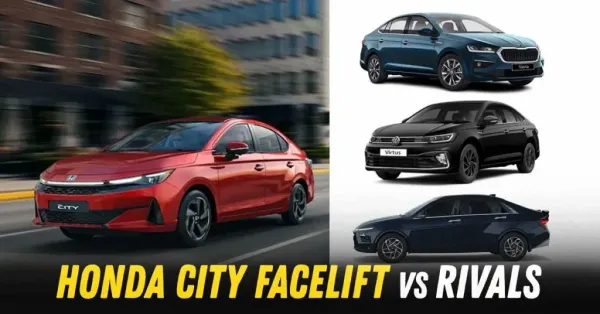
The newly launched 2026 Honda City facelift has once again heated up the mid-size sedan segment. This time around, it has become a lot sharper and more aggressive, and now people want to know how it stacks up against its major rivals. These rivals are none other than the newly launched Hyundai Verna facelift, Skoda Slavia, and everyone’s favourite Volkswagen Virtus. So here is a detailed comparison of the new Honda City with its established rivals.
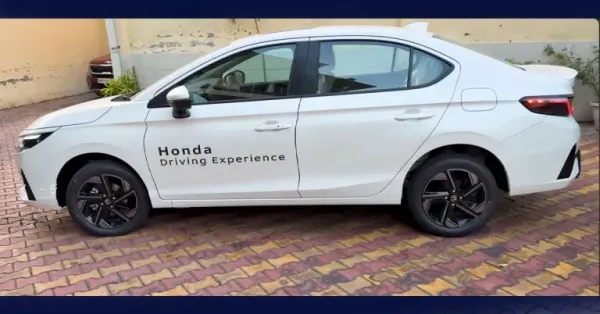
First off, let’s start with the design and road presence of the newly launched Honda City facelift. Honda has given this sedan a much more premium and mature appearance than before. The facelifted model features sleeker LED headlamps with eyebrow-style DRLs along with a full-width LED positioning lamp connecting both ends.
It also gets a new gloss black honeycomb grille, redesigned front bumper, larger air dam, clamshell bonnet, and new 16-inch aero-blade alloy wheels. At the rear, Honda has added updated LED tail lamps with smoked treatment and a revised bumper. Overall, the new City now looks a lot more premium, modern, and aggressive and has still managed to retain its elegant design language.
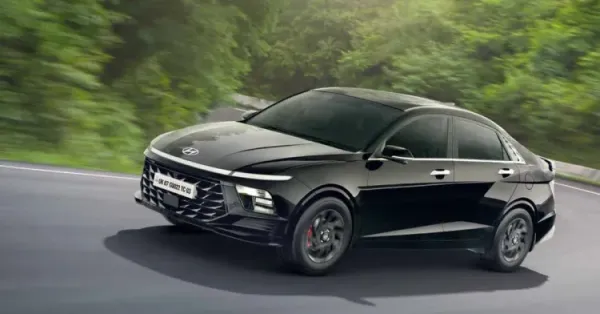
Hyundai also recently gave a mid-life facelift to the Verna, and it is still the most futuristic-looking sedan in this segment. Hyundai, with the updated model, has slightly changed the front fascia with revised LED headlamp housings and bumper changes. It still gets the connected LED DRL strip at the front and split LED headlight setup.
Additionally, Hyundai has also increased the overall length of the sedan by 30 mm, and this has helped in improving its road presence. At the rear, the Verna boasts a connected LED taillamp setup, and overall it looks very sporty and its design is very polarizing.
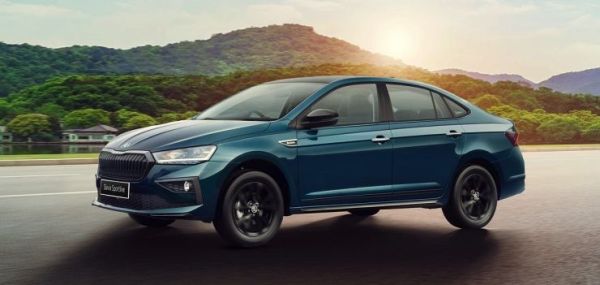
Moving on to the Skoda Slavia, this sedan is one of the most elegant-looking sedans as it offers a very clean and sophisticated design. It gets simple LED headlights with LED DRLs, elegant proportions, sharp character lines, and premium-looking 16-inch alloy wheels. To some, it may seem a bit boring, but overall it feels very classy and opulent. At the rear, the Skoda Slavia also features LED taillights.
As for the most popular sedan in the mid-size sedan segment in India, the Volkswagen Virtus is still on top. It is the sportiest-looking sedan among all four cars, especially in the top-of-the-line GT trims. It features blacked-out exterior treatment, sporty 16-inch alloy wheels, red brake calipers, spoiler, and sharp LED headlights and taillights, which give it an aggressive appearance.
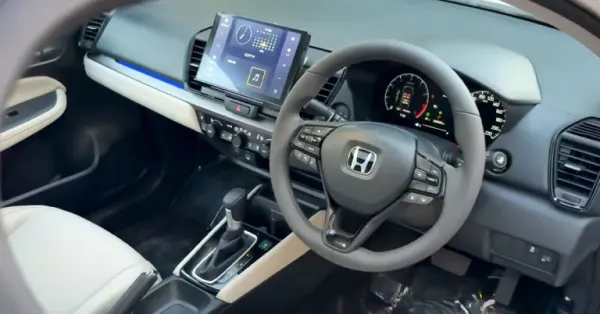
Honda has improved the cabin experience of the City facelift despite not changing the entire dashboard layout. The sedan now comes with a larger 10.1-inch touchscreen infotainment system with wireless Android Auto and Apple CarPlay. It also features a fully digital instrument cluster, ventilated front seats, 360-degree camera, ambient lighting, wireless charger, soft-touch dashboard materials, automatic climate control, electric sunroof, and Honda Sensing ADAS suite. The cabin already used to feel very premium, but it now feels even better.
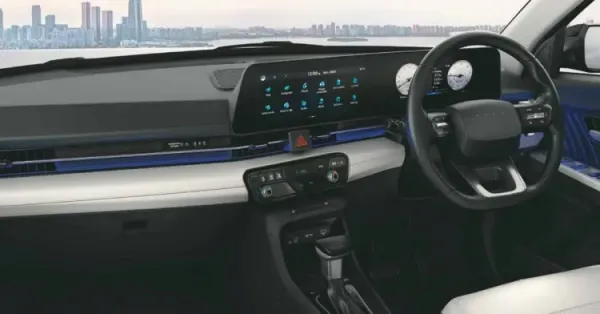
The 2026 Hyundai Verna is the most feature-loaded sedan in the segment. It features dual 10.25-inch screens, ventilated seats, powered driver and passenger seats, powered tailgate, rear sunshades, ambient lighting, dashcam, 360-degree camera, seven airbags, electronic parking brake, blind spot monitor, and Level 2 ADAS. Hyundai has packed the Verna with almost each and every modern feature available in this segment, which makes it very tempting.
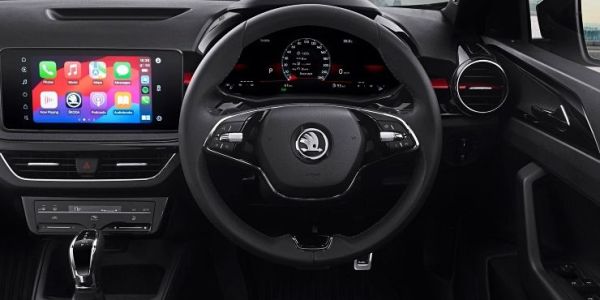
As for the interior design, the Skoda Slavia once again focuses more on comfort and practicality than providing a ton of features. However, it still comes offered with a 10-inch touchscreen, ventilated front seats, electric sunroof, digital instrument cluster, air purifier, TPMS, cruise control, connected car tech, and automatic climate control. The Slavia also offers a lot of rear seat comfort and offers one of the largest boots in the segment at 521 litres.
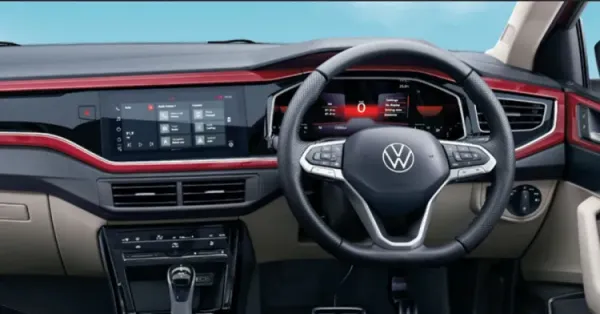
The Volkswagen Virtus and Slavia on paper share almost all the same features. However, its dashboard layout and overall experience are much sportier. The GT variants offer an all-black cabin, aluminum pedals, leatherette upholstery, ambient lighting, digital cockpit, ventilated seats, and sporty interior detailing. The Virtus cabin feels very premium, sporty, and driver-focused.
The Honda City facelift is still being offered with the same 1.5-litre naturally aspirated petrol engine, which produces 121 bhp and 145 Nm. This engine is available with a 5-speed manual and CVT gearbox. Now, it may not be the most powerful sedan in the segment. However, it is extremely refined and smooth to drive. Honda has also launched the updated City e:HEV hybrid. This version comes offered with a 1.5-litre Atkinson cycle petrol engine with a strong hybrid system. It is known for offering an impressive mileage of 27.26 kmpl.
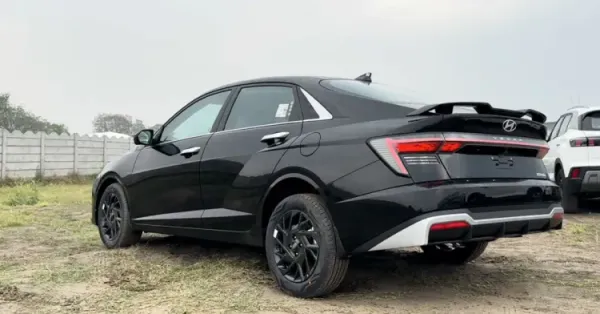
Hyundai offers the new-generation Verna with only two petrol engine choices. The first is the naturally aspirated 1.5-litre petrol, which produces 115 bhp and 144 Nm. And the second is the 1.5-litre turbo petrol, which makes 160 bhp and 253 Nm. This makes the Verna Turbo one of the quickest sedans in this segment. Buyers can choose between manual, CVT, and DCT gearbox options.
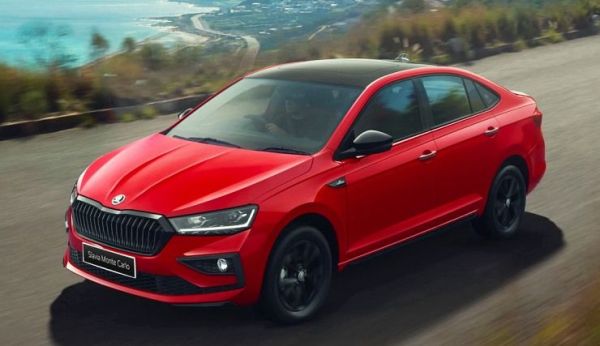
Coming to the Skoda Slavia, it also offers two petrol engines, but both are turbo petrols. The 1.0-litre TSI produces 114 bhp and 178 Nm. Meanwhile, the more powerful 1.5-litre TSI generates 148 bhp and 250 Nm. The 1.0-litre variants come with a 6-speed manual and 6-speed torque converter automatic. On the other hand, the 1.5-litre variants only get a 7-speed DSG.
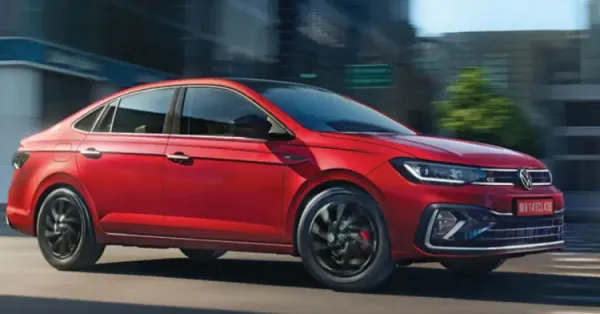
The Volkswagen Virtus once again shares the exact same engine options as the Slavia. However, the GT variants feel slightly more engaging to drive because of their sporty tuning and overall character.
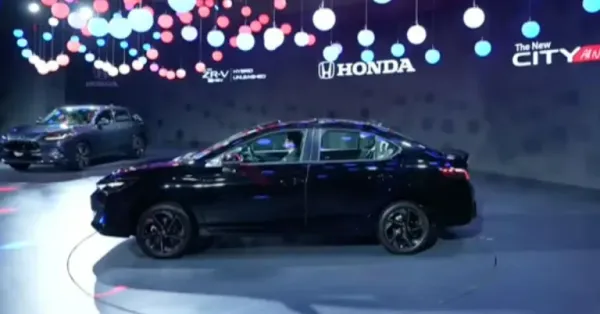
The Honda City facelift starts at Rs 11.99 lakh and goes up to Rs 17.14 lakh for the top non-hybrid trim. Meanwhile, the City e:HEV facelift has been priced at Rs 20.99 lakh. Although its starting price is the highest in the segment, the newly facelifted model is a good value-for-money purchase.
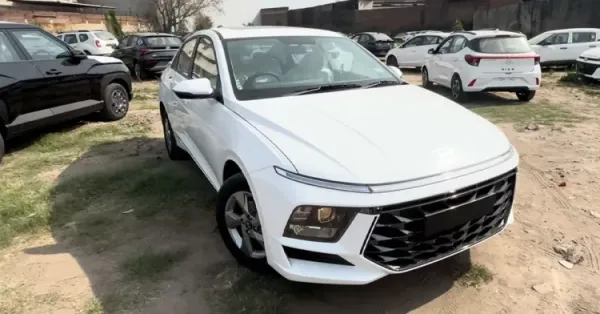
The Hyundai Verna starts at Rs 10.98 lakh and goes up to Rs 18.25 lakh for the top turbo DCT variant. For all the features that the Verna has to offer, its pricing is justified.
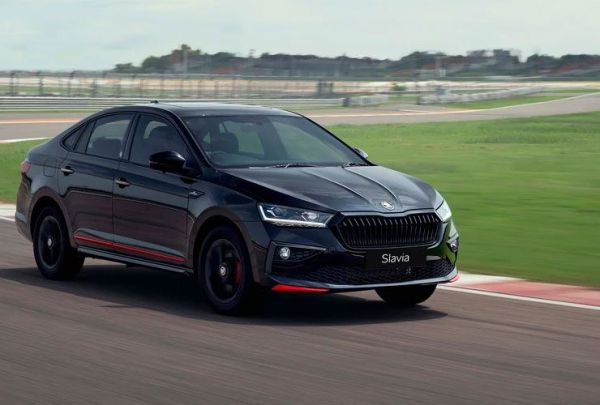
The Skoda Slavia starts at Rs 10 lakh and goes up to Rs 17.99 lakh. It is currently the most affordable mid-size sedan in India, and it also offers a lot of value for money.
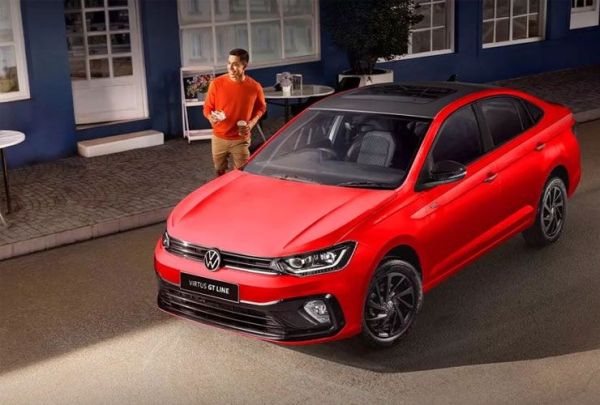
Lastly, the Volkswagen Virtus starts at Rs 10.50 lakh and goes up to Rs 19 lakh for the GT Plus Sport trim. Despite having a premium over the Slavia, it is still the go-to sedan for enthusiasts who want sporty styling and strong performance.
-
Sonu Nigam’s ‘The Revolution’ world tour to kick off in Abu Dhabi

-
Religious conversion is like throwing salt on Sanatan tree: IRS officer

-
Centre offers Article 371-style safeguards, legislative body for Ladakh

-
Five Record-Breaking Moments And Stats From IPL That Still Remain Iconic

-
WWE Star Arrested For Allegedly Beating Up Neighbor Over Elevator Kissing Comment