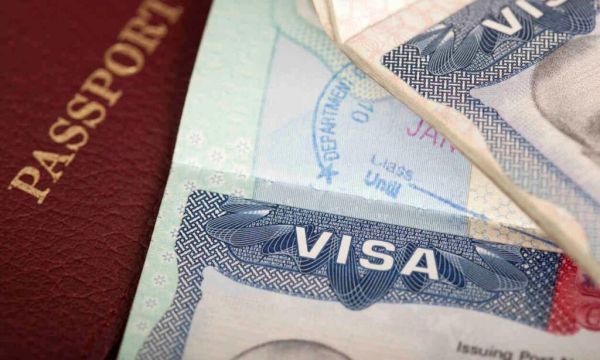
A proposed change in United States immigration policy has triggered concern among immigrant communities, particularly highly-skilled Indian professionals working in the technology and research sectors.
The new guidance from the US Citizenship and Immigration Services (USCIS) could require many applicants seeking permanent residency to leave the United States and complete the final stage of their Green Card process from their home countries. The move marks a significant shift in how American authorities interpret long-standing immigration procedures and has raised fears of prolonged disruptions for workers and families already facing years-long waits for permanent residency.
In a statement issued on Friday (May 22), USCIS spokesman Zach Kahler said that “an alien who is in the US temporarily and wants a Green Card must return to their home country to apply, except in extraordinary circumstances.”
The statement added that temporary visa categories such as students, tourists, and workers were originally intended for short-term stays and “should not function as the first step in the Green Card process.” However, within hours after the announcement, the USCIS introduced exemptions to economic and national interest.
Dual-intent visas under uncertainty
The proposal appears to affect applicants on temporary non-immigrant visas, including H-1B, L-1, F-1, J-1, and O-1 categories. Under the revised approach, applicants may no longer be permitted to remain in the US while their permanent residency applications are processed. Instead, they could be required to travel back to their home countries for consular processing, obtain immigrant visas there, and then re-enter the United States as permanent residents.
Also Read: US tightens USCIS signature rules, raising risks for H-1B and Green Card applicants
The policy has created widespread uncertainty among H-1B and L-1 visa holders, many of whom are Indian professionals employed in science, technology, engineering, and mathematics (STEM) sectors. Immigration experts noted that these visa categories have traditionally been treated as “dual-intent” visas, allowing holders to work temporarily while also seeking permanent residency.
An immigration attorney familiar with the issue said the new guidance remains broad and unclear on how such cases would be handled, increasing apprehension among visa holders already navigating complex immigration backlogs.
Immigration lawyers warn of disruption
Immigration law firm Reddy Neumann Brown was quoted by The Hindu BusinessLine as saying that the change suggests that merely meeting technical eligibility requirements may no longer suffice, and that applicants may now need to proactively document factors such as tax compliance, lawful status history, economic contributions, and family integration.
Also Read: Are Indian Green Card holders hit by Trump’s new scrutiny rules?
Critics argue the proposal could disrupt businesses, research institutions, and startup ecosystems by forcing skilled workers to temporarily leave the country during processing.
Andrew Ng, co-founder of Coursera and a prominent artificial intelligence entrepreneur, warned that the policy could hurt American competitiveness in areas such as AI by discouraging doctors, scientists, and engineers from staying in the country.
Indian professionals among hardest hit
The proposal has caused particular anxiety among Indian nationals, who form one of the largest groups in America’s employment-based Green Card queue. Due to annual country caps, many Indian applicants already face waiting periods stretching beyond a decade.
For families, the uncertainty extends beyond employment concerns. Repeated visa renewals, fears of travel disruptions, and children ageing out of dependent visa categories have long made the process stressful.
Also Read: Indian H-1B workers face 60-day window as US tech layoffs intensify: Report
Separately, USCIS also reported a sharp decline in H-1B registrations for fiscal year 2027, with applications falling 38.5 per cent from 343,981 in FY26 to 211,600 in FY27. The agency said it was increasingly selecting applicants with advanced degrees and higher salaries, especially graduates from US universities.
Economic, national interest exemptions introduced
Hours after announcing the proposed shift, USCIS appeared to soften parts of its position by introducing two possible exemptions tied to broader policy considerations: applications that deliver an “economic benefit” and those deemed to serve the “national interest.” The clarification suggests that not all applicants pursuing permanent residency would automatically face the same requirements, easing some of the uncertainty that had emerged following the initial announcement.
Explaining the revised position, USCIS indicated that certain applicants could still be allowed to continue with existing procedures depending on their circumstances, while others may still be directed to complete immigration processing outside the United States.
“After years of ignoring the intent of Congress in the adjustment of status application, USCIS is merely restating and reasserting that intent. While we work to operationalise this, people who present applications that provide an economic benefit or otherwise are in the national interest will likely be able to continue on their current path while others may be asked to apply abroad depending on individualised circumstances,” USCIS spokesman Zach Kahler said in a statement.
-
LIC Introduces Two New Savings Insurance Plans With Flexible Premium Payment Options

-
Credit Card Trap Alert: This Small Payment Mistake Could Destroy Your Financial Health

-
Bank Holiday Alert: Banks May Remain Closed for Several Days Next Week; Check City-Wise Holiday List

-
CNG Price Shock in Delhi-NCR: Rates Hiked Again for Third Time in 10 Days; Check Latest City-Wise Prices

-
Silver Price Today: Has Silver Become Cheaper or Costlier? Check Latest Rates in Delhi, Lucknow, Patna and Other Cities