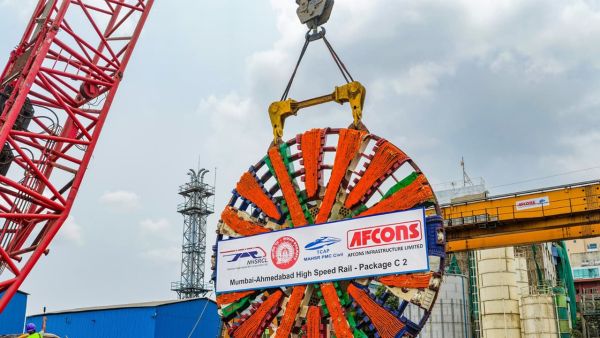
The cutterhead of the second Tunnel Boring Machine (TBM) was lowered at Sawli, Ghansoli for the Mumbai-Ahmedabad High-Speed Rail Corridor. Both TBMs will undergo trials before starting their initial drive in July 2026.
In a major milestone for the Mumbai-Ahmedabad High-Speed Rail Corridor, the cutterhead of the second Tunnel Boring Machine (TBM) was lowered at Sawli (Ghansoli) near Mumbai on Saturday, marking the completion of the primary assembly phase of the machine's main shield. The massive cutterhead, measuring 13.6 metres in diameter and weighing around 350 tonnes, this component marks the final step in the primary assembly of the TBM's main shield.

The second TBM will begin its journey from Sawli (Ghansoli) near Mumbai and move towards Vikhroli. Earlier this week, the cutterhead for the first TBM was also lowered at Vikhroli. Both machines will now undergo final assembly and commissioning trials before beginning their initial drive in the first week of July 2026.
TBM and Cutterhead Specifications
The release stated that the cutterhead, with a diameter of 13.6 metres, is designed to excavate a single tunnel large enough to accommodate both up and down lines of the high-speed corridor. The unit is equipped with 84 cutter discs, 124 scrapers, and 16 bucket lips to efficiently cut and remove muck during excavation.
Two Tunnel Boring Machines (TBMs) have been received for the project. TBM-1 weighs 3,080 tons, while TBM-2 weighs 3,184 tons. Both machines feature a cutter head diameter of 13.6 meters and are of Mix Shield/Slurry-based type, designed for efficient tunnelling in complex ground conditions.
Each TBM measures 95.32 meters in total length and comprises several critical components, including the cutter wheel, main bearing, jaw crusher, erector, main shield, tail shield, and four specialised gantries that support tunnelling operations. These machines can operate at a maximum cutterhead speed of 4 RPM (revolutions per minute), with a maximum excavation rate of 49 mm per minute, enabling steady and controlled tunnelling progress while maintaining high safety standards.
(Except for the headline, this story has not been edited by Asianet Newsable English staff and is published from a syndicated feed.)-
How garam masala and amchur powder landed a man in jail for 57 days

-
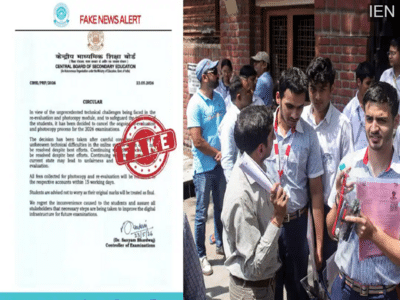
CBSE calls viral notice fake; Class 12 answer sheet copies and re-checking process to continue as scheduled.
-
IPL 2026 Memes: Hilarious Reactions from LSG vs PBKS, Match 68 at Ekana Stadium, Lucknow

-
IPL 2026: Lucknow Super Giants vs Punjab Kings, Match 68 - Who Said What?

-
IPL 2026: Video of the Day: Shreyas Iyer unleashes carnage all around the ground against LSG