
Just hours before the DFB Cup final, Bayern Munich president Uli Hoeneß publicly criticised his sporting director, Max Eberl. The issue was less about what he said and more about when he chose to say it. This timing turned what should have been a day of celebration into one clouded by internal tension.
The scene itself appeared almost scripted—symbolic yet real. Sitting in the stands of Berlin’s Olympic Stadium for the DFB Cup final, Max Eberl had Uli Hoeneß positioned directly behind him. This time, Hoeneß wasn’t merely figuratively looking over Eberl’s shoulder, but literally doing so.
Exactly five hours before kick-off, Der Spiegel released an extensive interview with Hoeneß. In it, the 74-year-old spoke candidly, as always, touching on topics ranging from Thomas Tuchel and the AfD to his preferred lineup for the German national team at the World Cup, his time in prison, and more.
He also cast “doubts” on sporting director Max Eberl’s performance, estimating the chances of extending Eberl’s 2027 contract at “60–40”.
After the final whistle, Eberl addressed Hoeneß’s remarks directly.
On the very day of FC Bayern’s biggest final since 2020—a chance to cap off their best season in six years with a team largely built under Eberl’s guidance—Hoeneß chose to question him publicly. The Munich club had just sealed an emphatic 3-0 win over VfB Stuttgart, completing a domestic double, yet the focus shifted to the internal dispute instead of the triumph.
From a human standpoint, Hoeneß’s actions were deeply disappointing. By diverting attention from the team’s success, he turned a moment of unity into one of division. As a result, Eberl could not fully enjoy the victory or the celebrations, instead finding himself preoccupied with his own job security and Hoeneß’s criticism—aware that public clarification would soon be necessary.
“60 to 40,” Eberl quipped dryly as he entered the mixed zone, even before fielding questions. He then gave an honest and composed interview, showing both pride in the team’s achievement and frustration over the timing of Hoeneß’s comments. While visibly disappointed, he refrained from escalating the matter.
Eberl even acknowledged that the scepticism expressed by Hoeneß and the supervisory board—who ultimately hold sway over his position—was “legitimate”. After all, his performance as sporting director remains open to fair evaluation.
Working alongside Christoph Freund and Jan-Christian Dreesen, Eberl has overseen several impactful moves. The appointment of Vincent Kompany as head coach was a masterstroke, though Hoeneß later claimed Eberl’s initial plan had been to retain Thomas Tuchel. Once Kompany proved his worth, Eberl acted swiftly to extend his contract, fending off interest from Manchester City.
Not all transfers were successful. The loan signing of Nicolas Jackson, costing around 25 million euros, turned out poorly. However, Hoeneß’s earlier public stance against loan deals had already restricted Eberl’s flexibility, and the overvalued Joao Palhinha transfer had been initiated before Eberl’s arrival.
Still, under Eberl’s direction, Bayern managed two marquee signings—Michael Olise and Luis Diaz. In Diaz’s case, as with Kompany, the transfer only came together after other primary targets fell through. Additional smart moves included free transfers for Jonathan Tah and Tom Bischof, along with the acquisition of young goalkeeper Jonas Urbig for just seven million euros, a player viewed as Manuel Neuer’s eventual successor.
He also sold Mathys Tel, Paul Wanner, and Adam Aznou for solid fees. However, extending Alphonso Davies and Jamal Musiala’s contracts significantly inflated the wage bill. Consequently, players like Dayot Upamecano and Konrad Laimer have used those lucrative renewals as benchmarks in their own negotiations, creating a ripple effect. To make matters worse, both Davies and Musiala have since struggled to regain top form following fresh injuries.
Eberl’s handling of public relations has often been a weak spot. His communication during negotiations has occasionally backfired—most notably during Thomas Müller’s unceremonious exit a year earlier and in the failed pursuits of Florian Wirtz and Nick Woltemade last summer. More recently, however, he has displayed gradual improvement and better composure.
Ultimately, results on the pitch matter most. This season, Bayern have combined success with entertainment—winning both the league and the cup while setting several records. Despite their heartbreaking Champions League semi-final exit, their performances won admiration across Europe. With Harry Kane and Michael Olise emerging as potential Ballon d’Or contenders, the club’s resurgence owes much to collective effort, with Eberl playing a central part.
There are indeed valid criticisms of Max Eberl’s tenure, but right now, the positives clearly outweigh the negatives—something even Hoeneß acknowledged with his “60 to 40” comment, albeit at the worst possible time. As Bayern move into the summer, discussions about Eberl’s future will continue. For now, though, everyone at the club would have preferred a final day free from unnecessary distractions.
-
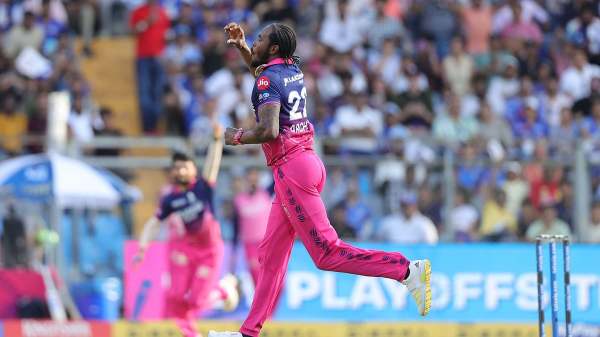
MI Vs RR: Rajasthan Royals Seal Playoffs Berth, Knock KKR, PBKS Out After 30-Run Win At Wankhede
-
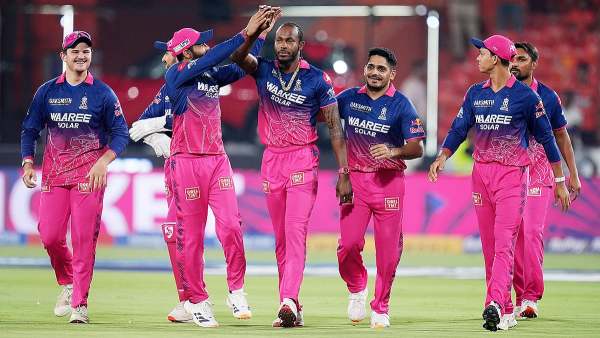
IPL 2026 Playoffs Race: RCB Vs GT In Qualifier 1, RR To Face SRH In Eliminator - Check Full Schedule
-
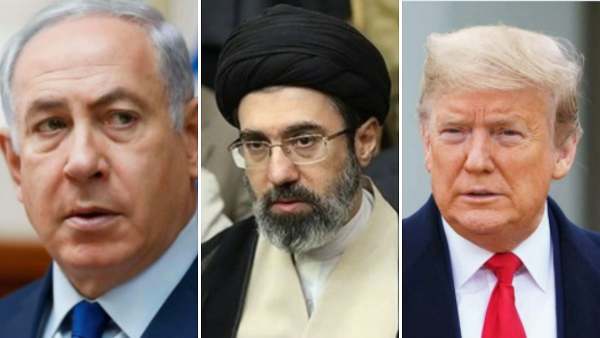
Iran Agrees In Principle To Relinquish Its Enriched Uranium Stockpile In Major US-Led Peace Deal: Report
-
Top Five Stunning Goals from the 2025-26 Premier League Season

-
Emotional scenes at Etihad as Manchester City honour departing legends with grand tifos