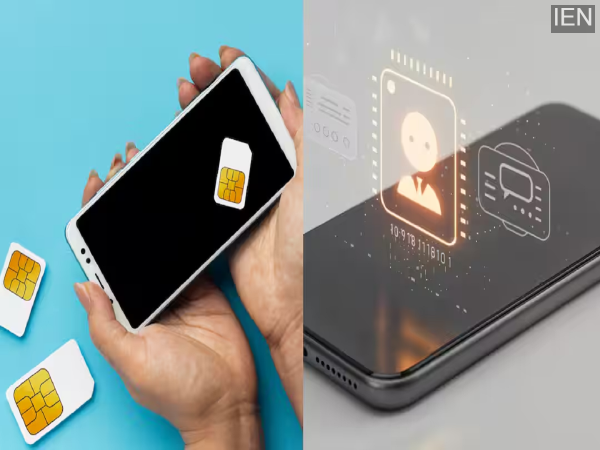
eSIM Vs. SIM: People often find themselves confused when trying to choose between the two. However, if you are aware of the differences, as well as the pros and cons of each, making a decision becomes much easier.
eSIM Vs. SIM: Until just a few years ago, after purchasing a phone, one never had to ponder whether to use an eSIM or a physical SIM card. The eSIM has now emerged as a secure alternative to the traditional physical SIM card. In light of this, several mobile manufacturers have even stopped providing slots for physical SIM cards in their devices—a decision driven by various factors. However, if you are feeling confused about which of these two options to select for your Android device, we are here to outline the key differences between them. This information should make the decision-making process a little easier for you.
What Is the Difference Between an eSIM and a SIM?
The first and most significant difference is that a physical SIM requires you to physically insert a pre-programmed card into the phone; a dedicated slot is built into the device specifically for this purpose. In contrast, an eSIM requires no such slot. Instead, network credentials are downloaded directly onto an embedded SIM card (eSIM) chip that is built into the device itself. Once downloaded, these credentials remain permanently stored on the phone.
The second difference is that if you wish to switch network providers, you would typically have to replace the physical SIM card with a new one. With an eSIM, however, you are spared this hassle; you can simply delete the old network details and download the new credentials directly onto the device.
The Advantages of Using an eSIM
eSIMs are generally considered to be more secure. Physical SIM cards can sometimes get damaged during the installation process. Furthermore, they can be easily removed—and potentially stolen—by anyone. Physical SIM cards also carry risks such as SIM duplication and SIM swapping fraud. These issues are non-existent with an eSIM, as it cannot be physically removed from or stolen from the phone. Additionally, the eSIM is linked directly to the phone's unique IMEI number, a feature that further enhances the device's overall security.
eSIMs Are More Convenient, But There Is a Catch
eSIMs offer greater convenience. They are the preferred choice for travelers or for those who frequently need to swap SIM cards. Unlike physical SIMs, there is no need to purchase, install, and then verify the card beforehand; you can simply download and start using it right from the comfort of your home. However, there is one major drawback: many phones do not support eSIMs. While companies are gradually moving towards incorporating eSIM support, numerous devices on the market still support only physical SIM cards.
-
Giribala on bail in Twisha case, many big questions raised in Supreme Court

-
Effect of heat, long traffic jam from Manali to Nainital, tourists stranded for hours

-
CM Pushkar Singh gave a big gift to Dhami Khatima: Inaugurated development schemes worth 89 lakhs

-
BJP’s big win in Bengal’s Falta seat signals shifting Muslim voter mood, CPM gains ground

-
How India Secured Its Oil Supply From Latin America, Africa After Iran War Hit Strait Of Hormuz