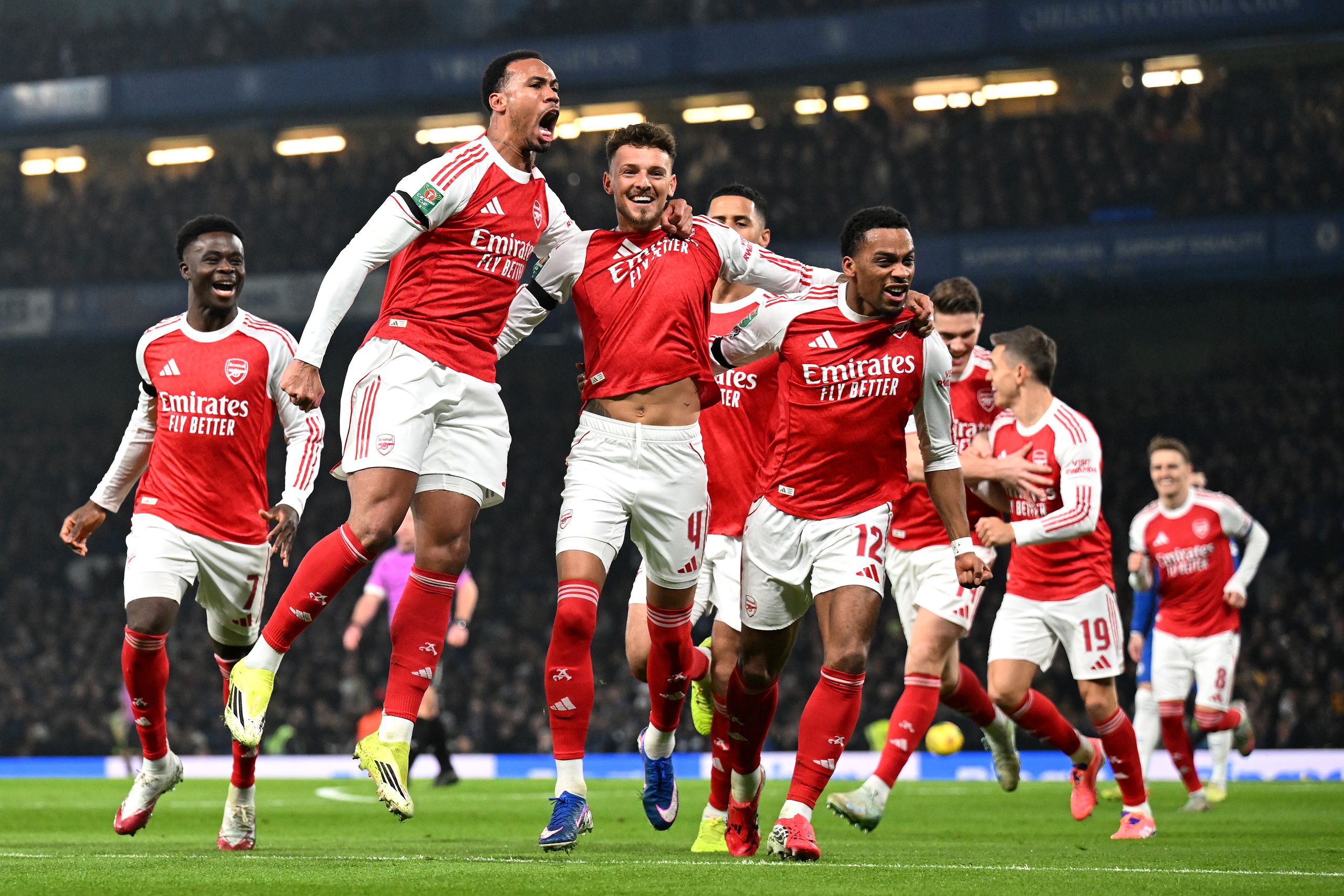
Currently leading both the Premier League and the Champions League, Arsenal can rightly argue that they are Europe’s most complete team. After years of near misses, the challenge now is to turn that belief into silverware.
It all began with heartbreak – the collapse, the fatigue, the sight of 11 Arsenal players slumped on the pitch at St James’ Park under the glow of Newcastle’s foil display. Mikel Arteta’s thousand-yard stare and Granit Xhaka’s furrowed brow told the story. Facing Bruno Guimaraes and 50,000 roaring Geordies under the lights, Arsenal fell 2-0 on May 16, 2022. “It’s true, we couldn’t cope,” Arteta admitted afterwards. Xhaka was more blunt: “If some minds aren’t ready for this game, stay at home. We need players who have the courage to come here and play.”
That night reignited an old narrative – Arsenal were too soft. It was a label that had followed them since their move from Highbury to the Emirates. Arteta, however, vowed to change that perception. Drawing inspiration from George Graham’s grit and Arsene Wenger’s artistry, he built a new foundation. “What did Arteta do? Build a wall!” Graham remarked in an interview.
Over time, that wall became a fortress. Arsenal steadily grew stronger, rebuilding after each setback. Four years after their Newcastle defeat, the Emirates had transformed – no longer a place of pressure, but of pride and energy. Still, there were more painful lessons ahead. Arsenal finished second in 2023, 2024, and 2025 – echoing the heartbreak of 1999-2001 before Wenger’s team finally triumphed in 2002. Now, in 2026, the aim is clear: to complete the journey. Arteta’s brush, dipped in the club’s rich history, paints a modern masterpiece built on resilience, flair, and ambition.
During the 2022/23 campaign, Arsenal collected 50 points from their first 19 games, five clear at the top with a game in hand. “That season’s atmosphere was the best I’d seen since Wenger’s early years,” says Arsenal writer Tim Stillman. “It felt like something special was taking shape – not just chasing fourth place, but building a real contender.”
Sporting director Edu played a crucial role in reshaping the squad. William Saliba returned, Gabriel Jesus arrived from Manchester City, bringing a winning mentality. “Jesus brought a huge winning mindset,” said Gilberto Silva. Bukayo Saka grew more ruthless, Gabriel Martinelli scored 15 goals, and Arsenal’s confidence surged. Landmark wins over Tottenham and Manchester United highlighted their growth. Even Reiss Nelson’s 97th-minute winner against Bournemouth became an iconic moment. Yet as spring approached, the momentum wavered. Arsenal won only two of their final eight matches, surrendering the title to Manchester City, who beat them 4-1 at the Etihad. Still, the foundation was set.
Off the pitch, the connection between team and fans deepened. The Ashburton Army revitalised the stadium atmosphere, while the club incorporated supporter input into new designs. “Arteta spoke about changing the energy,” Stillman recalls. “He saw the disconnect when he was City’s assistant. He’s completely transformed that.” After the season ended, Arteta addressed the crowd: “We’ve reconnected the soul of this club. We know where we’re going – to bring success and trophies. Enjoy the journey.”
Edu continued to strengthen the squad. Kai Havertz joined from Chelsea, Jurrien Timber from Ajax, Declan Rice for £105 million from West Ham, and David Raya from Brentford. “Edu’s alignment with the club’s culture was key,” said Gilberto. “His recruitment philosophy always reflected Arsenal’s DNA.”
Arsenal lifted the Community Shield against Manchester City and earned a dramatic win over Manchester United, showcasing Rice’s leadership. By New Year’s Eve, they sat fourth, but a strong finish saw them collect 49 of 54 possible points. “We’ve done less and won the league before,” Stillman sighed. Despite 89 points and 91 goals, they finished second again after a costly home defeat to Aston Villa post-Champions League exit to Bayern Munich.
In 2024, Arsenal added Riccardo Calafiori and Mikel Merino, plus promoted Myles Lewis-Skelly and Ethan Nwaneri. They opened the season with resilience, drawing at the Etihad despite being a man down. But injuries disrupted momentum, and Liverpool capitalised. Arsenal’s attack faltered – scoring 22 fewer league goals than the previous season. “Finding a top-class striker is tough,” said former forward Alan Smith. “A strong centre-forward changes everything.”
Merino adapted as a makeshift striker, using intelligence and physicality to fill the void. “I don’t care about style if Arsenal don’t win,” Stillman admitted. “We lost that edge under Wenger. I never liked being called soft by rivals.” Arsenal lost only four league games – their best record since 2007/08. Two defeats came against Bournemouth, whose manager Andoni Iraola praised Arteta’s adaptability: “Their defence and goalkeeper are elite. They can adjust to anything.”
Despite finishing second, their Champions League run showcased progress. A dominant win over Real Madrid at the Emirates, followed by a gritty 2-1 away triumph, marked one of the greatest nights in the club’s history. Declan Rice shone as a world-class midfielder, symbolising Arsenal’s evolution. Arteta’s creation now stood majestic – a cathedral of football glowing under the Emirates lights.
In the summer of 2025, new sporting director Andrea Berta oversaw a major recruitment drive. Eberechi Eze, Viktor Gyokeres, and Martin Zubimendi were among the key arrivals. “Zubimendi complements Rice perfectly,” Gilberto explained. “He’s the engine that gives Declan freedom to attack.” The fresh faces built both competition and camaraderie. “We all make each other better,” said Noni Madueke. “No one can drop their standards – that’s how special teams are made.”
By the turn of the year, Arsenal topped both the Premier League and the Champions League group stage, scoring 17 and conceding just once across six European matches. Having reached their first semi-final in 16 years, they were now favourites to win in Budapest on May 30. Arteta’s side blended tactical precision with creative freedom – capable of overpowering opponents physically or outthinking them technically. “They’ll get over the line eventually,” Stillman predicted. “The squad’s at its peak age, and they’ve learned from past seasons.”
It’s been 22 years since Arsenal last lifted the league title in 2004. Gilberto believes their persistence deserves recognition. “To stay in the race four years in a row is tough. This group isn’t responsible for the long drought.” History shows that long waits can end dynasties: Manchester City’s 44-year wait ended in 2012; Manchester United’s 26-year gap ended in 1993 – both went on to dominate. “Consistency is key,” Smith added. “If Arsenal win it once, they have what it takes to stay at the top. This could be the beginning.” For now, one Premier League trophy would be enough to satisfy fans who’ve waited two decades. This time, Arsenal don’t need to be Invincibles – they just need to be champions.
-
Train News: Why is a Large 'X' Mark Painted on the Last Coach of a Train? You Probably Don't Know Its True Meaning
-
Hyderabad Metro: ₹13,527 Crore Loan to Boost Metro Rail's Financial Health; Passengers to Benefit
-
8th Pay Commission: What Happens If the 8th Pay Commission Is Delayed? Know the Impact on Salary, HRA, and Arrears
-
SAIL Recruitment 2026: The Nation’s ‘Maharatna’ Company Presents a Lucrative Offer—A Chance at a Job Worth ₹1.40 Lakhs

-
Bihar Police Constable Operator Exam Postponed: Check the New Exam Date and Latest Official Update