Some movie dialogues entertain audiences for a moment, while others stay in people’s minds for years because they hit too close to reality. One such unforgettable line comes from To the Bone, where Keanu Reeves delivers a brutally honest monologue about pain, fear, and survival. The dialogue has resurfaced online once again for its raw truth about life’s struggles. At a time when people constantly chase comfort and emotional safety, the film’s message feels more relevant than ever.
The powerful dialogue from To the Bone
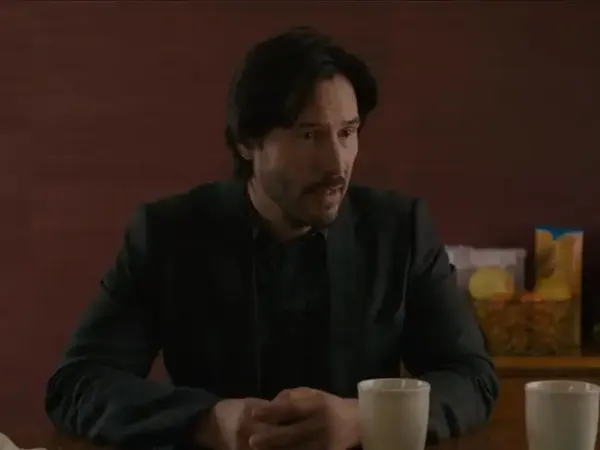
The complete dialogue spoken by Keanu Reeves in the film reads: "People say they love you... Bad things are going to happen. That's not negotiable. What is, is how you deal with it. This idea you have that there's a way to be safe, it's childish and cowardly... Face some hard facts, and you could have an incredible life."
In To the Bone, Reeves plays Dr. William Beckham, an unconventional physician who specialises in treating people struggling with severe eating disorders. The scene takes place when he is speaking to Ellen, played by Lily Collins, who is emotionally exhausted and deeply trapped in her own fears and pain.
Rather than comforting her with soft words, Dr. Beckham forces her to confront uncomfortable truths. His monologue is not meant to sound gentle, it is meant to shake Ellen out of denial and push her toward accountability and healing.
Why the quote feels painfully real
One reason the dialogue continues to resonate with audiences is that it refuses to sugarcoat life. The line, “Bad things are going to happen. That's not negotiable,” captures a harsh but universal truth. Heartbreak, rejection, illness, failure, grief, and disappointment are experiences nobody can completely escape.
The film suggests that no amount of money, success, love, or planning can fully protect a person from pain. Life will eventually become messy and unpredictable for everyone. Instead of pretending otherwise, the dialogue encourages people to accept this reality.
That honesty is what makes the quote powerful. It strips away the comforting fantasy that people can somehow build a life free from suffering.
The myth of perfect safety
Another striking part of the monologue is when Dr. Beckham says, “This idea you have that there's a way to be safe, it's childish and cowardly.”
The statement may sound harsh at first, but the deeper meaning behind it is about emotional avoidance. The film argues that many people spend years hiding from risks because they are terrified of getting hurt. Some avoid relationships, some avoid failure, while others isolate themselves emotionally to avoid disappointment.
According to the dialogue, this constant search for “safety” is not actually living. It is fear disguised as protection.
The quote explains that maturity comes from accepting uncertainty rather than constantly running away from it. Children depend on others to shield them from pain, but adults eventually learn that pain is a part of existence. Growth begins when people stop trying to control every possible outcome.
Keanu Reeves’ character challenges emotional denial
As Dr. William Beckham, Keanu Reeves plays a doctor who refuses to entertain self-destructive illusions. His character pushes Ellen to stop hiding behind fear and confront the reality of her condition. Throughout the scene, Dr. Beckham challenges the belief that people can completely protect themselves from emotional suffering. Instead of allowing Ellen to remain trapped in avoidance, he urges her to participate in life despite its risks.
This becomes especially important in the context of Ellen’s healing journey. Recovery, according to the film, is not about magically creating a painless life. It is about learning how to keep moving forward even when life becomes overwhelming.
His words become a wake-up call for Ellen, played by Lily Collins, forcing her to acknowledge that healing requires honesty, courage, and personal responsibility.
“What is, is how you deal with it” changes the entire meaning
While the first half of the quote focuses on unavoidable pain, the second half shifts toward personal power.
“What is, is how you deal with it.” This line changes the conversation completely. The dialogue argues that while people cannot always control what happens to them, they can control how they respond to adversity.
The quote suggests that strength is not about becoming emotionally bulletproof. Instead, resilience means adapting, learning, rebuilding, and continuing to live despite difficult experiences. A painful situation can either consume a person or teach them something meaningful depending on how they choose to handle it.
This is why the monologue feels motivating despite its harshness. Beneath the brutal honesty lies a hopeful idea: human beings are stronger than the pain they experience.
Why the dialogue continues to trend online
Years after the release of To the Bone, the monologue still finds new audiences online because its message feels deeply relatable. In a world where social media often promotes perfection, emotional control, and curated happiness, the quote reminds people that struggle is normal.
Many viewers connect with the dialogue because it validates difficult emotions without turning life into hopelessness. It acknowledges suffering while also insisting that people still have the ability to choose courage, growth, and healing.
The monologue ultimately delivers a simple but uncomfortable truth: courage is not about becoming fearless. It is about choosing to keep living, loving, healing, and hoping even after life proves that pain is unavoidable.
Meanwhile, To The Bone is currently streaming on Netflix.
The powerful dialogue from To the Bone
The complete dialogue spoken by Keanu Reeves in the film reads: "People say they love you... Bad things are going to happen. That's not negotiable. What is, is how you deal with it. This idea you have that there's a way to be safe, it's childish and cowardly... Face some hard facts, and you could have an incredible life."In To the Bone, Reeves plays Dr. William Beckham, an unconventional physician who specialises in treating people struggling with severe eating disorders. The scene takes place when he is speaking to Ellen, played by Lily Collins, who is emotionally exhausted and deeply trapped in her own fears and pain.
Rather than comforting her with soft words, Dr. Beckham forces her to confront uncomfortable truths. His monologue is not meant to sound gentle, it is meant to shake Ellen out of denial and push her toward accountability and healing.
Why the quote feels painfully real
One reason the dialogue continues to resonate with audiences is that it refuses to sugarcoat life. The line, “Bad things are going to happen. That's not negotiable,” captures a harsh but universal truth. Heartbreak, rejection, illness, failure, grief, and disappointment are experiences nobody can completely escape.The film suggests that no amount of money, success, love, or planning can fully protect a person from pain. Life will eventually become messy and unpredictable for everyone. Instead of pretending otherwise, the dialogue encourages people to accept this reality.
That honesty is what makes the quote powerful. It strips away the comforting fantasy that people can somehow build a life free from suffering.
The myth of perfect safety
Another striking part of the monologue is when Dr. Beckham says, “This idea you have that there's a way to be safe, it's childish and cowardly.”The statement may sound harsh at first, but the deeper meaning behind it is about emotional avoidance. The film argues that many people spend years hiding from risks because they are terrified of getting hurt. Some avoid relationships, some avoid failure, while others isolate themselves emotionally to avoid disappointment.
According to the dialogue, this constant search for “safety” is not actually living. It is fear disguised as protection.
The quote explains that maturity comes from accepting uncertainty rather than constantly running away from it. Children depend on others to shield them from pain, but adults eventually learn that pain is a part of existence. Growth begins when people stop trying to control every possible outcome.
Keanu Reeves’ character challenges emotional denial
As Dr. William Beckham, Keanu Reeves plays a doctor who refuses to entertain self-destructive illusions. His character pushes Ellen to stop hiding behind fear and confront the reality of her condition. Throughout the scene, Dr. Beckham challenges the belief that people can completely protect themselves from emotional suffering. Instead of allowing Ellen to remain trapped in avoidance, he urges her to participate in life despite its risks.This becomes especially important in the context of Ellen’s healing journey. Recovery, according to the film, is not about magically creating a painless life. It is about learning how to keep moving forward even when life becomes overwhelming.
His words become a wake-up call for Ellen, played by Lily Collins, forcing her to acknowledge that healing requires honesty, courage, and personal responsibility.
“What is, is how you deal with it” changes the entire meaning
While the first half of the quote focuses on unavoidable pain, the second half shifts toward personal power.
“What is, is how you deal with it.” This line changes the conversation completely. The dialogue argues that while people cannot always control what happens to them, they can control how they respond to adversity.
The quote suggests that strength is not about becoming emotionally bulletproof. Instead, resilience means adapting, learning, rebuilding, and continuing to live despite difficult experiences. A painful situation can either consume a person or teach them something meaningful depending on how they choose to handle it.
This is why the monologue feels motivating despite its harshness. Beneath the brutal honesty lies a hopeful idea: human beings are stronger than the pain they experience.
Why the dialogue continues to trend online
Years after the release of To the Bone, the monologue still finds new audiences online because its message feels deeply relatable. In a world where social media often promotes perfection, emotional control, and curated happiness, the quote reminds people that struggle is normal.Many viewers connect with the dialogue because it validates difficult emotions without turning life into hopelessness. It acknowledges suffering while also insisting that people still have the ability to choose courage, growth, and healing.
The monologue ultimately delivers a simple but uncomfortable truth: courage is not about becoming fearless. It is about choosing to keep living, loving, healing, and hoping even after life proves that pain is unavoidable.
Meanwhile, To The Bone is currently streaming on Netflix.