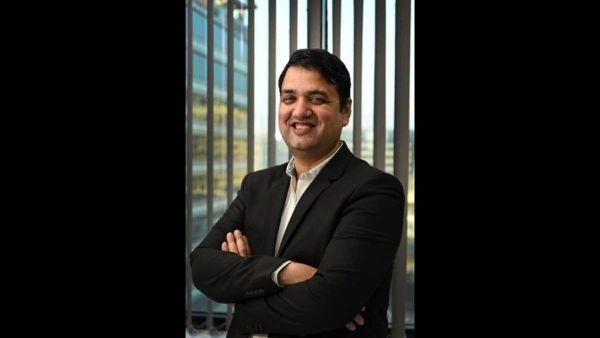
In this insightful discussion, Mr. Subhash Chandra Acharya, Managing Director of Seeds Fincap, outlines the evolving landscape of MSME lending in India's emerging markets. Following a significant funding round, Mr. Acharya discusses how the NBFC is leveraging data and AI-driven underwriting—not to replace human judgment, but to fairly evaluate underserved entrepreneurs in Tier II and Tier III locations. He highlights the company's strategic focus on product differentiation, including green finance, cluster-based funding, and gender-sensitive financing. Ultimately, Mr. Acharya emphasizes that Seeds Fincap measures its success not merely by scale, but by its long-term social impact on livelihood creation, women’s empowerment, and sustainable community growth.
1. How important is data and AI-driven underwriting in shaping the future of MSME lending?
Data and AI-driven underwriting will play a major role in the future of MSME lending. Not because technology replaces traditional lending, but because it helps solve a key challenge i.e. how to assess millions of small businesses quickly, fairly, and accurately.
India’s MSME sector is highly diverse. Many entrepreneurs, especially in underserved and emerging markets, may not always have perfect financial records or long credit histories. Yet, many of them run resilient and promising businesses. In such a landscape, traditional underwriting alone often tells only part of the story.
This is where data and AI become useful. By analysing cash flows, banking behaviour, GST data, repayment history and business transactions, lenders can better understand an MSME’s repayment capacity. This helps in faster decisions, better efficiency, and wider access to formal credit.
However, I would also say that, MSME lending cannot depend only on algorithm. Lending is also about understanding people, their intent, and local market realities. AI can improve consistency, reduce certain biases, and strengthen risk assessment, but human judgement will always remain important. In my view, the future belongs to institutions that can strike the right balance. When we finance an MSME, we are not just evaluating numbers, we are backing someone’s ambition to build, grow, and create livelihoods.
2.Seeds Fincap recently raised significant funding to scale operations. What are the next big milestones for the company?
The recent funding is an important step for SEEDS. It will help us grow faster and strengthen our long-term vision. Our focus is on three key areas: cost efficiency, product differentiation, and sharper strategic focus.
First is improving cost efficiency and operations. We are investing in technology and better processes to serve customers faster and more effectively.
Second is product differentiation. Along with our core MSME lending business, we are expanding into areas such as cluster financing and green finance, which align with both economic opportunity and sustainability goals. We are also consciously integrating gender-sensitive financing approaches, because inclusive finance is not just a social imperative, it is a growth imperative.
Third responsible expansion. We plan to grow our branch network in high-potential markets, strengthen our teams through training and leadership development, and further improve our credit underwriting and risk systems.
Our ambition is not just to become bigger, but to become a stronger, more responsible and more inclusive institution.
3.What sectors within the MSME ecosystem excite you the most from a lending perspective today?
Frankly speaking, what excites me most about the MSME sector is not only the businesses, but also the people and aspirations behind them. MSMEs represents hard work, resilience and the ambition to grow. There are a few sectors that I believe hold exceptional promise from a lending perspective.
Manufacturing and light engineering are very promising sectors, especially in the context of India’s Make in India vision. Across the country, we are seeing small manufacturers quietly becoming engines of employment and local economic growth. Supporting them also supports India’s self-reliance journey. We are also very optimistic about green finance. More businesses are now focusing on sustainability, and financing this transition creates both economic and social impact.
Another important area is agri-linked enterprises, including Farmer Producer Organisations (FPOs), food processing, dairy, and rural enterprises. These businesses are deeply connected with rural livelihood and local economies.
We also see strong potential in women led enterprises. Many women entrepreneurs are building successful businesses with limited resources and remarkable determination. Supporting them creates a wider positive impact on families and communities.
Promise in cluster-based financing also can’t be ruled out, where businesses operating within a common ecosystem or geography can be better understood, supported, and scaled through contextual lending approaches. Last but not the least, the sector that excite us most are those that combine growth potential with meaningful impact.
4.What are some common misconceptions traditional lenders have about small entrepreneurs in Tier II and Tier III markets?
This is an important question because I believe many of the assumptions about entrepreneurs in Tier II and Tier III markets are rapidly becoming outdated. One common misconception is that small entrepreneurs in Tier-II and Tier-III markets are high risk simply because they may not have formal documentation or long credit histories. In reality, many of them run stable and resilient businesses with strong repayment intent.
They may not always have sophisticated balance sheets, but they possess something equally important i.e. strong business understanding, local market knowledge, and a deep sense of financial responsibility.
Another common misconception is that businesses in smaller towns have limited growth potential. What we see on the ground is very different. These markets are highly entrepreneurial and growing rapidly. Better digital adoption, changing consumption patterns, better infrastructure, and rising aspirations are creating strong business opportunities. There is also a perception that informal businesses lack financial discipline. In many cases, however, these entrepreneurs maintain strong customer relationship, supplier trust and repayment behaviour.
I would also add that traditional underwriting models also sometimes miss the importance of local context. Businesses operating in rural markets, clusters or agri-linked ecosystem, cannot always be assessed through a standard approach.
The good news is that this mindset is gradually changing. With better data, stronger field understanding, and more inclusive underwriting, lenders are able to understand entrepreneurs more fairly and accurately.
Because ultimately, many of these businesses are not lacking potential. They simply need the right support and understanding.
5. Beyond finance, what kind of long-term social impact do you hope Seeds Fincap creates in India?
Beyond finance, we want SEEDS to help build a more inclusive, sustainable, and empowered entrepreneurial ecosystem in India.
One important focus area for us is green finance. We believe small businesses should also have access to sustainable growth opportunities. Through green financing, we want to support businesses that create both economic and environmental impact.
Women empowerment is another key priority. Some of the most inspiring entrepreneurial stories in India come from women who build businesses despite limited access to resources, networks, or formal credit. We see finance as a tool of empowerment. When a woman entrepreneur gets access to capital, the impact often extends far beyond the business. It strengthens families, supports education, creates livelihoods, and inspires communities.
We also hope to contribute towards livelihood creation, especially in Tier II, Tier III and underserved markets. MSMEs are among India’s largest job creators, and supporting them strengthens local economies.
At a broader level, we want to deepen financial inclusion by reaching entrepreneurs who may have traditionally been overlooked by the formal financial systems but possess tremendous potential and determination.
For us, success will not be measured only by growth or scale. It will be measured by whether we helped create stronger entrepreneurs, greener businesses, and more resilient communities. Because beyond finance, we believe our role is to enable aspiration, opportunity, and long-term progress.
-
8th Pay Commission Faces Inflation Pressure as Employee Unions Demand Simpler Salary Structure

-
A Unique Service Launches in Delhi’s Markets! Now Get a ‘Helper on Rent’ for Your Shopping—Find Out How Much It Costs!
-
Google Search: Searching for These 4 Things Could Cost You Dearly—Find Out Now, or You Could Face Jail Time

-
Aadhaar News: Lost Your Aadhaar Card? Don't Panic—Download It from Home Using This Simple UIDAI Method

-
Received a 'Lottery' Email in the Name of the RBI? The Government Has Now Revealed the Truth—Find Out Here