
As India’s digital ecosystem rapidly evolves, a new category of “recovery-tech” startups is emerging to solve an everyday yet overlooked problem — lost belongings. In this exclusive interaction with Jesintha Louis, Founder, Owners ID we explore how the start-up is building a privacy-first digital identity layer for physical assets through QR-powered technology.
From wallets and luggage to pets and vehicles, Owners ID is reimagining how people can reconnect with their belongings while laying the foundation for a larger consumer safety and smart identity ecosystem powered by AI and scalable digital infrastructure.
- What inspired you to build Owners ID, and what gap did you see in the lost-and-found ecosystem?
The inspiration behind Owners ID came from a very simple observation: What if everything I Own can talk? I want to be reachable if my pet is lost or if I forget my wallet in a taxi or a restaurant. People lose valuable belongings every single day, but most of those items are never returned — not because people are unwilling to help, but because there is no easy, privacy-safe way to contact the owner.
Today, if someone finds your luggage, keys, pet, or wallet, the recovery process depends largely on luck.
We saw a massive gap in creating a universal identity layer for physical belongings — something simple, affordable, privacy-first, and scalable globally. Owners ID was built to bridge that gap.
- Owners ID talks about creating a “digital identity” for physical belongings. How does the technology work in simple terms?
In simple terms, Owners ID gives physical items a smart digital identity through QR-powered technology.
Users attach an Owners ID Smart QR tag or sticker to their belongings. When someone finds the item, they simply scan the QR code using their phone camera — no app required for the finder.
The scan instantly opens a secure communication layer where the finder can contact the owner without seeing their personal phone number.
It transforms everyday objects into connected, reachable assets.
- How does your privacy-first QR technology help recover lost items without exposing personal information?
Privacy is one of the core foundations of Owners ID.
Traditional methods often require people to place their personal phone numbers directly on belongings, which creates security and privacy concerns; even for the finder, calling a direct number means exposing your phone number to a stranger. With Owners ID, personal details remain hidden.
Our platform acts as a secure communication bridge between the finder and the owner. The finder can call or message the owner instantly, neither the owner’s nor the finder’s actual phone number is publicly exposed.
This creates a much safer and more trusted recovery experience.
- How do you plan to integrate AI into Owners ID, and what role will it play in the future of recovery-tech?
We believe AI will fundamentally transform recovery-tech.
Our long-term vision is to build intelligent recovery systems that can proactively assist users before a loss becomes permanent. AI can help analyse recovery patterns, improve lost-item matching, detect fraud, and automate recovery workflows at scale.
In the future, AI could also help predict high-risk loss scenarios, enhance emergency response use cases, and create smarter contextual recovery systems across pets, luggage, and consumer electronics.
We see Owners ID evolving into an intelligent recovery and consumer safety platform powered by AI-driven infrastructure.
- How are you making Owners ID scalable and affordable for mass-market adoption in India?
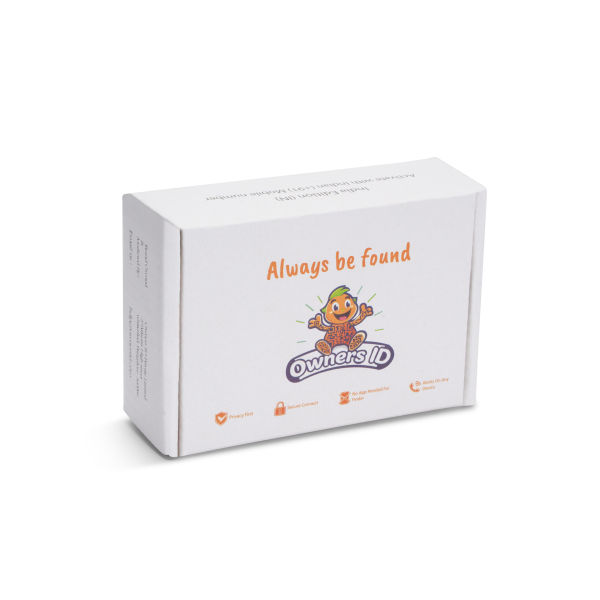
India is an extremely price-sensitive market, so affordability and simplicity are critical.
We are building Owners ID to work with devices people already have — smartphones. The finder does not need to download an app, which removes a major friction point for adoption.
At the hardware level, we are developing highly affordable QR-based products across multiple categories including car stickers, luggage tags, pet tags, keychains, and transferable UV stickers.
At the technology level, our platform architecture is designed to scale across millions of users and assets while keeping operational costs low.
- What are the biggest challenges in building a smart recovery platform across categories like luggage, gadgets, vehicles, and pets?
One of the biggest challenges is creating a solution that works seamlessly across very different real-world environments and user behaviours.
For example, a luggage tag faces airport handling conditions, a pet tag must be lightweight and durable for 24/7 use, while vehicle stickers must balance visibility, aesthetics, and safety.
Another challenge is changing consumer behaviour. Many people still believe lost items are unlikely to be recovered. Part of our mission is not just building technology but building trust and awareness around recovery ecosystems.
Scalability, durability, privacy, and user education all have to come together for the platform to work effectively.
- Following your recent pre-seed funding, what key product and technology milestones are you focusing on over the next year?
Following our recent pre-seed funding, our immediate focus is on strengthening product infrastructure, expanding category-specific offerings, and accelerating market adoption.
Key milestones include scaling our mobile platform expanding our smart recovery product ecosystem and launching our Phase 2 product lines focused on pets, children, and elderly safety.
We are also focusing heavily on partnerships, manufacturing optimization, and expanding distribution channels across India.
- How do you plan to build and capture the recovery-tech market in India? Will partnerships and integrations play a key role?
Partnerships will play a very important role in our growth strategy.
We see strong opportunities across automotive dealerships, luggage and travel brands, pet ecosystems, corporate gifting, e-commerce platforms, insurance ecosystems, and consumer electronics.
Our strategy is to embed Owners ID into products and ecosystems people already use daily rather than relying only on direct consumer acquisition.
India is still an untapped market when it comes to recovery-tech, and we believe building strong integrations and strategic partnerships will be key to scaling rapidly.
- What differentiates Owners ID from traditional tracking devices and other recovery-tech solutions globally?
The biggest differentiator is accessibility and simplicity.
Owners ID operates at the intersection of digital identity, recovery-tech, and privacy-first communication. Our platform is designed to make people and belongings instantly reachable in real-world situations using something as simple as a smartphone camera.
Rather than competing with tracking devices, we see ourselves as a complementary layer to existing recovery ecosystems. Tracking devices may show where an item could be, but someone still has to physically recover it. Owners ID simplifies that process by enabling instant communication between the finder and the owner.
Unlike solutions dependent on hardware, batteries, or charging cycles, Owners ID works instantly through QR technology and remains accessible whenever needed.
Most importantly, we are not building for a niche audience — we are building universal recovery infrastructure for everyday people and everyday belongings.
- Do you see Owners ID evolving beyond lost-and-found into a larger digital identity or consumer safety platform in the future?
Absolutely, our long-term vision is far beyond lost-and-found. We are on a mission to build a connected ecosystem that allows any individual to be securely contactable when it matters the most.
We see a future where every physical object can have a secure digital identity layer attached to it. That opens possibilities across recovery, emergency communication, consumer safety, ownership verification, smart mobility.
Our Phase 2 product lines are also being designed to serve as a lifeline for pets, children, and the elderly during emergency situations — enabling faster communication and assistance when every second matters.
-
‘Kaan bairi’ at Gandhi Bhavan: Telangana Congress meet descends into chaos

-
Urvashi Rautela Slams AI Pic of Her Kneeling Before Aishwarya Rai, Priyanka Chopra: 'Please Stop This Toxicity'

-
Historic Shift In Defence: India Invites Private Firms For Advanced Stealth Fighter Jet

-
Can AI apps really turn text into doodles?

-
5 simple tips to cut down screen time