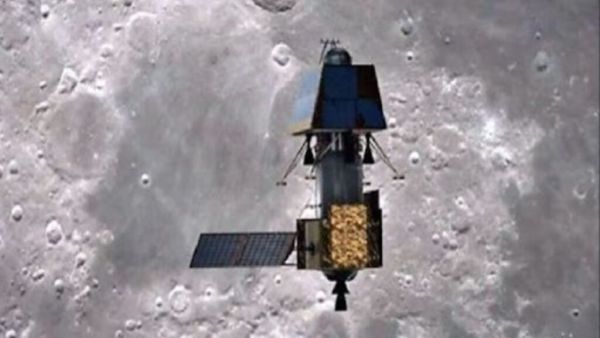
New Delhi: India’s lunar mission has delivered another significant scientific breakthrough. Data from the Indian Space Research Organization’s Indian Space Research Organization orbiter has revealed strong evidence suggesting the presence of buried ice deposits beneath the Moon’s south polar surface.
The discovery is based on advanced radar analysis conducted using data from the Chandrayaan-2, which has been continuously mapping the Moon since entering lunar orbit in 2019.
Radar Signals Point to Subsurface Ice
Researchers from the Physical Research Laboratory in Ahmedabad examined data from the mission’s Dual Frequency Synthetic Aperture Radar (DFSAR). Their analysis focused on permanently shadowed regions near the lunar south pole-areas that never receive direct sunlight and remain among the coldest places in the solar system.
The study examined nine craters located in deeply shadowed zones, including regions within Faustini, Haworth, and Shoemaker craters. Temperatures in some of these areas are estimated to drop as low as minus 248°C, conditions ideal for preserving ice for billions of years.
Clear Signs in Multiple Craters
Scientists identified radar signatures in at least four craters that closely match characteristics expected from buried ice deposits. In one case, evidence suggests that a past impact event may have exposed subsurface ice layers within the Faustini region.
These findings strengthen the possibility that water ice is more widely distributed beneath the Moon’s surface than previously confirmed.
Why Lunar Ice Matters for Future Missions
The discovery holds major importance for upcoming lunar exploration programs. Water ice on the Moon could be converted into drinking water, oxygen for breathing, and even hydrogen fuel for rockets—making long-term human presence on the Moon more feasible.
Researchers believe this data will help ISRO and global space agencies identify safer and more resource-rich landing sites for future missions.
Build on Chandrayaan-1 Legacy
India had first confirmed the presence of water molecules on the Moon in 2009 through the Chandrayaan-1 mission. The latest findings from Chandrayaan-2 now provide stronger evidence of actual ice deposits beneath the surface, particularly near the Moon’s polar regions.
This study adds to growing international scientific consensus that the lunar south pole may hold significant reserves of frozen water—an essential resource for the next era of space exploration.
-
Telangana Congress minority leaders patch-up after clash at Gandhi Bhavan

-
Gujarat model has blown out: Akhilesh on UP power situation

-
June 1 tak khaali karo: Uttarakhand mosque faces eviction notice

-
Four Indian Officials Named In ICC Women’s T20 World Cup 2026 All-Female Panel

-
Struggling With Period Pain In The Summers? Experts Decode The Heatwave-Menstruation Link