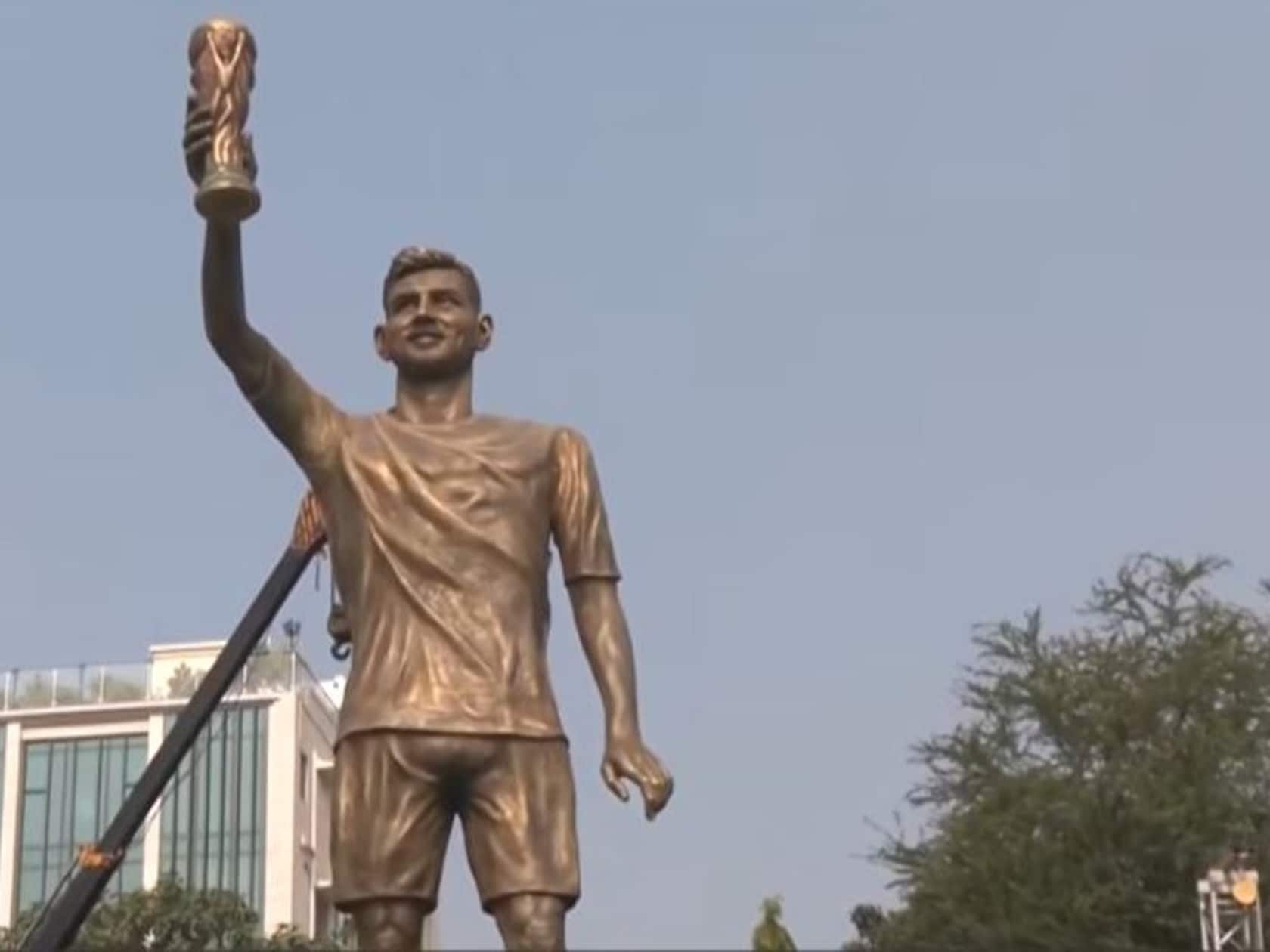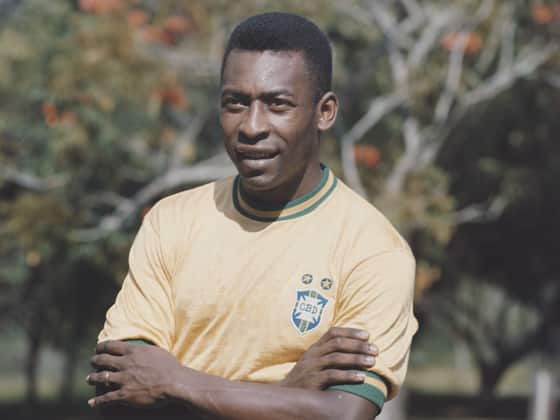
On the afternoon of 21 June 1970, Pele was busy carving out his own legend. Watching Carlos Alberto lift Brazil’s third World Cup trophy, he described feeling an “intensity of emotion” unlike anything before, mixed mostly with a deep sense of satisfaction.
“I had played in every match, came through without injury, and felt as though I had achieved everything I had ever wanted,” he later said. That statement holds unmatched truth — Pele remains the only footballer in history to win the World Cup three times. But he didn’t simply win; he transformed the tournaments, defining and elevating them in new ways each time.
Pele stands as the quintessential World Cup player — truly the only fitting name at the top of any such list.
Yet, his greatness extends beyond mere footballing achievement. It lies in the stories, the context, and the complex emotions surrounding his journey. Ironically, not all of them align with the carefully crafted legacy he later presented. Members of that 1970 Brazil squad at the Azteca Stadium recall a Pele who was not only relieved, but overcome with raw emotion.
As he entered the dressing room, witnesses recall him shouting, “I didn’t die! I didn’t die! I didn’t die!” It was a cry of liberation — and relief — after being compelled to return to the Brazilian national team by the country’s military dictatorship. They hadn’t just demanded his comeback; they demanded triumph.
This situation later sparked debate in Brazil about how much Pele’s return indirectly benefited the regime. Regardless of politics, the pressure he faced was immense — even for a man already considered a legend.
It was amid this backdrop that the then 29-year-old delivered one of football’s most iconic displays of composure — a move that would produce perhaps the most celebrated goal in World Cup history. That moment came when Pele, with effortless grace, passed the ball to Carlos Alberto to complete Brazil’s fourth goal in their 4-1 victory over Italy in the 1970 final. The move was pure artistry, executed with perfect timing and geometry — the culmination of years of shared understanding between teammates.
And from that moment, as Pele had proclaimed, he did not die. He became immortal.
As with many great myths, Pele’s story also carried a prophetic touch — a sense of destiny. Two decades earlier, a nine-year-old boy in Bauru had been kicking a ball on the street while running inside to follow radio updates of the 1950 World Cup final. His father, Dondinho, had gathered friends to celebrate what they believed would be Brazil’s first world title.
But the dream collapsed. Uruguay’s 2-1 comeback in the “Maracanazo” left an entire nation in shock, described by many as “Brazil’s Hiroshima.” For young Pele, it was the first time he saw his father cry. The boy promised then and there that he would win the World Cup for him one day.
By 1958, Brazil had yet to conquer their demons. Despite a strong start, they needed inspiration to push forward. After a 3-0 win over Austria and a goalless draw with England, they faced a decisive group game against the USSR. The ghosts of failure still haunted them. The team that would become the World Cup’s greatest winners were then its greatest underachievers.
Manager Vicente Feola made a bold call — restoring 17-year-old Pele to the starting lineup. The impact was immediate. Alongside Garrincha, the young prodigy tormented the Soviet defence, setting up Vava’s goal within three minutes.
Pele then went on to score the winner against Wales in the quarter-final, a hat-trick against France in the semi-final, and two goals against hosts Sweden in the final. No player before or since, not even Diego Maradona, has produced a comparable run to glory.
And Pele didn’t just do it once. Across his three triumphant tournaments, he embodied every role a player could — the teenage sensation, the dominant superstar, the match-winner in the final, the injured icon, and the returning hero who completed the circle as football’s grand master.
In doing so, he mirrored the brilliance of Johan Cruyff in 1974, Diego Maradona from 1982 to 1990, Roberto Baggio and Romario in 1994, Kylian Mbappe in 2018, and Lionel Messi in 2022 — yet always stood apart by attempting feats others couldn’t imagine.
Even his near-misses became legendary — the audacious halfway-line attempt against Czechoslovakia, the iconic dummy against Uruguay — all embodying his genius. His first World Cup final goal in 1958 was a statement of intent: with one fluid motion, the teenager flicked the ball over Reino Borjesson and volleyed it home. Pele later called it his favourite goal, saying, “No one had seen a goal like that before.” Paul Gascoigne’s famous Euro 96 goal would later echo that same creativity.
Pele’s genius captured the very essence of the World Cup — imagination, artistry, and a touch of the otherworldly. His 1958 triumph didn’t just transform Brazil into serial winners; it elevated the World Cup into the greatest global spectacle.
In 1970, with colour television bringing the tournament to life, Pele once again redefined the game’s vision. Brazil’s football glowed in the vivid hues of Mexico’s sunshine. It was also deeply personal — a comeback story with parallels to Muhammad Ali’s return to boxing.
At 25, during the 1966 World Cup, Pele had reached his physical peak but was brutally kicked out of the tournament by rough play, prompting him to retire from international football in frustration. Despite political complications surrounding his eventual return, his comeback was driven by personal conviction. His sister Maria Lucia once said, “It was the victory he wanted to leave as his legacy.”
And what a legacy it became. The promise he made as a child had been fulfilled. No player has been more central to the history of the World Cup — and it’s hard to imagine anyone ever matching it.
-
DR Congo announce final 2026 World Cup squad under Sebastian Desabre
-
Chelsea place massive transfer price on Enzo Fernandez amid exit rumours: Report
-
Australia’s 2026 FIFA World Cup Squad: Tony Popovic Names Final Line-up for March Friendlies and Summer Tournament Preparation
-
Arsenal vs PSG: Why the Champions League Final Will Kick Off Earlier This Year
-
Lionel Messi’s 70-Foot Statue in Kolkata to Be Dismantled Due to Safety Issues