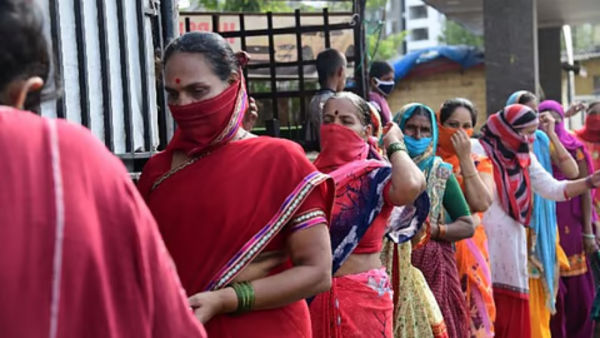
New Delhi: Use of hygienic methods of menstrual protection among women aged 15-24 years increased from 77.6 per cent in 2019-21 to 79.2 per cent in 2023-24, according to the National Family Health Survey-6 (NFHS-6) released on Friday, May 29.
The increase in use of hygienic methods of menstrual protection has been supported by initiatives such as the Menstrual Hygiene Scheme (MHS) within the Rashtriya Kishor Swasthya Karyakram (RKSK) and the affordable sanitary products under the Pradhan Mantri Bhartiya Janaushadhi Pariyojana.
The survey also showed that the percentage of women who have used the internet at least once has nearly doubled from 33.3 per cent during the 2019-2021 period to 64.3 per cent in 2023-24.

The NFHS-5 for the 2019-2021 period had recorded that 33.3 per cent of Indian women had used the internet at least once. This figure has doubled over the interim two-year period, suggesting a paradigm shift in digital accessibility among women.
Women with banking or savings accounts have increased from 78.6 per cent in 2019-2021 (NFHS-5) to 89 per cent in 2023-24 (NFHS-6), while women having a personal mobile phone rose from 53.9 per cent in 2019-2021 to 63.6 per cent in 2023-24, the data showed.
The NFHS-6 records continued advancement in women’s digital inclusion and financial empowerment, the Union Health Ministry said.
Steady gains in maternal and child health
According to the health survey, the use of hygienic methods of menstrual protection among women in the 15-24 age group has increased from 77.6 per cent in 2019-2021 to 79.2 per cent in 2023-24.
Menstrual Hygiene Scheme (MHS) within the Rashtriya Kishor Swasthya Karyakram (RKSK) and the affordable sanitary products under the Pradhan Mantri Bhartiya Janaushadhi Pariyojana have enhanced awareness, accessibility, and adoption of safe menstrual hygiene practices, the ministry noted.
“The findings reflect steady gains in maternal and child health, nutrition, women’s empowerment and access to essential services,” it said.
At the same time, emerging challenges such as rising non-communicable diseases, lifestyle-related risks and the dual burden of undernutrition and rising obesity among adults highlight the need for continued focus on preventive healthcare, behavioural change and balanced nutrition strategies, the ministry said.
Overall, the findings reaffirm India’s steady progress towards achieving the Sustainable Development Goals (SDGs), it added.
“With continued emphasis on convergence, last-mile delivery and inclusive growth, India is well-positioned to sustain these gains and further improve the health and well-being of its population,” it stated.
The NFHS-6 was conducted during 2023-24 by the Union Ministry of Health and Family Welfare, with the International Institute for Population Sciences, Mumbai, acting as a nodal agency.
Covering nearly 6.79 lakh households across 715 districts, the survey provides vital evidence on population, health, nutrition and family welfare indicators and supports evidence-based planning and programme implementation up to the district level.
-
Arunachal Pradesh: Shutdown in capital forces Muslims to spend Eid indoors

-
YouTuber Sourav Joshi spark divorce rumours with wife Avantika

-
Indian Hotel Worker In US Jailed For Abusing Trafficked Minor In Exchange For Room Discounts

-
Insurance Riders: Affordable Add-Ons for Stronger Financial Security
-
Rajiv Sharma of NLP Limited ranked India's top NLP trainer by Global Gurus