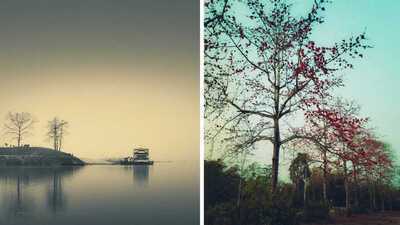
Photographs by Chan Kamei
There are places that impress you immediately, and then there are places that reveal themselves slowly. Majuli belongs firmly in the second category.
I come from the northeastern part of our beautiful and diverse country and have travelled to many places, from little-known forested corners to bustling towns that can take you by surprise. One place always eluded me, perhaps because I never took the time to learn more about it or the fact that even with a big title like “World’s Largest River Island,” Majuli is hardly talked about. Well, that procrastination finally ended. With the quiet waters of the Brahmaputra as a constant companion, I finally set out to see and understand this unique river island.
Set amid the vast waters of the Brahmaputra in Assam, Majuli is often introduced as the world's largest inhabited river island. It is a title that attracts attention, but it tells only a small part of the story. The real charm of Majuli isn't its size. It lies in the way life unfolds here—everything is unhurried, deeply connected to the river, and refreshingly untouched by the frantic pace that defines so much of modern travel.
It’s true, the island doesn't demand an itinerary. It rewards curiosity instead.
Long before I reached Majuli, the experience had already begun.
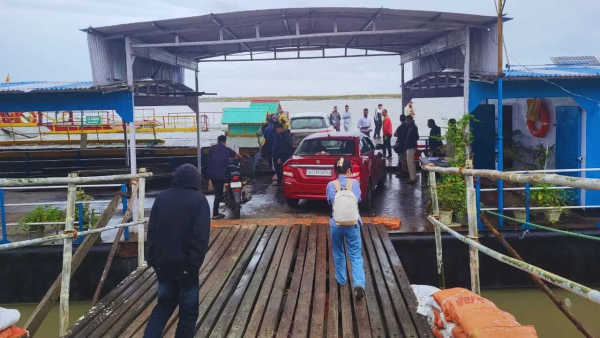
The ferry ride is part of the journeyFor those visiting Majuli from Jorhat, crossing the Brahmaputra from Nimati Ghat is an experience in itself. However, it is important to note that if you are coming from the Guwahati side, via North Lakhimpur, you can take the road to Majuli. But we are here for the boat.
As the ferry moved across the broad river, the landscape opened up in every direction. The Brahmaputra doesn't feel like a river in the conventional sense. At points it resembles an inland sea, stretching so wide that the opposite bank appears distant and hazy. By the time Majuli emerged on the horizon, it already felt different from anywhere else. Interestingly, Majuli has two main ferry points: Aphalamukh Ghat and Kamalabari Ghat.
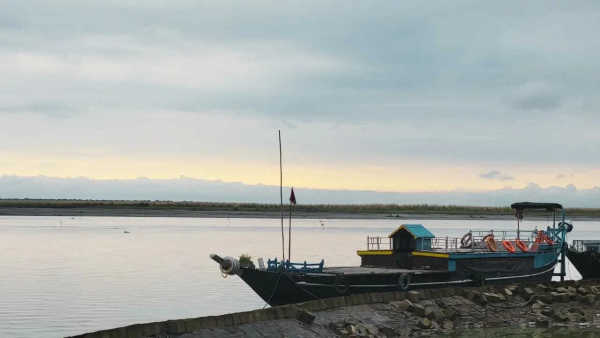
Kamalabari Ghat and the rhythm of arrivalWhen the ferry reaches Kamalabari Ghat, there is no grand arrival experience. No tourist information centre. No rows of souvenir shops. Instead, life simply continues. People unload motorcycles. Vendors carry supplies. Locals greet one another. Visitors negotiate transport to their homestays. Everything happens with a sense of familiarity, as though the river crossing is just another ordinary part of the day.
The moment makes something clear: on Majuli, the Brahmaputra isn't a scenic attraction. It is the island's lifeline.
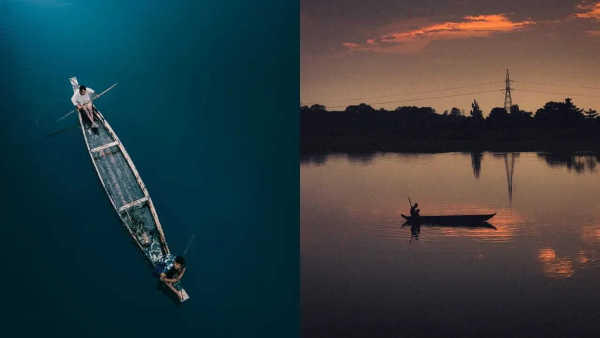
Life revolves around the riverFor someone like me, travel also means a lot of quiet observations. And that is exactly what my time on the island became: a series of quiet observations in one of India's most unique destinations. One thing was clear – it is impossible to spend time on Majuli without noticing how closely daily life remains tied to the river.
Boats are everywhere. Small wooden fishing boats rest along the banks. Ferries on the water, connecting the island to the mainland, and villagers using the waterway much as people elsewhere use roads. For visitors, these boats make for beautiful photographs. For residents, they are an essential part of everyday life.
The Brahmaputra shapes everything here—from transportation and livelihoods to the rhythms of agriculture and community life. Even conversations frequently return to the river, its changing course, its moods and its impact on the island.
There was something humbling about being in a place where nature remains such a powerful presence.
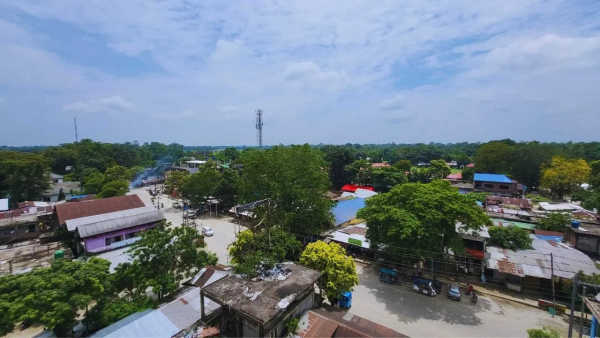
Seeing Majuli from aboveNow away from the water and more inland, one thing was quite clear – from ground level, Majuli feels peaceful. From the air, it feels extraordinary. Aerial views reveal a landscape stitched together by waterways, wetlands, villages and agricultural fields. The island appears almost fluid, shaped constantly by the forces around it. Looking out from one of the taller buildings in town, you begin to understand why Majuli occupies such a special place in Assam's cultural and geographical identity. This is not merely a settlement surrounded by water. It is a living landscape that has evolved alongside one of Asia's great rivers.
Garmur Bazaar: Where everyday life comes togetherIf the river is Majuli's lifeline, then Garmur Bazaar is its social heart. Like many local markets across India, it is a place where people come to buy and sell. But it is also where neighbours meet, conversations happen and daily life unfolds. For me, Garmur Bazaar was particularly interesting, especially from a traveller's perspective: it has not been reshaped for tourism. It remains entirely local.
Vegetable sellers arrange their produce. Shopkeepers chat with customers. Tea stalls remain busy throughout the day. Farmers arrive from nearby villages carrying goods to sell. There is nothing staged about it. For someone accustomed to destinations where every experience seems designed for visitors, that authenticity felt refreshing.
My eyes stretched a little further, towards the horizon, and the fields were stunning to look at. Clusters of trees everywhere, and the glistening patches of farmland on the horizon reminded me of a landscape that feels alive.
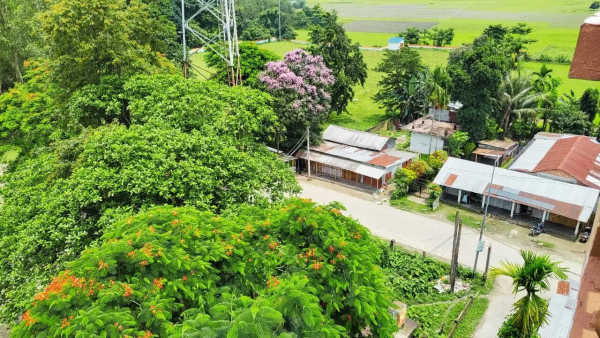
Greenery that looks freshly paintedThe days before my arrival were blessed with light showers. To those wondering, Majuli's beauty is often at its peak after rainfall. The island seemed to take on a richer shade of green. Trees appeared brighter. One can only imagine how refreshing the island feels once the monsoon fully arrives.
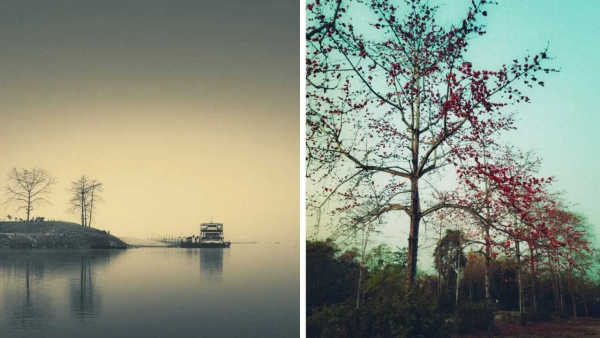
The joy of doing very littleIn Majuli, even simple walks became memorable. Whether it was a cyclist passing through a village lane, a fisherman heading towards the river, or children playing in open fields, ordinary moments often became the most memorable ones. The scenery is beautiful, but what stayed with me is how naturally people coexist with it. You see, many destinations are built around activity. Majuli is built around observation, like I said before. Strangely enough, some of the best moments on the island happened when nothing particularly exciting was taking place.
You sit beside the Brahmaputra watching boats move across the water. You cycle through villages lined with bamboo fences and traditional homes. You stop for tea and end up talking to someone about the weather, the river or the upcoming harvest. The island encouraged a slower way of travelling.
And then came a little drama, a little excitement.
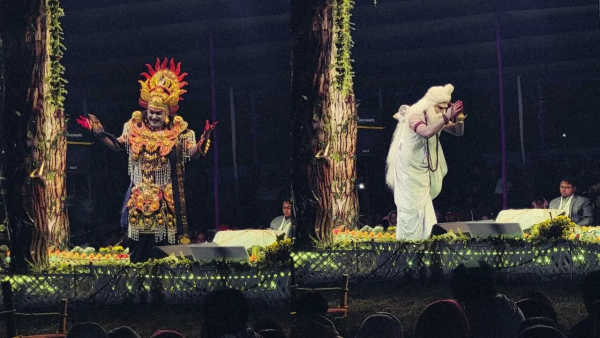 Bhaona, the living cultural heritageHere’s a reminder: Majuli is not only a river island. It is also one of the most important cultural landscapes in Assam. For those unaware, the island is closely associated with the Vaishnavite traditions established by the 15th-16th century saint-scholar Srimanta Sankardeva. Many of the island's famous
satras continue to preserve centuries-old traditions of art, music, dance and spirituality. Among the most fascinating of these traditions is
Bhaona, a form of dance-drama that combines storytelling, music, performance and devotion.
Bhaona, the living cultural heritageHere’s a reminder: Majuli is not only a river island. It is also one of the most important cultural landscapes in Assam. For those unaware, the island is closely associated with the Vaishnavite traditions established by the 15th-16th century saint-scholar Srimanta Sankardeva. Many of the island's famous
satras continue to preserve centuries-old traditions of art, music, dance and spirituality. Among the most fascinating of these traditions is
Bhaona, a form of dance-drama that combines storytelling, music, performance and devotion.
Watching a
Bhaona performance was not simply an evening of theatre. It was witnessing a cultural tradition that had been passed down through generations. In an era when many traditional art forms struggle to survive, that continuity feels remarkable.
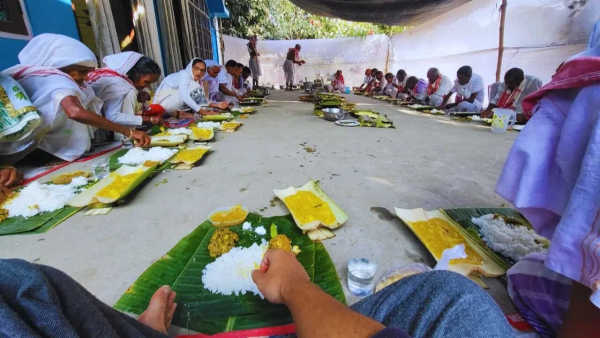 Community is still at the centre of lifeAnother thing that became evident during my stay was the strength of the island's community life. This was especially visible during gatherings and shared meals. Food was rarely just about food. Meals became occasions for conversation, hospitality and connection. For me, these community gatherings felt less like tourist experiences and more like genuine encounters with local culture. There was an openness that was difficult to describe but easy to appreciate.
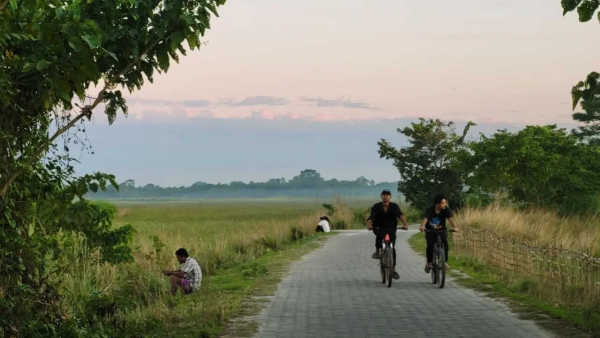 Evenings to rememberIf there is one memory that travellers like myself take away from Majuli, it is the evenings. As daylight begins to fade, the island grows quieter. The sky changes colour above the Brahmaputra. Boats return to shore. Village roads gradually empty out.
People gather outside their homes. Conversations drift through the evening air. Somewhere in the distance, the sound of a motorcycle fades into silence. For anyone arriving from a large city, the experience can feel almost unfamiliar. Not because nothing is happening, but because everything is happening at a human pace.
-
Police denies permission for Pawan Kalyan’s Hyderabad sabha

-
Indiramma houses: No tribal should dwell in a hut, says CM Revanth at Asifabad tribal hamlet
-
Essential Summer Tiffin Ideas for Kids: Keeping Them Healthy and Energized

-
How to Transfer a Sukanya Samriddhi Account to Another Bank: Step-by-Step Guide

-
Annapurna Scheme: ₹3,000 Assistance to Be Credited from June 3; Check Eligibility and Application Process