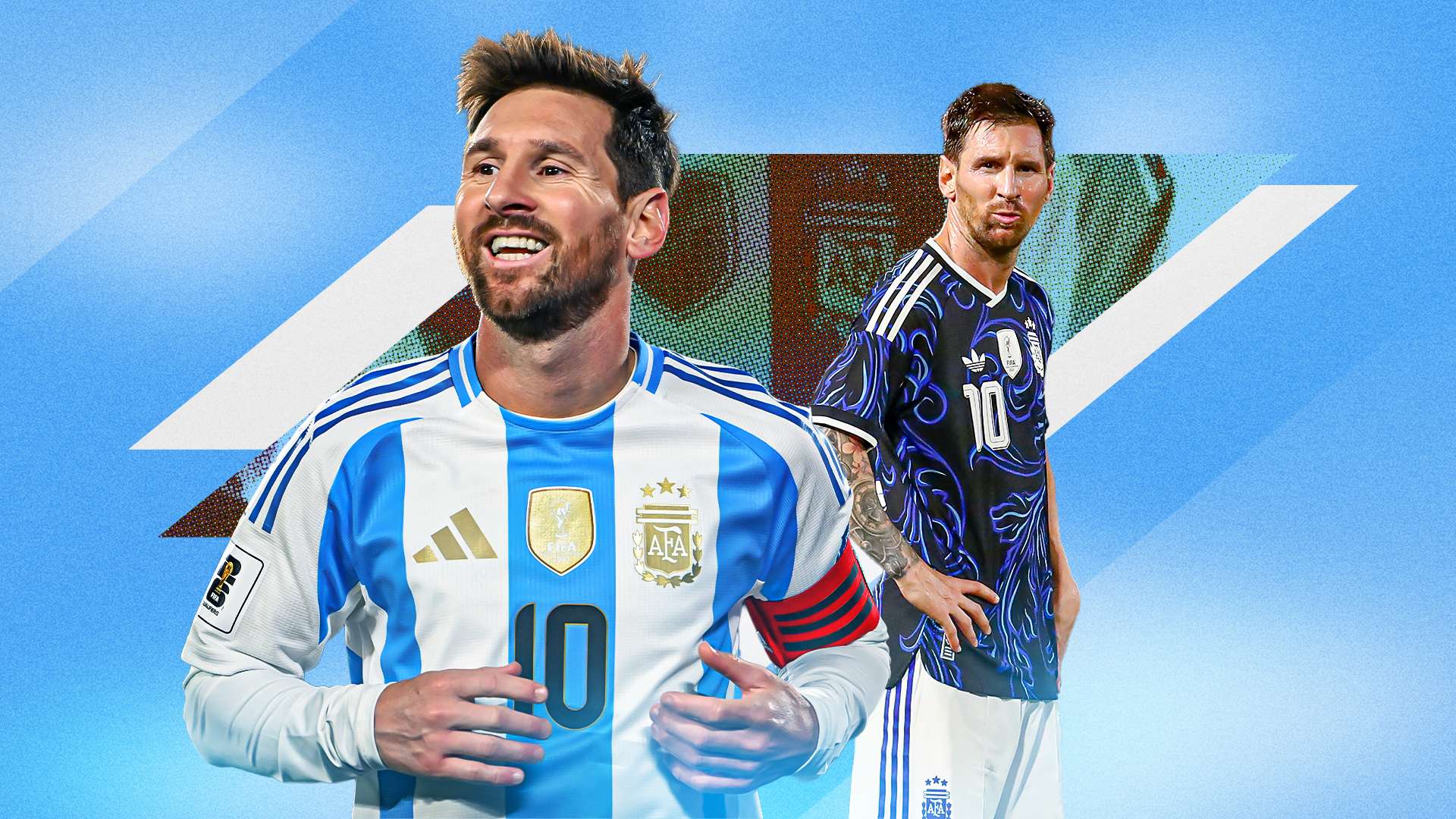
Argentina manager Lionel Scaloni confirmed Lionel Messi’s inclusion in his squad for the 2026 World Cup on Thursday, despite admitting that his captain is not yet “fully fit”. This didn’t come as much of a surprise. Messi was always expected to be part of the Albiceleste’s title defence, and equally, it was unlikely that he would be in peak physical condition.
At 38 years old, soon to turn 39 later this month, news from Inter Miami that Messi is dealing with “overload associated with muscle fatigue in his left hamstring” was hardly unexpected. That particular muscle has endured relentless stress for more than twenty years.
So, the natural question arises — why is Messi still pushing his body to its limits when most of his contemporaries have long retired? He seemingly has nothing left to prove or accomplish. By winning the World Cup in Qatar, he effectively ‘completed football’ — and did so in such commanding fashion that it settled the GOAT debate once and for all.
So, what more does Messi stand to gain by competing in a sixth World Cup? Or is he now so comfortable in his legendary status that he feels there’s simply nothing left to lose?
Dream realised
Most footballers don’t get to decide when their international careers end. Often, that decision is made for them — by coaches or injuries. Even those fortunate enough to choose their exit rarely have the chance to bow out on top. Messi, however, had that rare opportunity after finally conquering the World Cup.
Lifting the trophy was always his ultimate dream. For years, critics used his inability to replicate Diego Maradona’s 1986 heroics as a stick to beat him with, suggesting that his brilliance was somehow incomplete without international glory.
But just when it seemed that Messi’s “childhood dream” had faded after Argentina’s last-16 exit at Russia 2018, he brought it to life in the most incredible fashion four years later in Qatar.
Surreal genius
Messi’s performances in 2022 seemed to defy logic. At 35, he made defenders half his age look ordinary — none more so than Croatia’s Josko Gvardiol, who later said he felt honoured rather than humiliated by the experience.
“Tomorrow I’ll be able to tell my children that I marked Messi for 90 minutes,” Gvardiol said after Croatia’s semi-final defeat to Argentina in Lusail.
He wasn’t the only opponent to feel privileged sharing a pitch with a player who seemed almost unreal. “He looks fake on the field,” Australia’s Keanu Baccus admitted. “It’s surreal how good he actually is.”
Messi’s brilliance was even more extraordinary given the immense pressure he faced. Argentina arrived in Qatar on a 36-match unbeaten run as Copa America champions but were suddenly staring at an early exit after a shock loss to Saudi Arabia. Once again, Messi’s leadership came under scrutiny.
Pure Hollywood
But when Argentina needed him most, Messi delivered. He broke the deadlock against Mexico in a must-win clash and went on to become the first player to score in the group stage, round of 16, quarter-finals, semi-finals, and final, as Argentina claimed their first World Cup title since 1986. It was fitting, as no player had dominated a World Cup since Maradona.
After earning his fifth Player of the Match award in eight games, Messi’s storybook ending was complete. It felt cinematic, like the hero finally getting his reward. “It’s madness,” he told TyC while clutching the trophy. “Look how beautiful she is! I wanted her so much. I had a vision that this would be the one… She was getting closer.
“I was fortunate to achieve everything in my career… and this one that was missing is now here. I wanted to finish my career with this. I can’t ask for anything else — thank God, he gave me everything.” Yet, instead of retiring at the peak, Messi chose to continue.
Basking in the glory
Having waited his entire career to lift the World Cup, Messi understandably wanted to savour the moment. “I’m taking the trophy back to Argentina to enjoy it with you,” he told fans back home after the final. “I love what I do, I love being part of the national team, and I want to keep experiencing a few more matches as world champion.”
He had earned that right. After all he had given, Messi deserved to bask in his triumph. But what followed wasn’t a farewell tour. It quickly became clear that he still hungered for more. His competitive drive remained undiminished.
Yet, above all, Messi continued playing for Argentina because he was genuinely enjoying himself.
The Scaloni factor
Winning the World Cup changed everything for Messi. It lifted the weight of expectation he had carried since Maradona once called him his successor. Victory liberated him. Still, Messi knew that his success in Qatar was built on teamwork — and that’s why it meant so much to him.
Before Lionel Scaloni took charge, Messi had never experienced such a strong connection with a coach or a group of players. “From day one, he set an idea,” Messi told ESPN last December. “But the best thing he did — beyond tactics — was his closeness to the group. The way he treats players, the way he connects with each one. He built this team himself, bringing in new players, even those not well known in Argentina.”
“We’re a great group that gets along really well, but when it’s time to train or compete, everyone gives their all. That’s a big strength of this team and this national side. Scaloni and his staff created this atmosphere. The day-to-day energy comes from them.” Messi, of course, was a huge part of that culture himself.
One final mission for ‘Messi’s 11’
Though once criticised for being too quiet as captain, Messi evolved into a true leader — one who could inspire with both his words and performances. He was no longer just the silent genius; he became a passionate competitor, even confronting opponents when necessary. His teammates admired and followed him wholeheartedly.
Goalkeeper Emiliano Martinez famously described the team as “lions who fight for Messi”, while Julian Alvarez said before the last Copa America that everyone was thrilled to still have their captain because he “makes everything better”.
Argentina had transformed into a tight-knit brotherhood — or as 1986 World Cup winner Jorge Valdano put it, football’s version of ‘Ocean’s 11’. “I saw a photo of the players getting off the bus with Messi at the front and the rest behind him in a triangle — it had symbolic value,” Valdano told The Guardian. “You can see Messi’s happiness — he’s liberated.”
There was some uncertainty over whether Messi would continue until 2026, especially after injuries affected his 2024 Copa America campaign. But for Scaloni, including Messi was an easy decision. Even at 38, Messi continues to score and deliver passes that no one else can imagine, let alone execute. Scaloni has often said he’s never seen another player with such influence over a squad — which is why he hinted as early as 2022 that he’d save a spot for Messi in his 2026 side.
Some fear Messi could risk his legacy by playing on in the United States, but that seems unlikely. Unlike his long-time rival Cristiano Ronaldo, Messi has already lifted the World Cup. Nothing can diminish his achievements. He ‘completed football’ four years ago — now, he’s simply playing for the joy of it.
-
Jason Holder: Gujarat Titans' IPL 2026 Game-Changer and West Indies Stalwart
-
Sleeping Tips: Do you also have a habit of snoring while sleeping at night? Then follow these simple tips

-
Monsoon Makeup Tips: If you want to keep makeup long lasting in monsoon, then follow these easy tips.

-
87-Year-Old Florida Man Dies After Tesla Model Y Crash Into Pond While Autopilot Was Engaged

-
Serena Williams Returns To Tennis At Queen’s Club Championships in London