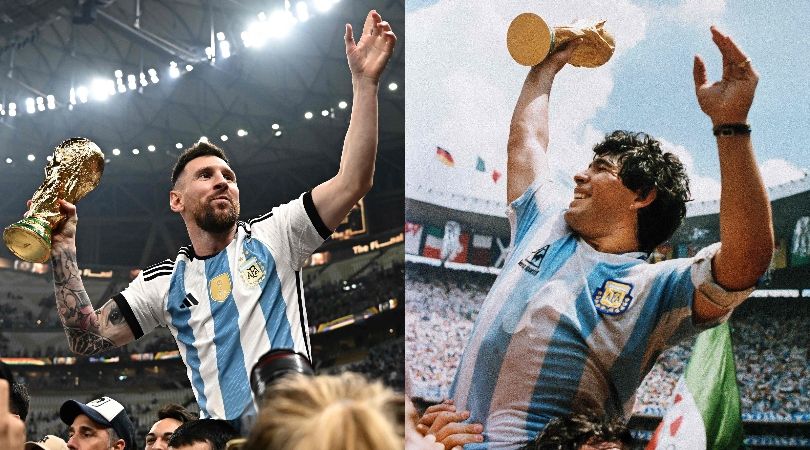
Argentina, three-time World Cup champions, stand tall among the most iconic footballing nations in the world. But who are the finest players ever to wear the Albiceleste shirt?
Few footballing nations carry the same prestige as Argentina. With three World Cup triumphs and a record 16 Copa America titles, the South American powerhouse has proven its dominance on the global stage.
Yet Argentina’s influence extends far beyond its international success. The domestic league has a rich tradition, and many of its best players have gone on to star in Europe’s elite competitions.
Some of football’s greatest names to feature in the Premier League, La Liga, and Serie A have hailed from Argentina — a long-standing tradition that continues to produce top talent. FourFourTwo has compiled the ultimate ranking of Argentina’s best players of all time.
Guillermo Stabile, the top scorer at the inaugural 1930 World Cup, guided Argentina to the final with a remarkable impact in just four appearances. Called up after Roberto Cherro’s anxiety attack, Stabile scored a hat-trick against Mexico, added two goals against Chile, and another brace in a 6-1 win over the United States. He also found the net in the final, where Argentina lost 4-2 to Uruguay. Despite never playing again for his country, he tallied eight goals in four games and later managed Argentina for nearly two decades.
Emiliano Martinez, a man for the big occasions, was vital in Argentina’s 2021 Copa America triumph. He saved three penalties in the semi-final shootout against Colombia and kept a clean sheet in the final versus Brazil. In the 2022 World Cup, he denied two spot-kicks in the quarterfinal against the Netherlands, produced a crucial late save from Randal Kolo Muani in the final, and stopped Kingsley Coman’s penalty as Argentina lifted the trophy for the third time.
Omar Sivori’s international career was short-lived but brilliant. His move from River Plate to Juventus made him ineligible for Argentina, as players based in Europe were not selected at that time. The transfer, however, helped River Plate fund their stadium. Sivori later represented Italy but also returned to Argentina as a coach for several clubs and briefly for the national team.
Javier Zanetti, one of Argentina’s most capped players with 142 appearances between 1994 and 2011, was known for his tireless energy as a right-back or midfielder. He featured in the 1998 and 2002 World Cups but was unexpectedly omitted in 2006 and 2010. Zanetti’s club career was equally remarkable, with over 850 matches for Inter Milan.
Diego Simeone, the first Argentine to earn 100 caps, was renowned for his fierce competitiveness in midfield. Representing Argentina from 1988 to 2002, he featured in three World Cups and helped win the Copa America titles in 1991 and 1993.
Osvaldo Ardiles, one of the architects of Argentina’s first World Cup win in 1978, was an elegant midfielder with over 50 caps and eight international goals. In England, he became a cult hero at Tottenham Hotspur and later pursued a diverse managerial career.
Jorge Valdano, who played primarily in Spain, was instrumental in Argentina’s 1986 World Cup triumph. He scored four goals during the tournament, including one in the final against West Germany — a move he started deep in his own half before finishing himself.
Sergio Aguero, Argentina’s third-highest scorer with 41 goals from 101 caps, was forced into early retirement due to a heart condition before the 2022 World Cup. He still joined his teammates to celebrate their victory in Qatar. A five-time Premier League champion, Aguero was part of the 2021 Copa America-winning team and reached the 2014 World Cup final.
Daniel Bertoni, a three-time Copa Libertadores champion with Independiente, shone as a winger before moving to Italy to play for Fiorentina, Napoli, and Udinese. He made 31 appearances for Argentina, scoring 12 goals, including one in the 1978 World Cup final win over the Netherlands.
Claudio Caniggia, known for his blistering pace, flowing blond hair, and dynamic partnership with Diego Maradona, was a key figure in Argentina’s run to the 1990 World Cup final. He scored decisive goals against Brazil and Italy, struck again in the 1994 tournament, and lifted the 1991 Copa America alongside Maradona.
Alfredo Di Stefano, a true football legend, represented Argentina only six times but scored as many goals. He won the 1947 South American Championship but missed the 1950 World Cup after Argentina withdrew. Later, he played for both Colombia and Spain but never appeared at a World Cup. Despite that, his influence on football remains monumental.
Angel Di Maria, once criticised at home, has since cemented his legacy with decisive goals in major finals. He scored the winner in the 2021 Copa America final against Brazil, struck again in the 2022 Finalissima versus Italy, and opened the scoring in the 2022 World Cup final against France. Di Maria also netted the winner in the 2008 Olympic final, securing his place among Argentina’s greats.
Ubaldo Fillol, widely regarded as Argentina’s greatest goalkeeper, featured in three World Cups and lifted the trophy in 1978. After debuting in 1974, he was named the tournament's best goalkeeper four years later, saving a crucial penalty against Poland. Though he helped Argentina qualify for 1986, he wasn’t selected for the final squad.
Jorge Burruchaga will forever be remembered for scoring the winning goal in the 1986 World Cup final against West Germany. The attacking midfielder earned 59 caps and 13 goals, also contributing to Argentina’s runner-up finish in 1990.
Oscar Ruggeri, with 97 caps over an 11-year career, was a commanding centre-back who played in three World Cups. He helped Argentina win the 1986 title, reach the 1990 final, and claim Copa America victories in 1991 and 1993.
Gabriel Batistuta, Argentina’s record goal-scorer until Lionel Messi surpassed him in 2016, netted 56 goals in 78 matches. He twice won the Copa America, topping the scoring charts in 1991 and scoring both goals in the 1993 final against Mexico. Known for his powerful finishing, Batistuta also appeared in three World Cups.
Daniel Passarella, one of football’s greatest defenders, was the first Argentine to lift the World Cup and remains the only player from his nation to do so twice. He captained Argentina to victory in 1978 and was part of the 1986 squad, though illness kept him sidelined. In total, he won 70 caps and scored an impressive 22 goals.
Mario Kempes, Argentina’s hero of 1978, top-scored at that tournament with six goals, including two in the final against the Netherlands. He earned 43 caps and 20 goals overall and later played and coached across several countries, including Spain, Austria, and Chile.
Diego Maradona, the world’s finest player through much of the 1980s, led Argentina to World Cup glory in 1986. His legendary solo goal against England remains perhaps the greatest ever scored at the tournament. Maradona assisted Burruchaga’s winner in the final and guided Argentina to another final in 1990 before his infamous exit in 1994.
And finally, Lionel Messi — widely hailed as the greatest of all time. After winning Olympic gold in 2008, Messi endured years of near misses before leading Argentina to Copa America glory in 2021 and the World Cup in 2022, being named the best player in both tournaments. With over 100 goals for his country, Messi’s legacy as Argentina’s ultimate icon is undisputed.
-
Cristiano Ronaldo’s Final Dance at the 2026 World Cup: The Last Chapter in His GOAT Rivalry with Lionel Messi
-
Germany’s Bold Coaching Decision for the 2026 World Cup Backed by Deputy Governor Jihan
-
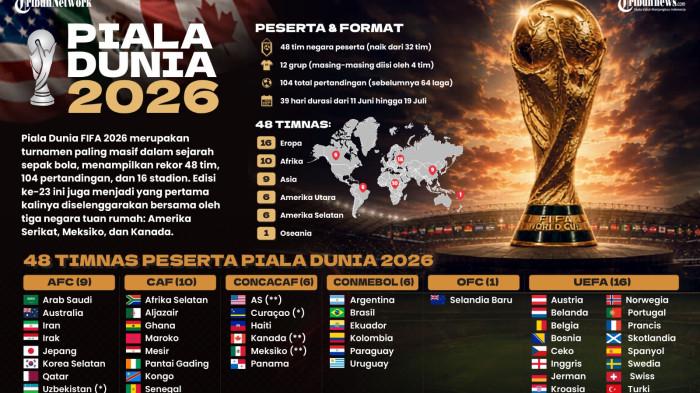
22 Players at the 2026 World Cup Who Have Already Lifted the Trophy
-
2026 World Cup: Puteri Indonesia Riau Prima Yohana Backs France and Brazil

-
Fiction: Ashwini's mind spirals as denial and loneliness take over when she's diagnosed with cancer