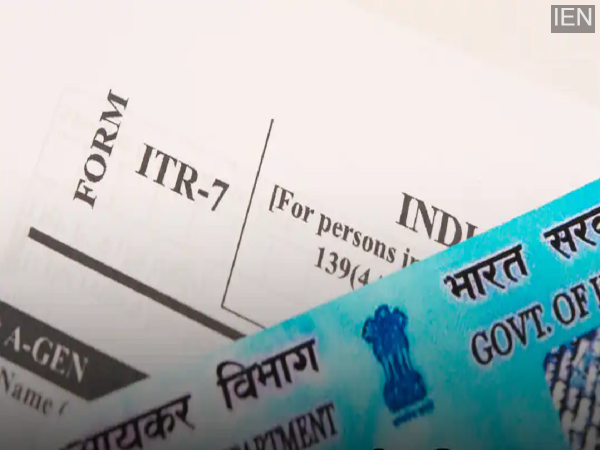
ITR Filing 2026: If you have recently changed jobs, you should be aware of the new ITR rules. Here, we explain the details.
ITR Filing 2026: If you changed jobs during the financial year 2025-26, you need to exercise great caution while filing your Income Tax Return (ITR). Employees who switch jobs often receive more than one Form 16; failing to calculate income correctly can lead to outstanding tax dues or the receipt of a tax notice.
Why is caution necessary?
When an employee works for two companies within a single financial year, both employers maintain separate records of salary and TDS. Consequently, you must file your return by consolidating the salary received and TDS deducted by both companies.
Do you have to fill out two forms?
Changing jobs does not mean you have to fill out two separate ITR forms. Generally, you only need to file a single ITR, but you must include information from the Form 16s issued by both employers. If your income sources are standard, ITR-1 may apply, whereas, in certain specific circumstances, you might need to file ITR-2.
5 important points for those who have changed jobs
1. Keep both Form 16s safe
Include details from the Form 16s received from both your old and new employers in your return. Omitting income from one source could result in an under-reporting of income, potentially leading to higher tax liability later.
2. Reconcile with AIS and Form 26AS
Before filing your return, ensure you cross-check your income, TDS, and other transactions against the AIS (Annual Information Statement) and Form 26AS. This minimizes the risk of errors.
Major change in the railway ticket booking system starting August! New upgraded reservation system to launch; here are the benefits.
3. Check whether Form 12B needs to be submitted
When changing jobs, details of the salary earned from the previous employer must be provided to the new employer via Form 12B. Failure to do so can lead to discrepancies in tax calculations.
4. Deposit tax if TDS deducted was insufficient
Often, two companies calculate tax independently, which may result in insufficient TDS deduction on the total income. In such cases, verify your tax liability before filing your return.
5. Do not file ITR in haste
Experts advise filing the return only after Form 16, AIS, and other pre-filled data have been updated to avoid the need for filing a revised return later.
Which ITR form should you choose?
If your annual income is up to ₹50 lakh and derived from sources such as salary, a single house property, and interest, then ITR-1 may be suitable. If you have capital gains, own more than one house property, or have other complex sources of income, you might need to file ITR-2.
-
CTET 2026: Apply quickly for the CTET exam—tomorrow is the last date; check the exam pattern..
-
UPSC Prelims results could be released at any time; here is how you can check them using your roll number..

-
Where does JoSAA counselling lead to admission? Here is how seats are allocated to candidates with identical scores..

-
SBI Apprentice Recruitment 2026: Great opportunity for an apprenticeship at SBI; recruitment for 7,150 posts—who can apply?
-
SSC Stenographer Recruitment: A golden opportunity for a government job; SSC announces recruitment for over 1,100 Stenographers.