The FIFA World Cup stands as the ultimate stage in world football, yet even some of the game’s greatest icons have never had the chance to perform under its spotlight.
Among the top names missing out on the 2026 World Cup are Gianluigi Donnarumma and Khvicha Kvaratskhelia, both world-class talents still waiting for their first appearance at the tournament. They will hope their names do not become permanent entries on this unfortunate list.
Alfredo Di Stefano, a Real Madrid legend, was instrumental in transforming the Spanish club into a global powerhouse. During the club’s golden era, he scored in five consecutive European Cup finals and registered 216 league goals in 282 games for Los Blancos.
However, his international career was complicated, as he represented three different nations — Argentina, Colombia, and Spain — but never appeared in a World Cup. Born in Buenos Aires, Di Stefano scored six goals in six matches for Argentina before briefly playing for Colombia during his spell with Millonarios. Later, he turned out for Spain after achieving stardom at Madrid but missed the 1962 tournament due to injury.
George Best, the mercurial winger from Manchester United, captivated fans in the 1960s with his dazzling skills and charisma. A key part of the Manchester United side that won the European Cup in 1968 — the first English team to do so — Best also claimed the Ballon d'Or that same year.
Over more than a decade at Old Trafford, he scored 179 goals in 470 appearances. Yet, despite his brilliance, he never graced the World Cup stage. Northern Ireland’s only appearance during his early years came in 1958 when Best was 12 years old; by the time they returned in 1982, he was 35 and had retired from international football five years earlier.
Before FIFA enforced stricter nationality rules, Laszlo Kubala represented three different countries. The Hungarian-born forward first played for Czechoslovakia, later for Hungary, and eventually for Spain. At Barcelona, Kubala became one of the most significant players in the club’s history, winning four league titles during a glittering career.
Despite being named in Spain’s squad for the 1962 World Cup, Kubala never got to play due to injury. His choice not to commit to Hungary — whose ‘Mighty Magyars’ famously reached the 1954 World Cup final — remains one of football’s enduring ‘what ifs.’
Gunnar Nordahl, AC Milan’s all-time leading scorer, was another great denied a World Cup appearance. The Swedish striker netted 221 goals for the Rossoneri and still holds the record for the most Capocannoniere titles as Serie A’s top scorer. For Sweden, he scored an astonishing 43 goals in just 33 appearances.
However, his international career coincided with World War II, which meant no World Cup tournaments were held during his six-year spell with the national team.
Ian Rush, Liverpool’s all-time leading goalscorer, remains a symbol of Welsh football greatness. Across two spells at Anfield, he scored 346 goals — a club record that is unlikely ever to be surpassed. Yet, his international career was marked by frustration, as Wales failed to qualify for any major tournament between 1958 and 2016, leaving Rush without the chance to shine on the world stage.
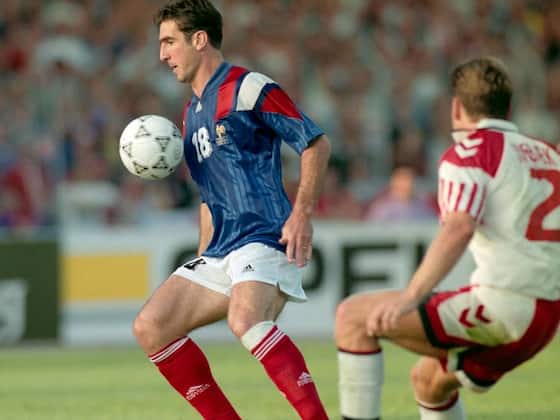
Eric Cantona, arguably the most influential player in English football during the early 1990s, was unable to mirror that success internationally with France. His tenure with the national team was turbulent, defined by clashes with coaches, failed qualification campaigns, and disciplinary issues.
Between 1987 and 1995, Cantona made 45 appearances and scored 20 goals for France. Despite his talent, France missed out on the 1990 and 1994 World Cups, denying Cantona the opportunity to perform at football’s grandest event.
-
Hyderabad Police arrest two in fake job racket, gold recovered

-
Harish Rao accuses NIMS of not taking care of Khammam rape victim
-
HCU to launch online certificate courses in Malariology and Sanskrit
-
Osmania University refutes claims of anomalies in test grading
-
Video: Siddaramaiah expresses displeasure over Congress MLA