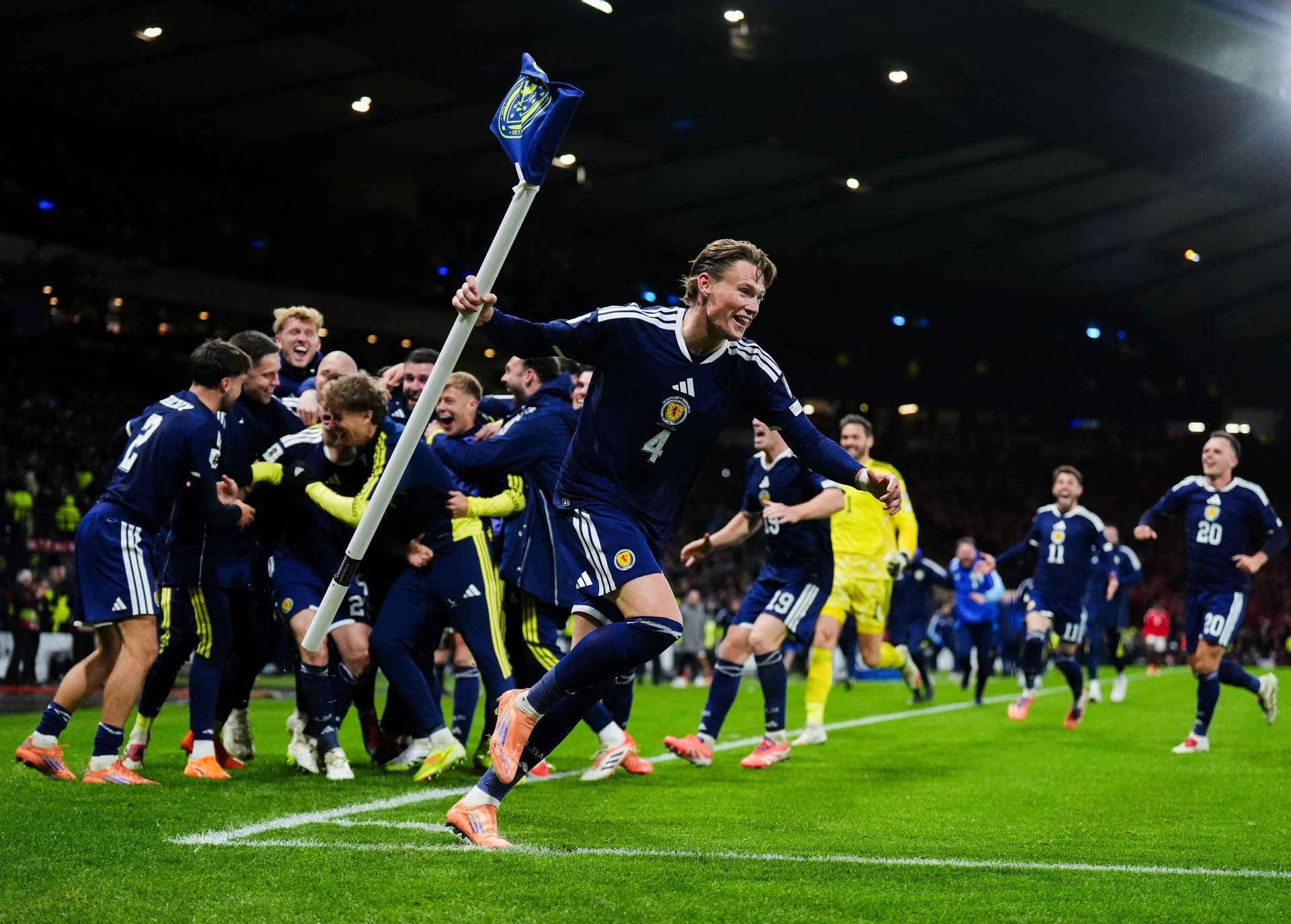
While the name Nova Scotia literally means ‘New Scotland,’ it is Boston, Massachusetts, that truly lives up to that title as the 2026 World Cup begins, with floods of Tartan Army supporters descending upon the city in celebration.
It wasn’t only Scotland’s battle-tested fans who were swept up in the emotion of that unforgettable November evening in Glasgow.
The highlight reel on the Scotland National Team’s YouTube channel has amassed 6.5 million views—an uncommon figure that suggests football enthusiasts worldwide shared in the extraordinary drama of that night.
Steve Clarke’s men, determined to end Scotland’s 28-year absence from the World Cup, scored twice in stoppage time to defeat Denmark 4-2 at Hampden Park.
Few could believe what they had just witnessed—Scott McTominay’s early overhead kick, later immortalised in a mural outside the stadium, and Kenny McLean’s stunning 98th-minute strike from the halfway line sealed a victory for the ages.
Ecstasy turned to despair and back again, culminating in an eruption of joy at the final whistle. The country has scarcely stopped smiling since that night.
Up next lie Haiti, Morocco, and Brazil—the same trio that featured in Scotland’s World Cup group back in 1998.
Yet, Steve Clarke faces several challenges. Craig Gordon finished the qualifying campaign as Scotland’s first-choice goalkeeper—a remarkable tale in itself. At 43, no longer first pick at Hearts and recovering from a shoulder injury since February, Gordon’s position is far from ideal.
He has never failed his country, but the situation remains tricky. Backup keeper Angus Gunn, dependable though he may be, has struggled for game time at Nottingham Forest, making only one competitive start by mid-March.
Aaron Hickey’s injury woes persist, and winger Ben Gannon-Doak only resumed training in March after a long layoff. There’s also concern that central figures like Scott McTominay and John McGinn often arrive at major tournaments drained after grueling club seasons due to their importance to Manchester United and Aston Villa respectively.
Nevertheless, Clarke and his men pieced things together throughout qualification. It would be unwise to bet against them doing the same again on North American soil.
Compared to past campaigns, Scotland now boast several players competing at high levels, though their true strength lies in unity. This is a team that plays with deep mutual trust and unwavering belief in their manager.
The message remains clear: ‘Keep the faith.’ It’s worth recalling that Scotland were booed off the pitch during a couple of tense home qualifiers, when pressure ran high. A timely assist from Belarus helped set up their must-win tie against Denmark, but it was the Scots’ resilience that ultimately saw them through.
They’ve earned the right to be believed in.
Clarke has openly discussed his goalkeeping struggles—neither Gunn nor Gordon has seen regular club action this season. Due to injuries and experiments, he has called up nine different keepers over the past year.
Scotland now aim to move past the disappointment of Euro 2024, where they underperformed, and become the first Scottish side ever to reach the knockout rounds of a senior tournament. A victory over Haiti in their opening match would take off plenty of pressure.
This team has shed the ‘glorious failure’ label that haunted previous generations. With eight third-placed teams advancing to the knockouts, their chances look brighter—but they cannot afford to slip against Haiti. And it wouldn’t be surprising if a bemused Brazil manager, Carlo Ancelotti, were asked about his son Davide’s past links to the Rangers job.
While Scott McTominay’s influence is immense, it is captain Andy Robertson who truly sets the tone. The 32-year-old Liverpool defender leads Scotland for the third time at a major tournament—a remarkable feat considering the team’s struggles before Euro 2020. His leadership, quality, and experience remain invaluable.
Critics accuse Steve Clarke of being overly loyal to certain players and of playing too conservatively, but his record speaks volumes. There’s a reason he has managed more Scotland games than any other coach—he has nurtured a club-like spirit and consistently extracted the best from his squad.
Joe Donnohue, Senior Digital Writer