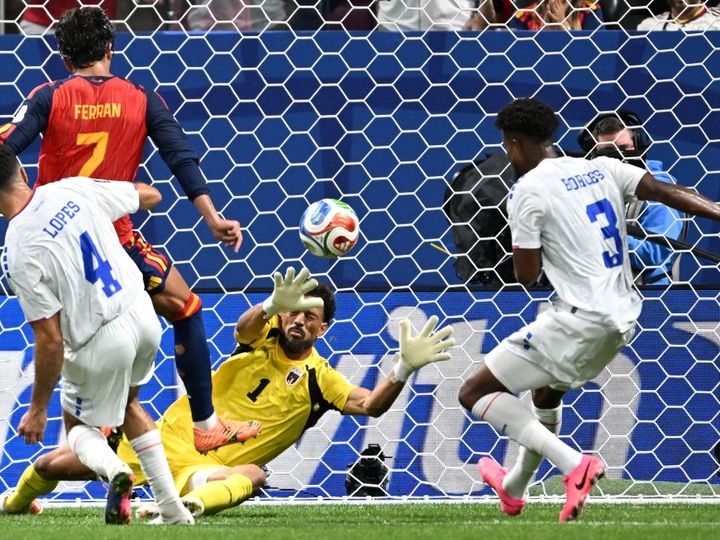
The Cape Verde national team's goalkeeper, Vozinha, delivered a remarkable performance against Spain in Atlanta on June 15, 2026.
The goalless draw between Spain and Cape Verde in the 2026 FIFA World Cup once again proved that football statistics are not the ultimate measure of the game.
In a stunning turn of events, Cape Verde held the mighty Spanish side to a 0-0 draw in their Group H encounter at the 2026 World Cup.
Prior to kick-off, every statistical indicator suggested that such a result was nearly impossible.
Opta’s supercomputer had simulated this match 25,000 times, and Spain emerged victorious in 87.2 percent of those outcomes.
Cape Verde were predicted to draw only 8.1 percent of the time, with a mere 4.7 percent chance of winning outright.
The FIFA world ranking difference between the two sides also highlighted the gulf in quality. Spain entered the 2026 World Cup ranked 2nd in the world, whereas Cape Verde sat at 67th.
From a data perspective, this was a fixture whose outcome seemed almost predetermined. Yet, football has a way of humbling even the most sophisticated algorithms.
Throughout the 90 minutes in Atlanta, Spain performed like a dominant side in every possible metric. They controlled 74.2 percent of possession, completed 734 passes, took 27 shots, and recorded an expected goals (xG) value of 2.29.
By contrast, Cape Verde managed only four shots on target with a total xG of just 0.07.
Looking purely at the post-match statistics, one might assume Spain had cruised to victory. However, the numbers failed to capture Cape Verde’s extraordinary collective defensive discipline.
Spain’s dominance was overwhelming, with 96.7 percent of their passes in the final third. Yet, that superiority could not translate into goals.
Since scoring against Japan in the 2022 World Cup, Spain have now completed over 2,500 passes and taken 49 shots in World Cup matches without finding the back of the net again.
Cape Verde, on the other hand, achieved this historic result with an impressively clean and disciplined style of play. They committed just one foul during the entire match — the fewest ever recorded by a team in World Cup history since 1966.
This achievement also made Cape Verde the lowest-ranked team to avoid defeat against a top-ranked opponent in the World Cup since FIFA rankings were introduced in 1993.
Furthermore, Cape Verde’s resilient draw placed Spain statistically on the same level as Malaysia when it comes to results against the African side.
Malaysia had previously faced Cape Verde in a friendly match in May of the previous year. As part of their preparation for the 2027 AFC Asian Cup qualifiers, Malaysia hosted Cape Verde at the Kuala Lumpur Football Stadium.
That match ended 1-1, with Cape Verde taking the lead in the 8th minute through Sydny Cabral before Paulo Josue equalised for Malaysia in the 80th minute.
In comparison, Spain’s goalless draw appears even less flattering, as they failed to breach Cape Verde’s defence entirely.
-
Six Asian Teams Remain Unbeaten at the 2026 World Cup – Who Has Been the Most Impressive?

-
Gam Kleng Backs Portugal to Win the 2026 FIFA World Cup

-
“I Get Goosebumps” – Reijnders Reflects on His Milan Experience and Wanting to Achieve More

-
Sigh of relief in Africa as the Strait of Hormuz 'reopens'

-
Madhya Pradesh Police Constable Recruitment 2026: Admit Card Released