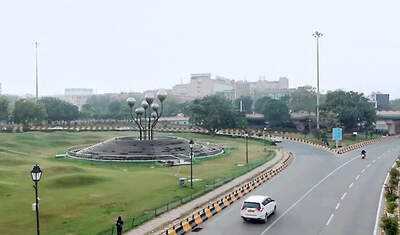
To promote balanced regional development in the National Capital Region (NCR), four new greenfield cities will be established under the 'Namo Cities' initiative as part of the Regional Plan 2041. This decision was made during a meeting of the National Capital Region Planning Board (NCRPB), chaired by the Union Minister for Housing and Urban Affairs, Manohar Lal. According to the Regional Plan 2041, urbanization in the NCR is expected to accelerate significantly, with the urban population projected to reach approximately 57% by 2031 and around 67% by 2041.
Details from the Meeting
After the meeting, Lal informed reporters that the decision to construct four new cities, referred to as 'Namo Cities', was finalized. He mentioned that ₹5,000 crores will be allocated for these cities. States will submit their proposals, and a competitive challenge will determine the selection of these four cities. The meeting included Delhi's Chief Minister Rekha Gupta, Haryana's Chief Minister Nayab Singh Saini, and the urban development ministers from Rajasthan and Uttar Pradesh.
Need for a New Growth Model in NCR Why a New Growth Model is Essential for NCR?
The draft plan estimates that the population of NCR will rise from 58.1 million in 2011 to approximately 113 million by 2041. The level of urbanization is expected to increase rapidly as more individuals seek jobs and better opportunities in urban areas. For decades, cities like Delhi, Gurugram, and Noida have absorbed most of this growth, but experts suggest that this model is reaching its limits.
Investment Opportunities in NCR
According to a research report by Knight Frank India, the proposed NCR Regional Plan 2041 could attract over ₹20 trillion in investments in housing, transport, and civic infrastructure, potentially transforming the growth trajectory of the real estate market in Northern India. Singh noted that if the current growth trend continues, by 2030, Delhi-NCR could become the largest urban agglomeration in the world.
Importance of Namo Cities Why Namo Cities are Crucial?
The development of the four greenfield 'Namo Cities' is perhaps the most appealing proposal. The aim is not merely to create new townships but to establish self-sufficient urban centers capable of managing future population growth while alleviating pressure on Delhi and other congested markets.
Infrastructure as a Key to Success Infrastructure Will Determine Success
While this vision is ambitious, experts believe that its success will depend on the implementation strategies. Manish Mathur, CEO of the Crane Division at Action Construction Equipment (ACE), stated that the area spans over 55,000 square kilometers, and it is anticipated that more than 110 million people will reside there by 2041. Supporting such extensive development will require significant investments in transport networks, logistics hubs, industrial corridors, and urban infrastructure.
-
Luis de la Fuente defends Rodri from ‘insulting’ criticism, calls Manchester City star the best in the world

-
Manuel Neuer to retire from Germany duty after 2026 World Cup, aiming to conclude career with second world title

-
How the Weakest Link Could Decide the World Cup Champion

-
This Hyderabadi brand is helping home cooks master Arabian cuisine

-
Mukesh Ambani unveils 5-way roadmap to propel RIL’s growth ahead