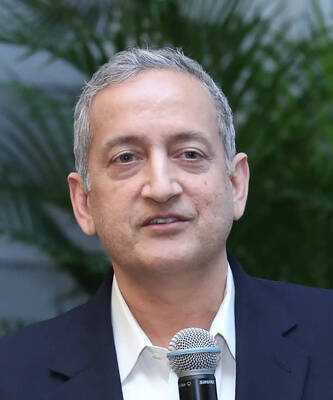
New Delhi: Jainendra K Jain, a theoretical physicist of Indian descent based in the US, has been awarded the esteemed Wolf Prize in Physics for his groundbreaking work on composite fermions. This discovery has significantly altered the understanding of the fractional quantum Hall effect and continues to influence contemporary quantum physics.
Jain is notably the first individual of Indian heritage to receive this prestigious accolade in the field of physics.
The award was conferred by Israeli President Isaac Herzog during a formal ceremony held at the Knesset in Jerusalem on Thursday.
The Office of the Principal Scientific Adviser to the Government of India extended congratulations to Jain and Venkatesan Sundaresan, who received the Wolf Prize in Agriculture, recognizing their 'breakthrough discoveries.'
The Wolf Prize is presented annually to individuals in science and the arts for their exceptional contributions. Professor Sundaresan was acknowledged for his significant advancements in plant genetics and crop enhancement, while Professor Jain was honored for his insights into two-dimensional electron systems.
Hailing from Sambhar, a small town near Rajasthan's Thar Desert, Jain serves as the Founding Director of the Lodha Theoretical Physics Institute (LTPI) and holds a professorship at Evan Pugh University, in addition to being the Eberly Family Chair in Physics at Pennsylvania State University.
Established by the Wolf Foundation in 1978, the Wolf Prize in Physics recognizes physicists whose work has greatly expanded human knowledge. It is considered one of the most prestigious awards in the discipline, with 27 recipients later winning Nobel Prizes.
"I am profoundly honored by this recognition. Physics has provided me with far more than I could have ever envisioned when I embarked on this journey as a young boy in rural Rajasthan," Jain expressed.
The discovery that led to Jain's award dates back to 1989, during his postdoctoral research at Yale University.
He focused on the enigmatic fractional quantum Hall effect, where experiments indicated that electrons in ultra-thin semiconductor layers displayed unusual behavior when subjected to strong magnetic fields.
These electrons exhibited conductivity values in specific fractions that challenged traditional physics, necessitating a new theoretical approach.
The pivotal realization came to Jain while he was doodling during a commercial break on television. He understood that the experimental results could be explained through a novel type of particle formed when electrons bind to tiny quantum vortices.
He termed these particles 'composite fermions.'
This theoretical insight, published in Physical Review Letters in 1989, provided a cohesive explanation that clarified the fractional quantum Hall effect.
The sequences of fractions predicted by his theory are now referred to as the Jain sequences or Jain states, and composite fermions have become a fundamental concept in modern condensed matter physics.
Jain's innovative work continues to push the boundaries of contemporary physics.
"Composite fermions have unveiled a diverse array of exotic quantum states, some of which are thought to possess extraordinary topological characteristics. These findings have inspired new strategies in quantum computation aimed at utilizing such states to create quantum bits that are resilient to specific errors," the release noted.
With over 250 scientific articles and a monograph titled Composite Fermions published by Cambridge University Press in 2007, Jain's contributions are extensive.
His accolades include the Oliver E Buckley Prize from the American Physical Society, the Distinguished Alumnus Award from IIT Kanpur, and memberships in the US National Academy of Sciences, the American Academy of Arts and Sciences, and the Indian National Science Academy.
Jain's path to scientific acclaim began in rural Rajasthan, where he developed a keen interest in physics. A story about Indian physicist Satyendra Nath Bose and his collaboration with Albert Einstein, which Jain encountered in a children's magazine, left a profound impact on him.
At the age of 12, a tragic tram accident in Kolkata resulted in his mother's death and left Jain with severe injuries that caused a lifelong disability.
Fortunately, the affordable Jaipur Foot prosthetic, developed by P K Sethi and Ram Chandra Sharma, enabled him to walk again and pursue his education.
He later obtained a bachelor's degree from Maharaja College, a master's degree from the Indian Institute of Technology Kanpur, and a PhD from Stony Brook University.
The Wolf Prize is also awarded in various fields including agriculture, chemistry, mathematics, medicine, and the arts.
Two other Indian-origin scientists have previously received the Wolf Prize in Agriculture: Dr. Gurdev Singh Khush for his contributions to the Green Revolution and plant biologist Dr. Venkatesan Sundaresan.
Conductor Zubin Mehta has also been honored with the Wolf Prize in Music.
Jain is additionally involved with the Lodha Theoretical Physics Institute in Mumbai, where he is contributing to the establishment of India's first fully privately funded center dedicated to fundamental research in theoretical physics.
"I aspire for LTPI to foster an environment where young scientists can explore ambitious ideas, collaborate with exceptional researchers globally, and engage with the most profound questions in physics," Jain stated.
-
Telangana CID arrests executive VP in Falcon fraud case

-
Rishabh Pant Poised for Dramatic Return to Delhi Capitals Ahead of IPL 2027

-
Actis Offloads Pine Labs Shares Worth ₹152 Cr

-
Juneteenth 2023: What to Expect on the Federal Holiday

-
Instagram Introduces Per-Slide Captions for Carousel Posts, Giving Creators More Storytelling Freedom