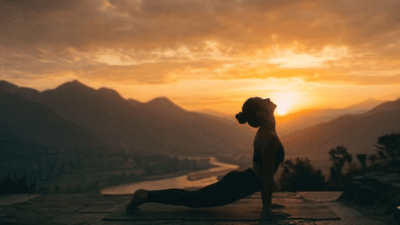
New Delhi: Yoga is a 5,000-year-old Indian practice that unites the body, breath, and mind into a harmonious whole. Derived from the Sanskrit word yuj, meaning “union,” yoga represents the connection of individual consciousness with universal consciousness. Today, it has evolved from a spiritual discipline into a globally recognised form of physical and mental wellness, practised by millions across the world for its benefits in strength building, stress reduction, and healthy ageing. International Yoga Day 2026 marks the 12th edition of this global celebration, observed on Sunday, 21 June, with Prime Minister Narendra Modi leading the celebrations from Kolkata.
This year’s official theme, “Yoga for Healthy Ageing”, emphasises staying active, independent, and energetic at every stage of life as life expectancy continues to rise globally. The United Nations adopted International Yoga Day in 2014 with support from 175 member nations, following PM Modi’s proposal at the 69th UN General Assembly in 2014. In this article, you’ll discover what yoga truly means, explore its rich history from the Indus Valley Civilisation to Patanjali’s Yoga Sutras, and understand the different types of yoga, including Hatha, Vinyasa, Bhakti, Karma, Raja, and Jnana.
What is YogaIn very simple words, yoga means giving care to your body, mind, and breath. It is a holistic practice that integrates the mind, body, breath, and emotions for achieving a higher plane of living. Sage Patanjali, in the first chapter of the Yoga Sutras (Samadhi Pada), defines yoga as chitta-vritti-nirodha – the restraint of fluctuations of consciousness or mind-stuff. Yoga is increasingly viewed as a public health intervention and a tool for promoting longevity, mobility, and preventive healthcare.
History of Yoga: From ancient India to global recognitionThe history of yoga dates back 5,000–8,000 years to ancient India, with early evidence of yoga-like poses found in archaeological sites from the Indus Valley Civilisation. During the Vedic period, yoga was practised ritually to develop concentration and transcend everyday life. The first appearance of the word ‘yoga’ is in the Rig Veda, one of the four sacred texts of Hinduism.
A landmark moment came with Maharshi Patanjali (around 2nd century BCE), who codified yoga’s diverse practices into the eightfold path known as Ashtanga Yoga through his Yoga Sutras. Between 700 and 1900 CE, systems like Hatha Yoga emerged, emphasising the body as a vehicle for spiritual growth. Classical yoga developed around 500 BC with texts like the Upanishads, Bhagavad Gita, and Patanjali’s Yoga Sutras codifying different paths, including Jnana, Bhakti, Karma, and Raja yoga.
In the modern era, Swami Vivekananda introduced yoga to the Western world in 1893, popularising it as a spiritual practice worldwide. PM Modi proposed International Yoga Day on 27 September 2014, and on 11 December 2014, the UN designated 21 June as the International Day of Yoga. The first IDY was observed on 21 June 2015.
Types of Yoga Traditional paths of Yoga
| Karma Yoga | Action | Service and duty; balance transformative actions |
| Bhakti Yoga | Devotion | Devotion to the divine; mantras dedicated to peace and forgiveness |
| Jnana Yoga | Wisdom | Intellect, study, and mastery of sacred texts require great mental discipline. |
| Raja Yoga | Meditation | Introspection and psychophysical mastery may involve a monastic lifestyle |
| Hatha Yoga | Physical Balance | Physical postures (asanas) and breath control (pranayama) prepare the body for meditation. |
| Tantra Yoga | Union | Recognition of connections between all things may involve rituals |
-
Vinyasa Yoga: Movements synchronised with breathing; often called “vinyasa flow” for its fluid nature.
-
Hatha Yoga: Slow, deliberate movements balancing “sun” and “moon”; focuses on strength, flexibility, and mindfulness.
-
Ashtanga Yoga: Athletic form following a set sequence of six series with synchronised breath work.
-
Iyengar Yoga: Precise, detail-oriented practice focusing on proper alignment using props like blocks, chairs, and straps.
-
Bikram/Hot Yoga: Performed in rooms heated to 40°C with 40% humidity; original hot yoga developed in the 1970s.
-
Yin Yoga: Slow, passive floor poses targeting connective tissues (joints, ligaments, fascia); focuses on hips, pelvis, lower spine.
-
Power Yoga: Strength-building with poses held for longer periods; challenging and challenging.
-
Restorative Yoga: Nourishing style supported by props for deep relaxation.
-
Aerial Yoga: Students suspended from hammocks hung from the ceiling, using body weight to twist and flip acrobat-style.
Yoga remains a timeless practice connecting mind, body, and breath for holistic wellness. As we celebrate International Yoga Day 2026, adopt yoga as a way of life for a healthier future.
-
12 Indians among 13 killed in Qatar gas plant explosion

-
Lucknow fire tragedy: 4 officials suspended

-
Man attacks biker with axe over road rage in east Delhi, held

-
At least 15 dead as fire rips through Lucknow building; four arrested

-
Man attacks elder brother over Rs 300 dispute in east Delhi, arrested