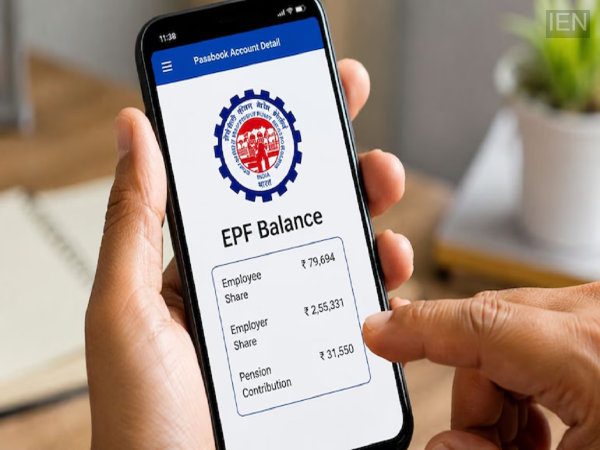
For millions of salaried employees in India, the Employees' Provident Fund (EPF) serves as one of the most important long-term retirement savings tools. However, financial experts are warning workers against making a common mistake that could significantly reduce their retirement corpus: withdrawing EPF money too early.
While many employees tap into their EPF balance to meet short-term expenses, lifestyle needs, or unexpected financial requirements, experts say such withdrawals can have a far greater impact than most people realize. Thanks to the power of compounding, even a small withdrawal made at a young age can translate into a loss of several lakhs by the time retirement arrives.
Why Early EPF Withdrawals Can Be Costly
The biggest reason behind this potential loss is compound growth. EPF contributions earn annual interest, and that interest is added back to the principal amount. Over time, the accumulated balance continues to generate additional returns, creating a snowball effect that significantly increases retirement wealth.
When a portion of the EPF balance is withdrawn prematurely, the investor not only loses the amount withdrawn but also misses out on decades of potential growth that money could have generated.
Financial planners often describe this as the "opportunity cost" of withdrawing retirement savings before retirement.
Understanding the Power of Compounding
The Employees' Provident Fund currently offers an annual interest rate of 8.25%, making it one of the attractive long-term savings avenues available to salaried individuals.
At this rate, funds left untouched for several decades can multiply many times over. This is why retirement experts encourage employees to view EPF as a long-term wealth-building instrument rather than a readily accessible savings account.
A withdrawal that appears small today can result in a much larger reduction in the final retirement corpus because the money loses years of compound growth.
How a ₹1 Lakh Withdrawal Can Lead to a Much Bigger Loss
To understand the impact, consider a hypothetical employee who begins working at the age of 23 and continues contributing to EPF until the age of 58.
Assume the employee gradually increases monthly contributions throughout the career:
-
₹5,000 per month during the first 10 years
-
₹10,000 per month during the next 10 years
-
₹20,000 per month during the following 10 years
-
₹25,000 per month during the final five years
If the employee maintains contributions consistently and never withdraws money from the EPF account, the retirement corpus could grow to approximately ₹2.11 crore by retirement, assuming long-term compounding at current interest levels.
However, the picture changes dramatically when early withdrawals are made.
Scenario 1: Withdrawal of ₹1 Lakh
If the employee withdraws ₹1 lakh at the age of 28, the final retirement corpus could be lower by nearly ₹11.8 lakh by retirement age.
In other words, a single withdrawal made early in a career may reduce future wealth by more than ten times the amount withdrawn.
Scenario 2: Withdrawal of ₹5 Lakh
The impact becomes even more significant with larger withdrawals.
A withdrawal of ₹5 lakh at an early stage could potentially reduce the final retirement corpus by around ₹60 lakh, depending on contribution patterns and long-term interest accumulation.
This demonstrates how seemingly manageable withdrawals can have a substantial effect on retirement readiness.
Experts Advise Treating EPF as a Retirement Asset
Financial advisors consistently emphasize that EPF should not be treated like a regular savings account.
Unlike short-term savings, EPF is designed specifically to provide financial security after retirement. Frequent withdrawals can undermine the very purpose of the scheme by reducing the amount available during the post-retirement years.
Experts suggest that employees should avoid touching their EPF funds unless absolutely necessary and permitted under the scheme's withdrawal rules.
Build an Emergency Fund Instead
One of the most common reasons employees withdraw EPF savings is to handle unexpected expenses.
Financial planners recommend maintaining a separate emergency fund covering at least six to twelve months of essential expenses. Such a reserve can help individuals manage medical emergencies, temporary job loss, or urgent financial needs without disrupting retirement savings.
Having a dedicated emergency fund reduces dependence on long-term investments and preserves the benefits of compounding.
The Long-Term View Matters
Retirement planning is often a decades-long journey, and the decisions made early in a career can have a lasting impact on future financial security.
Experts say that every rupee left invested in an EPF account has the potential to grow substantially over time. Conversely, every rupee withdrawn prematurely loses the opportunity to participate in long-term compounding.
For salaried employees, the key takeaway is simple: protect retirement savings whenever possible, avoid unnecessary withdrawals, and allow the power of compounding to work uninterrupted over the long term.
Disclaimer: This article is intended for informational purposes only and should not be considered financial advice. Individuals should evaluate their financial situation and consult a qualified financial advisor before making investment or withdrawal decisions.
-
Roti vs Rice: Choosing the Healthier Option

-
NYC couple gets engaged atop NYPD car during Knicks parade

-
Ayodhya Ram temple offering controversy: New petition filed in Supreme Court demanding CBI-led investigation, read news

-
If any mishap or accident happens during the job, then a hefty pension will come to the family’s account every month, know this secret rule of EPFO.
-
Steamed bun vendor’s improvised song helps durian seller draw customers