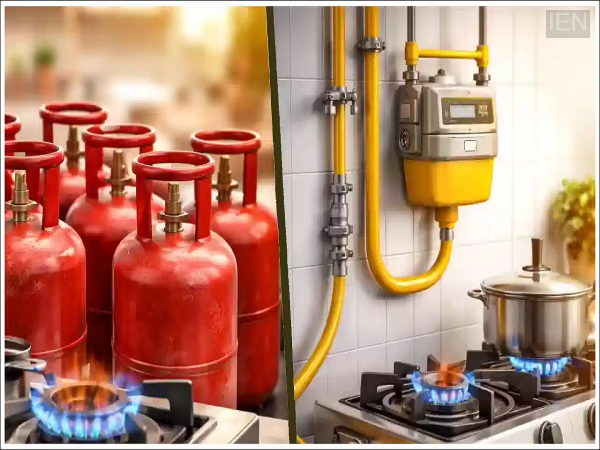
LPG vs. PNG: Amid rising gas prices, everyone wonders which is better—LPG or PNG—and which costs less. If you aren't aware of the differences between the two, here is what you need to know.
LPG vs. PNG Connection: LPG cylinders are a necessity in almost every household today, but rising prices have increased expenses for consumers. Naturally, everyone seeks a cheaper alternative to reduce their kitchen gas costs. While LPG cylinders are used in most Indian households, the use of PNG (Piped Natural Gas) is steadily increasing in many cities. However, people are often confused about which option is superior and more economical for daily use.
Is PNG a better option?
With PNG, there is no worry about running out of gas, as the supply is delivered via a meter. You are billed based on actual consumption; if you use less, your bill is lower. Unlike LPG cylinders, there is no need for monthly booking, so you don't have to stress about scheduling a delivery—PNG provides a continuous gas supply.
Facts about LPG
Domestic LPG cylinders typically weigh 14.2 kg.
Prices vary by city.
The full amount must be paid upon delivery.
LPG cylinders require monthly booking.
How to get an LPG or PNG connection?
You can obtain an LPG connection through gas agencies; applications can be submitted via the websites of providers like Bharat Gas, Indane, and HP. You can obtain a connection by visiting any nearby gas dealer; however, for a PNG connection, you first need to check whether a pipeline is available in your area.
Which is better for small versus large families?
If you have a small family with low gas consumption, an LPG connection is a suitable choice; conversely, if you have a large family with high gas usage, a PNG connection would be better.
Which one is superior?
Both LPG and PNG have their own advantages. Ultimately, your cooking gas expenses will depend on your actual usage. While it is true that people in areas with PNG supply facilities prefer it, it remains a fact that the majority of the country's population still relies on LPG cylinders.
-
UAE women entrepreneurs can now get 12-month fee waiver with new bank offers
-
“How Long Will India Keep Carrying Young Dead Bodies?” — A Nation Confronts Its Systemic Safety Failures After Another Fire Tragedy

-
Law student held for selling AI-generated fake NEET paper ahead of exam

-
Lucknow fire FIR cites illegal commercial use, lack of fire safety measures
-
Horror as girl, 10, raped and murdered before being dumped on road - taxi driver arrested