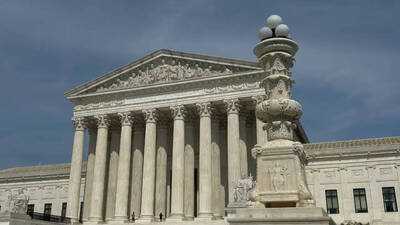
On Tuesday, the US Supreme Court delivered a 6-3 verdict favoring the Department of Homeland Security (DHS) in a significant immigration case that addresses the rights of lawful permanent residents, often referred to as green card holders, when they return to the US after international travel. This ruling clarifies that immigration officials are not required to have "clear and convincing evidence" of a crime involving moral turpitude before treating a green card holder as an applicant for admission at the border.
Details of the Case
The case, titled Blanche v. Lau, involved Muk Choi Lau, a lawful permanent resident who traveled to China in 2012 while facing a criminal charge for counterfeiting in New Jersey. Upon his return, immigration authorities placed him on parole instead of admitting him as a returning resident. Lau later pleaded guilty to trademark counterfeiting.
A lower court had previously determined that the DHS needed to provide clear and convincing evidence at the time of Lau's reentry to prove he had committed a crime involving moral turpitude before he could be treated as someone seeking admission. However, the Supreme Court disagreed with this assessment.
Justice Clarence Thomas, writing for the majority, stated that the Immigration and Nationality Act does not impose such an evidentiary requirement on border officers prior to making their determination. The Court concluded that the government could present the necessary evidence during subsequent removal proceedings.
Significance of the Ruling
According to US immigration law, lawful permanent residents typically have the right to temporarily leave the country and return without being classified as new arrivals. However, exceptions exist, particularly when the government suspects that the resident has committed a crime involving moral turpitude, which encompasses offenses related to fraud, theft, or dishonesty.
This ruling facilitates the ability of immigration authorities to categorize certain returning green card holders as applicants for admission, which could expose them to wider grounds for removal proceedings. Critics of the decision argue that it may place some permanent residents at risk of immigration consequences before their criminal charges are fully resolved.
Dissenting Opinions
Justice Ketanji Brown Jackson, along with Justices Sonia Sotomayor and Elena Kagan, dissented from the majority opinion. Jackson contended that the ruling permits the government to treat lawful permanent residents as if they are seeking admission without conclusively proving that an exception to their protected status applies. She cautioned that this decision could leave immigrants in a state of "immigration limbo" until any conviction is secured.
Implications of the Ruling
The Supreme Court did not state that the DHS can automatically revoke a green card solely based on pending criminal charges. Instead, the ruling clarifies the evidence immigration officers must possess at the border when determining whether a returning lawful permanent resident should be treated as an applicant for admission. The government is still required to pursue immigration proceedings and establish a legal basis for removal under federal immigration law.
This decision is anticipated to have significant ramifications for lawful permanent residents who travel internationally while facing unresolved criminal allegations and may shape future immigration enforcement policies.
-
Joao Cancelo says Cristiano Ronaldo and Neymar have nothing left to prove amid World Cup criticism

-
‘When Leo finds his rhythm, the team follows!’ – Lionel Messi’s committed World Cup show against Austria delights Lionel Scaloni

-
Marcus Rashford, Morgan Rogers and how England’s ‘finishers’ could unlock World Cup glory

-
US Supreme Court Rules Against Rastafarian Prisoner's Rights

-
FIFA WC: Ronaldo's brace headlines Portugal's 5-0 win over Uzbekistan