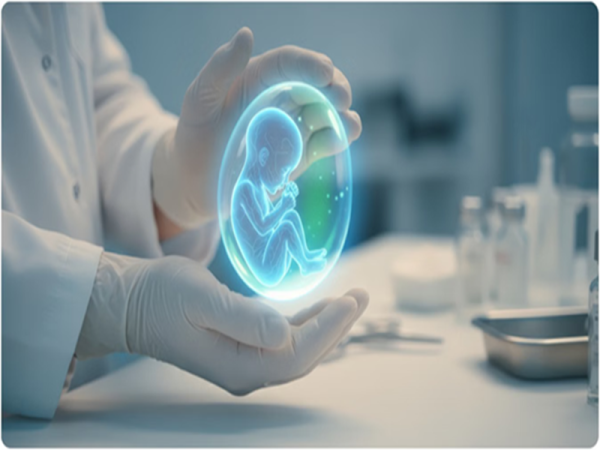
Lifestyle, dietary habits, and environmental factors have severely impacted our overall health. This has not only led to a rise in conditions like obesity, diabetes, heart disease, and cancer, but conceiving a child has also become a major challenge for many people.

Conception, which used to occur naturally just a few decades ago, now requires many couples to undergo medical treatment for months or even years. In many instances, they eventually have to resort to assisted reproductive technologies like In Vitro Fertilization (IVF).
The rising prevalence of fertility-related issues in India is a matter of serious concern. If you believe that the inability to conceive is solely due to the woman, you are mistaken. A report published in *Amar Ujala* highlighted that men are responsible for 50% of infertility cases.
IVF has emerged as a ray of hope for couples grappling with fertility issues and infertility. But how can one determine which couples actually need it?
**Fertility Issues and the Need for IVF**
Experts point out that declining sperm quality and count in men, hormonal imbalances, and unhealthy lifestyles are contributing to fertility problems. In other words, the difficulty in conceiving is a shared health issue that cannot be attributed to just one partner.
There is a greater need than ever for serious dialogue regarding fertility challenges in India. Timely check-ups, a healthy lifestyle, proper nutrition, regular exercise, and expert advice can help mitigate risks in many cases.
IVF specialist Dr. Gauri Agarwal shared valuable insights during a conversation with *Amar Ujala* regarding fertility issues and IVF. She explained—in simple terms—which couples require IVF and when they should consider it.
**Understanding Natural Pregnancy First**
Dr. Gauri explains that, under normal circumstances, a woman's body releases an egg every month. During sexual intercourse, when sperm is released, it travels through the uterus to the fallopian tube, where an egg is already present. It is there that the sperm and egg combine to form an embryo.
Five days later, the tube transfers the embryo into the uterus, where it continues to grow for nine months.
Conception generally becomes difficult if a woman has blocked fallopian tubes, low egg production, or a low sperm count (less than 10 million), or if there are uterine fibroids or other issues with the uterus. In such situations, IVF becomes necessary.
What happens during IVF?
In IVF, hormonal injections are administered over a period of 10–12 days. These injections stimulate egg production in both ovaries, although egg formation depends on various physiological factors.

Once eggs are produced, they are retrieved through a specific procedure and combined with sperm in a laboratory to create an embryo.
Within 3–4 days, this embryo is implanted into the uterus.
If the woman's uterus is not ready to receive the embryo, additional procedures are performed.
PC Social Media
-
Before celebrating Ashura, know the complete story of martyrdom and sacrifice of Imam Hussain.

-
Age is increasing but marriage is not happening! This is the perfect remedy for men mentioned in Lal Kitab

-
13 Top Rum Brands You Must Have In Your Collection

-
Creepy mystery of Lohagarh Fort, where fiancé killed Ketan, 300 stairs, 2000 years old history, alive people buried under the door

-
What is Vapor Chamber? Know how this special cooling system protects your smartphone from overheating