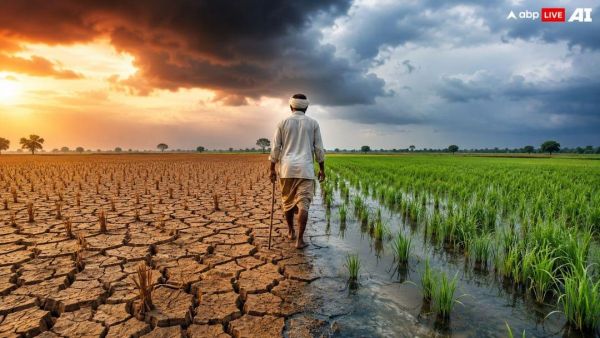
India may have found some relief as tensions in West Asia ease and energy supplies begin to stabilise, but another challenge is quietly gathering pace much closer to home. A delayed monsoon, coupled with the emergence of a super El Nino in the Pacific, is threatening to disrupt the country’s $300 billion agricultural economy at one of the most critical points in the farming calendar.
While concerns over oil supply disruptions through the Strait of Hormuz have dominated headlines in recent months, weather is now emerging as an equally significant economic risk. Experts warn that delayed rainfall could affect crop production, fuel food inflation and create fresh challenges for policymakers in the months ahead.
Monsoon Delay Raises Fresh Concerns
For generations, India's agricultural cycle has revolved around the arrival of the south-west monsoon in June. The seasonal rains are so predictable that farmers plan sowing schedules around them, particularly for kharif crops such as rice, cotton and millet.
This year, however, the monsoon reached Mumbai almost two weeks later than usual, raising concerns across agricultural regions. With June traditionally marking the peak sowing season, delayed rainfall has forced many farmers to postpone planting until sufficient moisture reaches their fields.
The disruption comes at a crucial time for India's farm sector, which contributes nearly $300 billion to the economy, reported Bloomberg.
India’s Agricultural Heartland Under Stress
The rainfall deficit has been most severe across central India and the Deccan plateau, covering states including Rajasthan, Gujarat, Maharashtra, Karnataka, Uttar Pradesh, Madhya Pradesh, Chhattisgarh and Telangana.
These regions account for around 90 per cent of India's soybean and sugarcane production, 80 per cent of cotton output, and nearly 70 per cent of peanuts and pulses, including lentils and chickpeas.
They also play a vital role in fruit and vegetable production, meaning weaker rainfall could eventually influence food prices across the country.
Onion Belt Offers an Early Warning
One district attracting particular attention is Nashik in Maharashtra, often regarded as India's onion capital.
Onion prices have historically carried significant political and economic importance because sharp increases quickly affect household budgets and have, at times, influenced election outcomes.
Rainfall in Nashik this month has reached only around 16 per cent of its long-term average, raising fears of supply shortages later in the season. Poor monsoons have frequently resulted in onion price spikes during August and September.
From Fertiliser Worries to Rainfall Risks
Only a few months ago, concerns centred on whether the conflict around the Strait of Hormuz would interrupt India's fertiliser supplies, particularly urea produced using Gulf natural gas.
Those fears have largely eased. However, analysts argue that rainfall is a far more critical input for Indian agriculture than fertiliser availability.
With sowing already delayed, inadequate rainfall during the growing season could inflict further damage on crop yields.
Super El Nino Could Intensify the Challenge
Although meteorologists do not attribute the delayed onset of this year's monsoon solely to El Nino, the warming event is expected to play a larger role as the season progresses.
The newly declared super El Nino is forecast to contribute to the weakest Indian monsoon in more than a decade. Crops already affected by delayed sowing may face additional stress if dry conditions persist through the growing period.
Food Inflation May Return to the Spotlight
The effects of weaker agricultural output extend well beyond farms.
Lower production of sugar, edible oil crops, cotton and pulses could translate into higher food prices, adding fresh inflationary pressure at a time when price stability remains a key policy objective.
The Reserve Bank of India has already identified abnormal weather conditions as a risk to its macroeconomic projections, highlighting the close link between agriculture and broader economic stability.
Could Export Curbs Return?
The government has previously used trade restrictions to stabilise domestic food prices during periods of supply stress.
Following uneven rainfall and flooding in 2023, India imposed restrictions on rice exports, disrupting a global market that depends on the country for around 40 per cent of total supplies.
Similar measures are now being widely anticipated for sugar if production weakens further.
India Is Better Prepared Than Before
Despite these concerns, India's food system is considerably more resilient than it was a decade ago.
Stockpiles of fertilisers helped cushion the impact of recent geopolitical tensions. Rice inventories have increased substantially since the 2023 export restrictions, while wheat stocks also remain comfortable.
Expanded irrigation, improvements in crop science and stronger logistics networks have enhanced the resilience of agricultural supply chains.
Climate Change Remains the Bigger Challenge
Even with stronger infrastructure, experts argue that climate risks are increasing faster than adaptation measures.
Across South Asia, nearly one-quarter of the world's population depends on the annual monsoon cycle. Rising global temperatures are making rainfall increasingly unpredictable, with longer dry spells often followed by extreme flooding.
As the super El Nino develops over the coming months, its effects are expected to extend beyond Indian agriculture, influencing food prices, inflation and global commodity markets.
-
EPFO Portal: Major update for PF account holders! Portal to remain closed for 3 days; these services will be unavailable..
-
Discover the real story behind those colorful dots on your mobile screen—learn what the green, orange, and yellow lights mean..

-
Your YouTube channel could be shut down upon receiving three copyright strikes; learn an easy way to avoid this..

-
Is your smartphone overheating frequently? These 5 mistakes could be the reason—try these simple tricks..

-
Earthquake Alert! This special mobile feature will warn you before an earthquake strikes; it even sent out alerts in Venezuela..