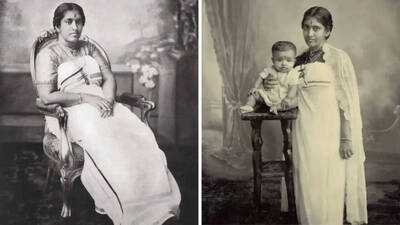
Throughout history, the significant contributions of women have often been overlooked, yet some have made such profound impacts that their legacies endure. One such figure is Pooradam Thirunal Sethu Lakshmi Bayi (1895–1985), the senior Maharani of Travancore. She ascended to power as a regent, effectively ruling with authority akin to that of a sovereign from 1924 to 1931, while her nephew, Chithira Thirunal Balarama Varma, was still a minor. The Travancore royal lineage adhered to the Marumakkathayam system, where succession passed not from father to son but to the eldest nephew, the son of the king's sister. During her regency, she implemented a series of reforms across social, educational, administrative, and religious spheres.
One of her most notable achievements was the abolition of the Devadasi system in 1926, a practice that had devolved from a sacred tradition into one of exploitation. Initially, Devadasis were respected figures dedicated to temple service, but over time, many faced severe social and economic hardships. Under Sethu Lakshmi Bayi's leadership, the official recognition of this institution was abolished in Travancore, marking one of the earliest state-led efforts against such practices in southern India.
Her reign also prioritized the inclusion of minorities. She championed women's rights by providing police protection to Kerala’s first low-caste film actress and facilitating women's representation across caste lines in councils. Despite presenting herself as a model of traditional femininity, her ability to balance modernity and tradition won her the admiration of her subjects. Historian Manu S Pillai noted that her popularity significantly influenced future leaders like Vellodi and Menon.
Additionally, she made history by appointing Dr. Mary Poonen Lukose as the head of the medical department, a groundbreaking move for women in governance. Sethu Lakshmi Bayi was also instrumental during the Vaikom Satyagraha, a pivotal anti-caste movement that sought to dismantle caste barriers preventing lower-caste individuals from accessing roads near the Vaikom Mahadeva Temple. In 1924, Mahatma Gandhi visited Travancore, meeting with her to advocate for temple access for all castes, which he termed a 'bedrock of freedom.' Although complete temple entry was not achieved during her rule, this initiative marked a significant step towards reducing caste-based restrictions.
Her administration is remembered as one of the most reformative periods in Travancore's history, characterized by her efforts to modernize the state amidst the complex social and political landscape of her time.
-
Sunil Chhetri: 'Just Watch And Enjoy' As He Reflects On Messi, Ronaldo And World Cup Highlights

-
How Did Kunal Shah Get Hired As WhatsApp's Global Chief? Meta's Chris Cox Reveals That It All Started With One Cold Email

-
Nothing Phone 4b Design Revealed Ahead Of July 7 India Launch: Dual Cameras, Glyph Bar, Blue Colourway Teased

-
Deadly Twin Earthquakes Devastate Venezuela: 32 Killed, Over 700 Injured; State Of Emergency Declared | Video

-
Six Months, Nine Massive Tremors: Earthquakes Over Magnitude 7 Are Spiking At An Alarming Rate This Year