“When I was an undergraduate, amoxicillin was the drug of choice. It doesn’t work anymore… Now everybody knows that resistance is only increasing,” Dr Krish Nair told us when we visited his hospital in Hyderabad several years ago.
Nair was not simply describing the failure of one drug. He was pointing to a wider crisis in which antibiotics are losing their force even as hospitals have come to depend on them more heavily. His statement that amoxicillin “doesn’t work anymore” may be an exaggeration: the drug likely still retains some efficacy in certain situations. But his concern captures something real. In India’s public hospitals, antibiotics have become a crutch for a health system buckling under patient load, scarce diagnostics, limited infrastructure and the everyday pressure to keep people alive.
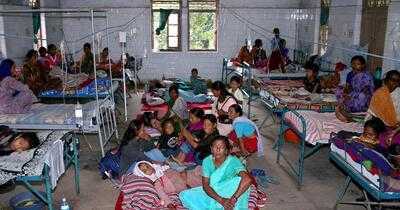
Many of India’s public hospitals are severely overcrowded, underfunded, and equipped with only the barest infrastructure. These ever-present constraints fundamentally influence approaches to antibiotics in hospital settings. Physicians are confronted with an overwhelming and increasingly daunting task: to “optimise” and address “overuse” in the epoch of rising resistance while also doing their job by giving the person in front of them the best chance of survival today and into the future.Antibiotic resistance is both a biological...
Read more
-
CM Rise Schools: 75 CM Rise schools to become high-tech; will offer various facilities...
-
JEECUP Counselling 2026: First round of JEECUP counselling begins; choices can be filled until June 30; check the full schedule...

-
New PMRC-2026 Research Fellowship Launched: Opportunities for Researchers from Junior to Senior Levels; Check Eligibility Criteria..

-
NCERT: Why did naming the book 'Krishna' spark a controversy? NCERT presents its stance on the Kannada textbook..

-
TN Schools: E-petition service launched in Tamil Nadu; personal grievances can now be submitted online via QR code..