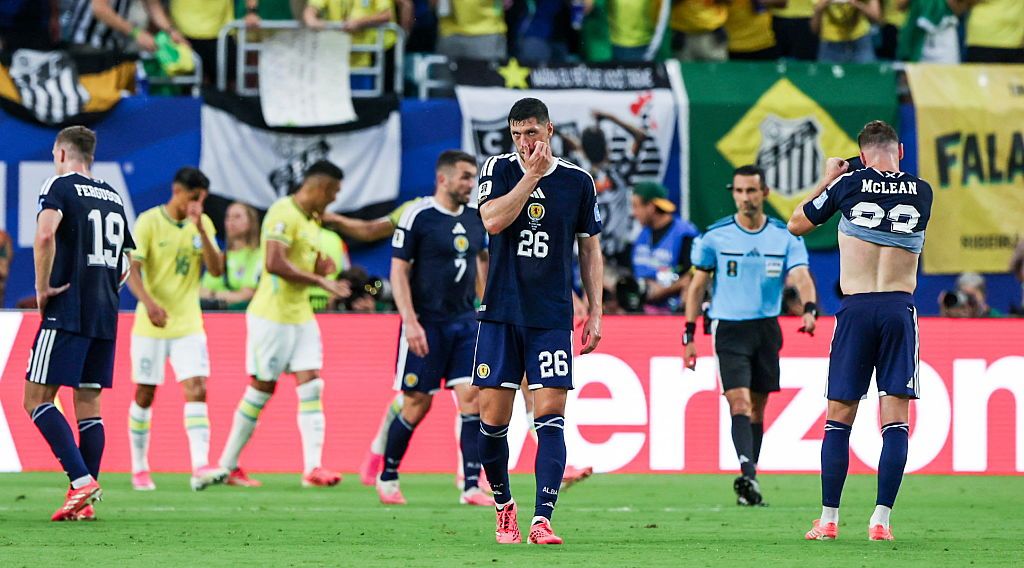
It’s all concluded except for the formalities. Senegal’s 5-0 demolition of Iraq in Toronto on Friday proved decisive, knocking Scotland out of the top eight among third-placed teams and effectively eliminating them from the theoretical qualification for the 2026 World Cup.
Scotland now finds itself powerless to influence its fate. Since the final whistle blew against Brazil, the team has depended entirely on results from other groups, aware that conceding too many goals in that match and scoring too few in their sole victory over Haiti could prove costly.
While some teams may progress with just three points, Scotland’s inferior goal difference in the group stage left them exposed. Senegal’s emphatic win also pushed them ahead of South Korea. Like Scotland, their qualification dreams are fading as the group stage draws to a close.
The expansion of the World Cup to 48 teams has brought several implications. Dividing 48 sides into groups of four results in 12 groups, but this structure poses mathematical challenges — as 24 or 36 teams cannot cleanly fit into a round of 32 or 16 without a compromise in format.
The imperfect solution, which has been widely criticised, is to allow the top two teams from each group to advance automatically while ranking all 12 third-placed sides to identify the best eight who will fill the remaining slots in the round of 32.
Although every team is aware of this system from the start, it still creates an uneven playing field. The process of comparing third-placed teams across groups introduces cross-group interference, meaning that some sides benefit from knowing exactly what results they need while others do not.
In essence, Senegal’s 5-0 triumph displaced Scotland from the top eight on goal difference — two days after Scotland’s own group stage campaign had ended, leaving them unable to respond.
Steve Clarke's men have no excuses. They put themselves in this precarious position, and no one else can be blamed. Yet, their situation shines a light on the imbalance within a tournament that is meant to uphold competitive fairness.
At the end of the first half of the group stage — Groups A through F — only two third-placed teams had three points: South Korea in Group A and Scotland in Group C.
Meanwhile, Bosnia and Herzegovina, Paraguay, Ecuador, and Sweden all secured four points each, sparing themselves the silent injustice of the ranking system.
The last time the World Cup featured an uneven structure was back in 1994, the previous edition hosted in the United States.
In that tournament, six groups produced two third-placed teams who were eliminated: Russia from Group B and South Korea from Group C. Meanwhile, the United States progressed in third place from Group A, and two of the three teams that qualified after Russia and South Korea had already played their final matches did so knowing the results they needed.
Similarly, in the 2016 European Championship, when the format expanded to 24 teams, Albania (Group A) and Turkey (Group D) were knocked out, while the Republic of Ireland (Group E) and Portugal (Group F) managed to advance with favourable results in their final fixtures.
At Euro 2020, the third-placed teams eliminated were from Groups B and E. In Euro 2024, Hungary (Group A) and Croatia (Group B) suffered the same fate, exiting at the group stage.
While there is no irrefutable evidence that teams placed in earlier groups are systematically disadvantaged by those playing later — who might know the precise outcomes required — the suspicion remains.
Too many teams have stumbled into the knockout rounds or recorded ordinary results late in the group stage to definitively claim that being drawn into an early group like A, B, or C is a measurable handicap.
However, as FourFourTwo argues, the overlapping of group outcomes introduced by both FIFA and UEFA has created unnecessary ambiguity. It provides a clearer competitive picture for teams in Senegal’s position than for those like Scotland.
Though it’s impossible to determine exactly how or whether these overlaps influence third-match outcomes, even the potential for such imbalance could — and should — have been avoided in pursuit of genuine sporting integrity.
-
Mini PC vs. Laptop: What is the difference in how they work? Find out which one is the better buy for you.
-
What is the lifespan of a gaming laptop? Know the full story before buying.
-
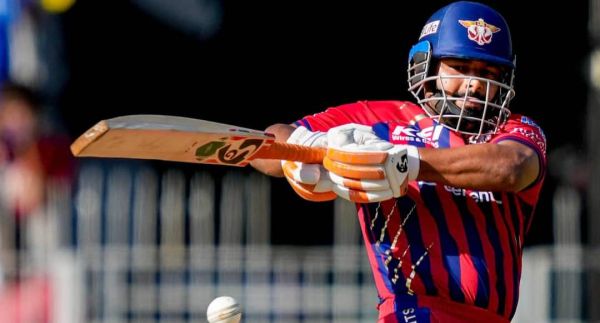
No Captaincy For Rishabh Pant! Delhi Capitals Back This Indian Player For IPL 2027
-
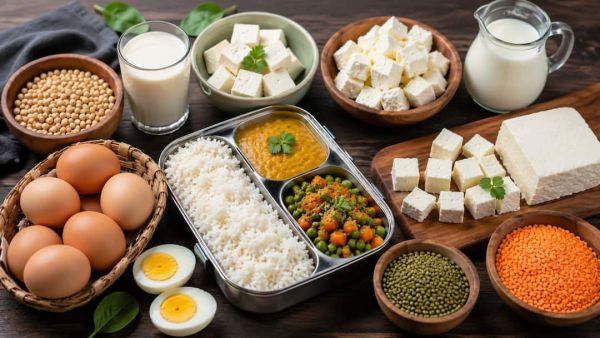
Can Paneer Replace Eggs In School Meals? What Is Better For Children In India’s Mid-Day Meal Programme?
-
Eight Militants Killed In Two Security Operations In Pakistan's Balochistan, Army Says