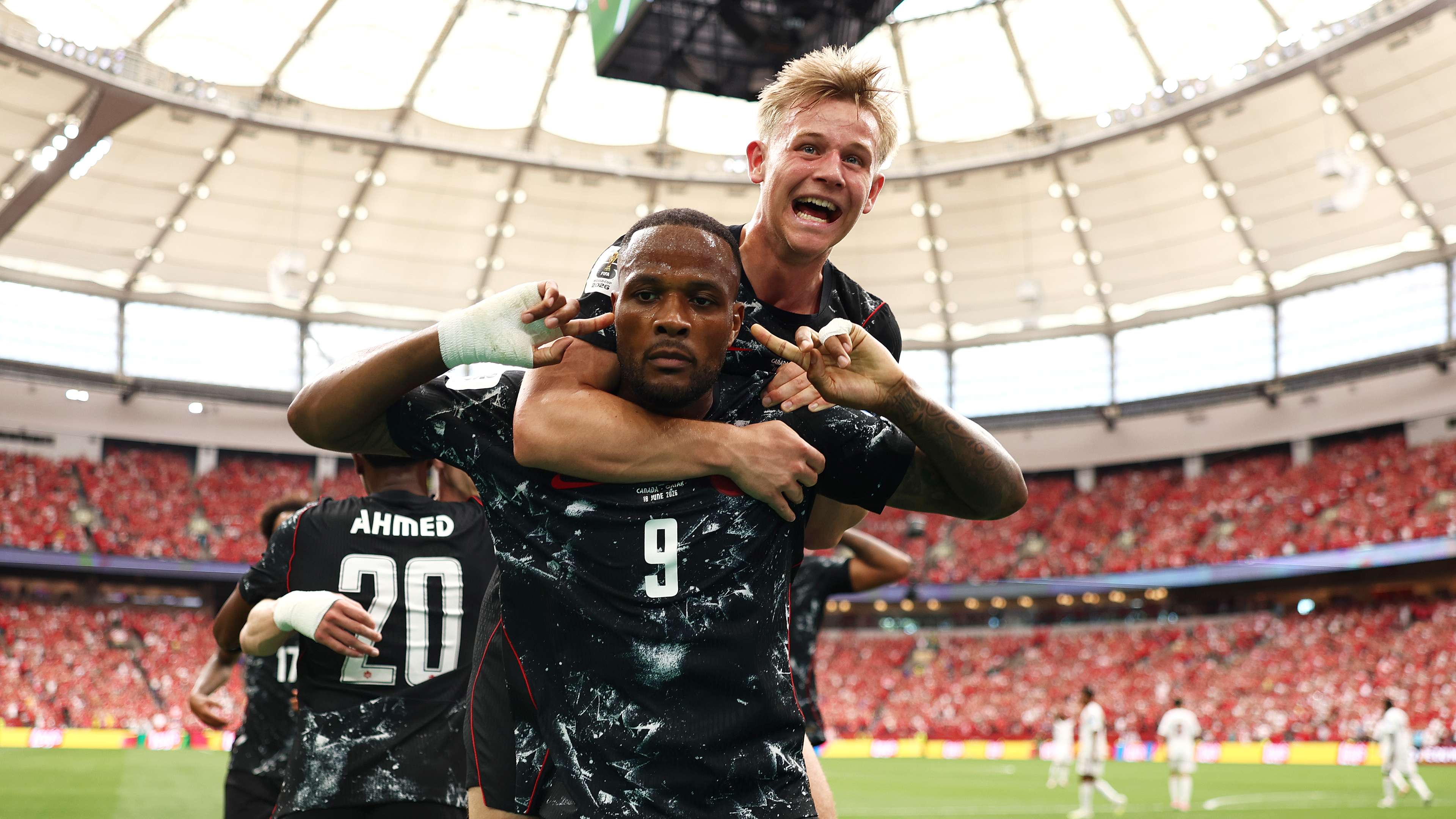
Nathan Saliba and Luc de Fougerolles enhanced their reputations, while Jesse Marsch and Tajon Buchanan face renewed scrutiny as Canada move into the World Cup knockout rounds.
VANCOUVER – Canada’s Men’s National Team have advanced to the World Cup knockout phase for the first time, but despite being co-hosts, they’ll now leave home soil as Group B’s runners-up following a win over Qatar, a draw against Bosnia and Herzegovina, and a defeat to Switzerland.
With the group stage concluded, the squad will head to Los Angeles to meet South Africa in the Round of 32, with a possible Round of 16 encounter against either Morocco or the Netherlands in Houston on July 4.
While their home fixtures have ended, Canada’s campaign is far from over.
Here’s a look at the key winners and losers from Canada’s Group B performance.
WINNER: Canada’s World Cup prospects
Although staying in Vancouver for a home knockout tie would have been ideal, finishing second in Group B may have actually paved a smoother path to a potential quarterfinal berth—considered by many as the team’s realistic ceiling.
After the final whistle against Switzerland, many expected South Korea to await Canada in Los Angeles. Instead, South Africa’s shock victory over the Asian giants means Les Rouges could even enjoy majority support inside the stadium.
Ranked 60th in the world and lacking prior World Cup knockout experience, South Africa arguably present Canada’s most favourable matchup. Marsch acknowledged he’d have had detailed insight into South Korea’s setup, having previously sought their managerial role, but he was content to face the African side instead.
“We’re in a great place, and that’s exactly where we want to be,” said defender Alistair Johnston. “They’re also very athletic, a side that’s shown defensive discipline and the ability to keep clean sheets, as they did against Mexico. But I think we match up well.”
Should Canada progress, tougher challenges await against either the Netherlands or Morocco. Yet, if anyone had told the team before kickoff they’d only need a bit of luck from the Round of 16 onward, they’d likely have accepted it without hesitation.
LOSER: Canada’s home advantage
The debate continues over how much home support truly sways results. For Canada, playing away from the immense pressure of hosting could be a blessing, but the energy of a passionate home crowd will undoubtedly be missed.
“We’ve really enjoyed the home crowd,” Marsch admitted, echoing the feelings of his players. “I think going to LA right now… our team has been physically and mentally pushed to the limits, and we need three days to settle down and refocus. Training won’t be too intense—it’s about recovery, rehabilitation, and preparing to go again for the biggest match in our programme’s history.”
Playing abroad also means losing some of the connection forged with supporters. In Toronto and Vancouver, over 5,000 fans joined the march to the stadiums—scenes that won’t be replicated in Los Angeles.
For the wider Canadian public, that bond matters deeply. For the players, it’s more about missing the chance to celebrate with fans should they advance further.
WINNER: Nathan Saliba
When Ismaël Koné suffered a broken leg, Canada’s “next man up” mindset came to the fore once more. Nathan Saliba seized the opportunity with an assured display against Switzerland that likely cemented his place alongside Stephen Eustáquio for the knockout stages.
Still only 22, Saliba continues to impress in national colours. Marsch previously admitted he regretted not calling up the Belgian league midfielder sooner, but since stepping in for Koné, Saliba has stood out. A pinpoint free kick against Qatar and a deft assist against Switzerland showcased his composure and creativity.
In the short term, Saliba appears Canada’s first-choice partner for Eustáquio. Looking ahead, the trio of Saliba, Koné, and Eustáquio could form the team’s midfield core heading toward the 2030 World Cup.
LOSER: Jesse Marsch
At the start of the tournament, Jesse Marsch could seemingly do no wrong. The American coach who belted out Canada’s anthem, criticised USMNT players during his time under Gregg Berhalter, and defended Canadian sovereignty when U.S. President Donald Trump made controversial remarks, quickly became a fan favourite.
While much of that goodwill remains, perceptions have shifted.
After repeatedly suggesting Alphonso Davies would feature against Qatar and Switzerland, Marsch later admitted the team had used the Bayern Munich star as a “decoy.”
Some fans were frustrated by the tactic, but Marsch stood firm.
“My main loyalty is to this team and to doing whatever it takes for us to succeed in this tournament,” he said before Thursday’s training session. “People can be upset, but this isn’t a friendly. It’s competitive football. We’ll do whatever gives us an edge.”
Winning one or two knockout matches might be the only way to fully restore his early-tournament popularity.
WINNER: Luc de Fougerolles
Luc de Fougerolles has now earned 17 international caps despite having only 31 professional appearances—most of them with Belgian club FCV Dender before their relegation to the second tier.
Despite limited experience, he’s shown poise, technical skill, and growing importance to Canada’s defensive setup.
With Moïse Bombito sidelined by a leg fracture, de Fougerolles has formed a solid partnership with Derek Cornelius. While Cornelius occasionally struggled with positioning against Switzerland, de Fougerolles remained composed—confidently dribbling out of tight spaces and competing effectively in the air despite standing just 5-foot-11.
Across the group stage, he tallied 18 defensive interventions, 12 clearances, and drew seven fouls, mainly through his willingness to carry the ball forward. That calmness under pressure may have established him as Bombito’s long-term defensive partner ahead of Cornelius.
LOSER: Tajon Buchanan
Tajon Buchanan possesses all the attributes to be a dynamic winger and chance creator for the CanMNT, but it’s been a while since he produced a truly decisive moment in Canadian colours.
The Villarreal forward was one of the stars of last year’s Gold Cup, scoring three goals against Curaçao and another opponent, but his form has since dipped. He’s now gone 13 matches without scoring and 16 without providing an assist for Canada.
Preferring to stay wide rather than cut inside, Buchanan’s pace and dribbling have yet to consistently trouble defences at this tournament. At his best, he’s an X-factor; through the group stage, he’s looked far from it.
“I know I can always improve, but I think I’ve shown confidence and aggression to make a difference in the final third,” he told reporters. “It’s about taking it one match at a time and learning from every situation. I’m always striving to get better.”
-
ICC Women's T20 World Cup: England end New Zealand's journey
-
Manchester United could land millions from FIFA after shock Manuel Ugarte injury in Uruguay World Cup exit

-
Dizziness Causes: Frequent dizziness? Don’t ignore; It can be a serious illness

-
Foxconn’s Big India Bet: Why the tech giant invested $37.2 million in manufacturing

-
Vivo Y6a debuts with massive 7,200mAh battery and 50MP rear camera