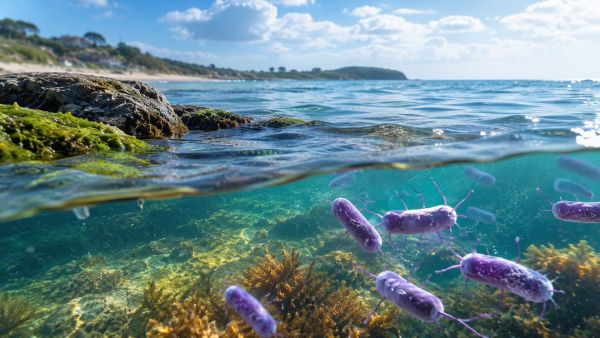
As Europe faces intense summer heatwaves, rising sea temperatures are creating favourable conditions for bacteria that thrive in warmer coastal waters. One organism drawing growing attention is Vibrio, a naturally occurring bacterium found where saltwater and freshwater mix. While infections remain relatively uncommon, health experts are closely monitoring their spread as warmer waters may increase exposure risks. The concern is especially relevant for people swimming in coastal areas or consuming raw seafood. With climate-driven heat events becoming more frequent, experts are urging greater awareness about Vibrio, how infections happen, and the simple precautions that can reduce health risks this summer across Europe.
Vibrio Bacteria Explained
Vibrio is a group of bacteria naturally present in coastal and brackish waters, particularly in warmer conditions with moderate salt levels. Not all Vibrio strains are harmful, but some can cause infections in humans through contaminated water or seafood. Certain strains are linked to severe illnesses, especially in vulnerable individuals.
How Vibrio Infections Happen
Infections usually happen in two main ways: through contaminated seafood or direct exposure to infected water. Eating raw or undercooked shellfish, particularly oysters, can lead to foodborne illness. Infection can also occur when bacteria enter the body through cuts, wounds, or broken skin during swimming or water activities. This makes open wounds a major risk factor during coastal exposure.
Symptoms To Watch For
Symptoms depend on how the bacteria enter the body. Food-related infections often cause stomach pain, vomiting, diarrhoea, and fever. Water-related infections may lead to skin irritation, redness, swelling, pain, or ear infections. In rare but serious cases, untreated wound infections can progress into severe complications including bloodstream infections, sepsis, and tissue damage. Some strains, including Vibrio vulnificus, can cause life-threatening infections.
Europe Sees Rising Cases
Although infections remain uncommon across Europe, health agencies have observed a noticeable rise in recent years. The increase has been more visible during summers marked by prolonged heatwaves and warmer coastal waters. Northern European regions, especially around the Baltic Sea, have reported higher case numbers during extreme heat periods. Experts believe climate change and rising water temperatures may continue to increase infection risks.
High-Risk Regions In Europe
Certain coastal areas are more vulnerable to Vibrio growth. These include the Baltic Sea, the transition zone between the Baltic and North Sea, the Black Sea, and coastal areas influenced by major river inflows. Warm, less salty waters in these regions create ideal conditions for bacterial growth.
Reducing the risk of infection is largely about taking simple precautions. Avoid swimming in coastal waters if you have cuts, fresh wounds, or recent piercings. If you are handling or eating seafood, ensure it is properly cooked. People with weak immune systems or chronic liver conditions should be particularly cautious, as they face a higher risk of severe illness. As Europe’s seas warm further, awareness remains the strongest defence. Simple precautions can significantly lower the risk while allowing people to safely enjoy coastal activities this summer.
-
Which State Is Known As The Coconut Capital Of India?

-
Entry will not be possible only through passport, know which important documents will be required for Kailash Mansarovar Yatra.

-
Why did Google restrict Meta’s Gemini AI access? The computing power crunch explained

-
Now the bottle will become solar battery, this new technology will store sunlight for years

-
Vi partners Spotify to offer free Spotify Premium for 3 months to postpaid users